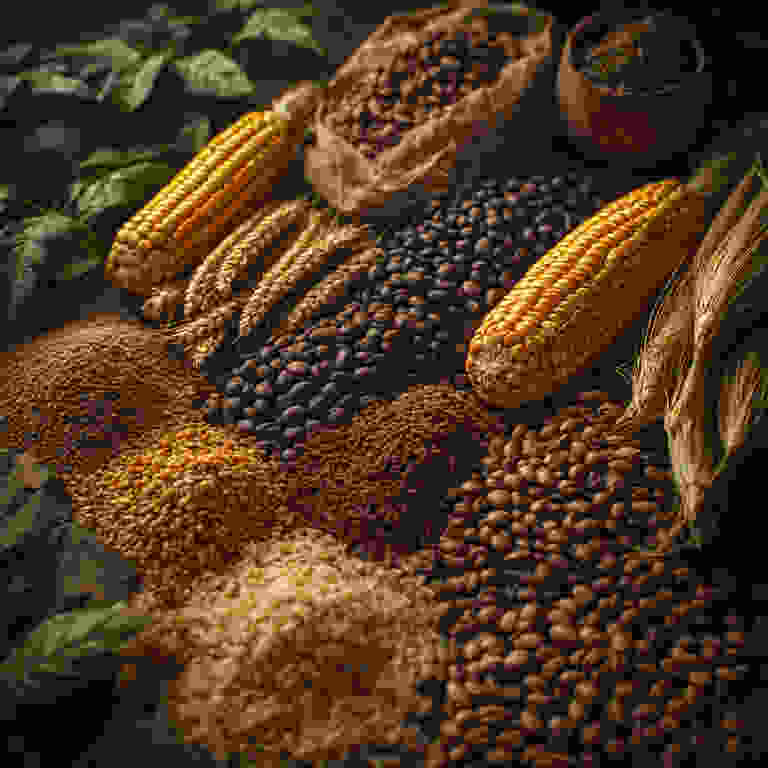
What is Corn as a Commodity?
Corn: The Grain That Feeds the World
Corn—known scientifically as Zea mays and often called maize—is one of the most widely cultivated cereal crops globally. It stands alongside wheat and rice as a pillar of the global food system, collectively providing an estimated 42% of the world’s food calories and 37% of protein intake. Originating in Mexico approximately 10,000 years ago, corn has evolved from a sacred indigenous staple into a versatile industrial commodity that touches nearly every aspect of modern life.
Unlike many other crops, corn is remarkable for its efficiency and its unique place in the economy: only about 5% of the corn plant consists of the edible kernels we recognize, leaving 95% as by-products such as cobs, leaves, husks, and stalks. These residues, often discarded or underutilized, are increasingly being transformed into valuable materials ranging from bioplastics to biofuels.
This article explores corn’s vital role in food stability, its diverse applications across business and industry, and its significance in global financial markets. This article is not financial advice or any prediction of asset prices.
Part I: Types and Characteristics of Corn
Corn is not a single, uniform product. Different varieties have been developed for specific uses, each with distinct characteristics :
| Type | Primary Uses | Key Characteristics |
|---|---|---|
| Dent Corn | Animal feed, processed foods | The most widely grown type; named for the indentation (“dent”) that forms on each kernel as it dries |
| Flint Corn | Cornmeal, polenta | Harder kernels; more resistant to pests and cold |
| Sweet Corn | Fresh consumption, frozen/canned vegetables | Harvested while kernels are immature and sweet; higher sugar content |
| Popcorn | Snack food | Unique kernel structure with hard pericarp that allows it to “pop” when heated |
| Waxy Corn | Food processing, industrial applications | High amylopectin content (a starch component) making it ideal for specialized thickeners and adhesives |
For commodity trading purposes, the standardized benchmark is No. 2 Yellow Corn. This grade serves as the reference point for futures contracts, with premium or discount adjustments for higher or lower quality grades.
Part II: The Biology of Value – Corn Waste and the Circular Economy
A critical aspect of corn’s economic significance lies in what is typically discarded. The plant structure consists of:
| Component | Percentage of Plant | Potential Applications |
|---|---|---|
| Stalk | ~51% | Biochar, fiber composites, bioplastics, biofuel |
| Leaf blades | ~21% | Biopolymer production, composting |
| Cob | ~15% | Biofuel production, fiber materials, activated carbon |
| Husk | ~13% | Bioplastics, natural fiber compounds, packaging materials |
| Silk | ~3-5% | Nutraceuticals, traditional medicine, bioactive compounds |
Corn Waste Valorization
Modern technology is enabling the transformation of corn residues into high-value products, supporting the principles of a circular bioeconomy :
- Biofuels: Corn stalks and cobs serve as excellent substrates for bioethanol production, offering a renewable alternative to fossil fuels while utilizing waste material that would otherwise be burned or discarded
- Bioplastics: Corn husks and stalks can be processed into biodegradable packaging materials, reducing dependence on petroleum-based polymers
- Bioactive Compounds: Corn silk, often discarded during processing, is rich in antioxidants, flavonoids, and anti-inflammatory compounds with potential pharmaceutical and nutraceutical applications
- Activated Carbon: Corn cobs can be converted into activated carbon for water filtration and industrial processes
This shift toward utilizing the “other 95%” of the corn plant represents a significant economic opportunity, transforming what was once considered waste into valuable feedstocks for emerging industries.
Part III: Corn and Food Stability
Global Food Security
Corn’s role in food stability cannot be overstated. Together with wheat and rice, it forms the foundation of the human diet. With the world population projected to reach approximately 9.3 billion by 2050, demand for these cereal crops is expected to increase significantly, particularly in developing regions of Africa and Asia.
However, the global cereal supply chain faces numerous challenges that threaten food stability:
| Challenge | Impact |
|---|---|
| Climate Change | Increasing weather volatility affects yields; shifting growing zones disrupt established production patterns |
| Market Instability | Price volatility driven by speculation, policy changes, and global economic conditions |
| Conflicts | Disruptions such as the Ukraine-Russia war have demonstrated how regional conflicts can cascade through global grain markets |
| Supply Chain Disruptions | Pandemics and logistical bottlenecks interrupt the flow of grain from producing to consuming regions |
| Post-Harvest Losses | Inefficient storage and transportation infrastructure results in significant grain loss, particularly in developing economies |
These factors are expected to intensify, with the United Nations projecting that such pressures could push an additional 75-95 million people into extreme poverty.
Food Safety Considerations
Corn’s relatively long shelf life compared to other crops makes it valuable for food reserves, but it is not immune to safety concerns. Grain safety during production, storage, and transportation requires careful management of mycotoxins, pests, and spoilage risks. Investments in post-harvest handling infrastructure and food safety systems are essential to maintain the integrity of corn supplies destined for human consumption.
Part IV: Corn in Business and Industry
Animal Feed
The largest share of corn production—particularly dent corn—is used as animal feed. Corn provides high-energy content essential for livestock, poultry, and aquaculture operations. Its role in animal agriculture makes it an indirect but crucial component of global meat, dairy, and egg production.
Food Processing and Human Consumption
Beyond sweet corn consumed as a vegetable, corn is processed into a vast array of food products:
- Cornmeal and corn flour: Used for tortillas, cornbread, polenta, and breakfast cereals
- Corn syrup and sweeteners: High-fructose corn syrup (HFCS) and other corn-derived sweeteners are ubiquitous in processed foods and beverages
- Corn starch: Used as a thickener in sauces, soups, and desserts
- Snack foods: Tortilla chips, popcorn, and corn-based snacks
- Fermented products: Corn is used in the production of certain spirits and traditional beverages
Industrial Applications
Corn’s utility extends far beyond food:
- Bioethanol: Corn is a primary feedstock for ethanol production, particularly in the United States, where a significant portion of the corn crop is directed to fuel
- Bioplastics: Corn-based plastics are increasingly used in packaging, disposable tableware, and compostable products
- Adhesives and binders: Waxy corn starch is used in paper manufacturing, textile processing, and industrial adhesives
- Pharmaceuticals: Corn starch serves as a filler and binder in tablets and capsules; corn-derived ingredients appear in various medical products
Part V: Corn in the Financial Market
Corn Futures: The Global Benchmark
Corn is one of the most actively traded agricultural commodities in the world. The primary futures contract is traded on the Chicago Board of Trade (CBOT) , now part of the CME Group.
CBOT Corn Futures Contract Specifications :
| Specification | Details |
|---|---|
| Symbol | ZC (CME Globex electronic trading) |
| Contract Size | 5,000 bushels (approximately 127 metric tons) |
| Price Quotation | Cents per bushel |
| Minimum Fluctuation | ¼ cent per bushel ($12.50 per contract) |
| Contract Months | March (H), May (K), July (N), September (U), December (Z) |
| Trading Hours (CT) | 7:00 p.m. – 7:45 a.m. and 8:30 a.m. – 1:20 p.m., Sunday–Friday |
| Daily Price Limit | $0.40 per bushel ($2,000 per contract); expands to $0.60 under certain conditions |
| Settlement Type | Physical delivery |
| Grade | No. 2 Yellow Corn at par; premiums/discounts for other grades |
Other Corn Futures Markets
Beyond Chicago, corn futures are also traded on other exchanges that serve regional markets:
- BM&F Corn (B3 – Brazil) : Symbol CCM; contract size 450 bags (27 metric tons); cash-settled in Brazilian Real
- Dalian Commodity Exchange (DCE – China) : Offers corn futures contracts serving the Chinese domestic market
Why Corn Futures Matter
The corn futures market serves multiple critical functions :
- Price Discovery: Futures prices provide transparent, forward-looking benchmarks that reflect global supply and demand expectations, weather forecasts, and policy developments
- Risk Management (Hedging) : Farmers, grain elevators, ethanol plants, and food companies use futures to lock in prices and protect against adverse price movements:
- Producers (Farmers) sell futures (via Hedge-to-Arrive contracts) to lock in selling prices before harvest
- End-users (Processors, Feedlots) buy futures to secure input costs
- Exporters and Importers use futures to manage currency and price exposure
- Liquidity and Speculation: Speculators provide market liquidity, enabling hedgers to enter and exit positions efficiently. While speculation can increase volatility, it is essential for market functioning
Using Futures and Options in Grain Marketing
For participants in the corn market, a range of derivative tools is available to manage price risk :
| Tool | Function | Example Application |
|---|---|---|
| Futures (Short Hedge) | Lock in selling price | Farmer sells December corn futures in spring to secure profitable price before planting |
| Put Options | Establish price floor while retaining upside | Farmer buys put option with strike price above current market; gains value if prices fall, expires worthless if prices rise |
| Call Options | Re-establish upside exposure after cash sale | After selling cash corn at harvest, buyer of calls profits if prices rally later |
| Hedge-to-Arrive (HTA) | Lock futures price, defer basis decision | Farmer sells futures to elevator, settles basis later when favorable |
Factors Influencing Corn Prices
Corn prices are affected by a complex web of factors :
- Weather and Growing Conditions: Drought, excessive rainfall, or unseasonable temperatures during key growth stages directly impact yields
- Global Supply and Demand: USDA and other agencies regularly report on production estimates, export sales, and consumption trends
- Geopolitical Events: Conflicts affecting major producers (e.g., Ukraine) or trade routes disrupt supply chains
- Biofuel Policy: U.S. Renewable Fuel Standard (RFS) and similar policies in other countries create demand for corn-based ethanol
- Exchange Rates: A stronger U.S. dollar makes American corn more expensive for foreign buyers, potentially reducing export demand
- Input Costs: Fertilizer and fuel prices affect production costs and planting decisions
- Competing Crops: Soybean prices influence planting acreage decisions, affecting corn supply
Part VI: Global Trade Patterns
Corn is a globally traded commodity, with significant export flows from major producing regions to importing nations. According to 2022 data, the largest exporters of maize seed (a category reflecting corn for planting) were :
| Country | Export Value (USD) | Primary Export Destinations |
|---|---|---|
| France | $830M | Germany, Poland, Spain, Romania, Hungary |
| Argentina | $494M | Malaysia (86%), Uruguay, United States |
| United States | $344M | Canada, Pakistan, Jamaica, Mexico |
| Hungary | $295M | Russia, Romania, France, Germany |
| Romania | $259M | Bulgaria, France, Hungary, Moldova |
For corn as a bulk commodity, the United States, Brazil, Argentina, and Ukraine are the dominant exporters, while major importers include Japan, Mexico, South Korea, Egypt, and countries across Southeast Asia and North Africa.
Conclusion: The Grain at the Center of the Global System
Corn is far more than a staple food. It is a foundational crop that weaves together agriculture, industry, energy, and finance. Its kernels feed humans and livestock; its residues are being transformed into plastics, fuels, and medicines; its price influences food costs, animal feed expenses, and biofuel economics across the globe.
In financial markets, corn futures provide essential price discovery and risk management tools for an industry that stretches from American farm fields to Asian feedlots, from European food processors to Brazilian ethanol plants. The CBOT corn contract—symbol ZC—remains one of the most liquid and actively traded agricultural futures in the world.
As global population grows, climate patterns shift, and the circular economy gains momentum, corn’s importance is likely to increase. The challenge for the coming decades will be to balance the competing demands for corn as food, feed, fuel, and industrial feedstock—all while building supply chain resilience against the environmental and geopolitical pressures that increasingly characterize the 21st century.










2 comments