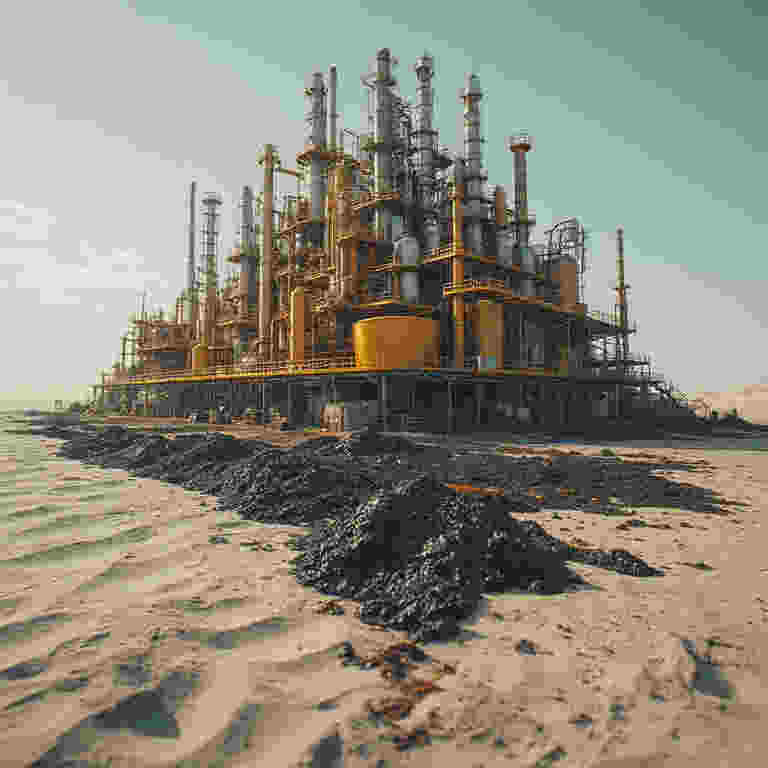
What Is the Petrodollar System? : Architecture, Power, and Market Implications
The petrodollar system is a global financial arrangement in which crude oil is priced, traded, and settled exclusively in U.S. dollars. It emerged from a series of strategic agreements between the United States and Saudi Arabia in the aftermath of the 1973 oil crisis, formalizing a relationship that would shape the global economy for decades.
It is crucial to understand what “petrodollar” means. The term does not refer to a separate currency—petrodollars are simply U.S. dollars used to purchase oil. The system’s significance lies in the requirement that any country wishing to buy oil on global markets must first acquire U.S. dollars, creating a permanent, structural demand for the currency that extends far beyond America’s borders.
This article is not financial advice or any prediction of asset prices.
The Historical Origins: From Bretton Woods to the Oil Shock
To appreciate the petrodollar system’s importance, one must understand the crisis it was designed to resolve. Following World War II, the Bretton Woods Agreement established the U.S. dollar as the anchor of global finance, backed by gold at $35 per ounce. For a quarter-century, this system provided stability. However, by the late 1960s, persistent U.S. deficits and inflation made the arrangement unsustainable.
The rupture came in 1971, when President Richard Nixon unilaterally ended the dollar’s convertibility into gold—an event known as the Nixon Shock. With the dollar no longer backed by gold, an existential question arose: what would underpin global demand for the currency?
The answer came through strategic diplomacy. In the wake of the 1973 Arab oil embargo—which had crippled Western economies—Secretary of State Henry Kissinger negotiated a series of understandings with Saudi Arabia. The terms were elegant in their simplicity: Saudi Arabia would price its oil exports exclusively in U.S. dollars and invest its surplus revenues in U.S. Treasury securities. In exchange, the United States would provide military protection, advanced weaponry, and guarantee the survival of the House of Saud.
By 1975, other OPEC nations followed suit, and the petrodollar system was born.
How the Petrodollar System Works: The Cycle of Recycling
The petrodollar system operates through a self-reinforcing cycle often called petrodollar recycling. Understanding this cycle is essential to grasping the system’s power and its vulnerabilities.
The Cycle Step by Step
| Step | Description | Effect |
|---|---|---|
| 1. Dollar Pricing | Oil is priced and sold exclusively in U.S. dollars | Any nation needing oil must acquire dollars, creating permanent demand |
| 2. Surplus Accumulation | Oil-exporting nations accumulate large dollar reserves from oil sales | Gulf sovereign wealth funds and central bank reserves grow |
| 3. Recycling | Oil exporters reinvest surplus dollars into U.S. assets—primarily Treasury bonds, but also equities and real estate | Dollars flow back to the U.S., financing its deficits |
| 4. Demand Reinforcement | The recycling process supports U.S. bond markets, keeping interest rates lower than they would otherwise be | The dollar’s value and U.S. borrowing capacity are reinforced |
This cycle creates what analysts call an “exorbitant privilege” for the United States: the ability to run persistent trade deficits, finance massive government spending, and maintain a global military presence without facing the currency crises that would doom other nations.
The Quantitative Scale
The scale of petrodollar recycling is immense. At the peak of the 2010-2014 oil price run, crude exporters recycled an estimated $400 billion to $800 billion annually into global assets. These funds flowed into U.S. Treasuries, bank deposits, and global equities, providing a consistent source of demand for dollar-denominated assets.
This recycling mechanism had a crucial side effect: it acted as a built-in cushion for global markets. When oil prices rose, the surge in exporter revenues was recycled back into financial assets, offsetting the economic drain on oil-importing nations.
The Strategic Importance: Why the System Matters
For U.S. Financial Hegemony
The petrodollar system has conferred upon the United States a form of monetary sovereignty unmatched in modern history. By placing the dollar at the center of global energy trade, Washington secured several strategic advantages:
| Advantage | Description |
|---|---|
| Permanent Dollar Demand | Every oil-importing nation must hold dollar reserves, creating structural demand independent of U.S. economic performance |
| Lower Borrowing Costs | Petrodollar recycling into Treasuries suppresses U.S. interest rates, reducing the cost of government debt |
| Sanctions Leverage | Because oil flows through dollar-based systems, the U.S. can effectively block access to global energy trade for sanctioned nations |
| Deficit Financing | The U.S. can run persistent trade deficits without immediate destabilization, as dollars return through recycling |
For Oil-Exporting Nations
The relationship was not one-sided. Oil-exporting nations derived substantial benefits:
- Security guarantees from the world’s dominant military power
- Access to advanced weaponry and political backing
- Stable demand for their oil through U.S.-backed global trade frameworks
- Profitable investment outlets for their accumulated wealth
As analysts note, the arrangement was asymmetric but mutually reinforcing.
The System Under Pressure: De-Dollarization and the 2026 Shock
The petrodollar system, long considered unassailable, is showing unprecedented signs of strain. The convergence of long-term structural shifts and the acute shock of the 2026 Gulf War has accelerated what many analysts call the transition toward a multipolar currency world.
The Structural Erosion (Pre-2026)
Even before the current conflict, the foundations of the petrodollar system were eroding:
1. The Saudi Shift
In June 2024, the 50-year exclusive U.S.-Saudi petrodollar agreement expired. Under Crown Prince Mohammed bin Salman’s Vision 2030 initiative, Riyadh signaled it would no longer tether its destiny to a single superpower. Saudi Arabia began accepting payments in Chinese renminbi (RMB), euros, and even digital assets for oil sales outside the U.S.
2. The Rise of the Petroyuan
China, the world’s largest oil importer, launched renminbi-denominated oil futures on the Shanghai International Energy Exchange (INE). Major suppliers including Russia, Iran, and Venezuela began pricing oil sales to China in yuan. Russia announced the yuan as its favored currency for trade settlements following Western sanctions.
3. BRICS Expansion
The BRICS bloc (Brazil, Russia, India, China, South Africa) expanded to include Saudi Arabia, Iran, the UAE, and others, providing an institutional framework for de-dollarization. The bloc has actively explored alternative reserve currencies and payment systems.
See also : Is BRICS Gold Standard possible? : A Technical Exploration
4. Declining Dollar Share
The U.S. dollar’s share of global central bank reserves has slipped from 72% in 2001 to just under 60% today. While still dominant, the trend is clear.
The 2026 Catalyst: Gulf War and the Strait of Hormuz
The outbreak of the 2026 Gulf War—beginning with U.S.-Israeli strikes against Iran on February 28—has dramatically accelerated these trends. Iran’s asymmetric response has proven devastating to the petrodollar architecture.
The Soft Closure of the Strait of Hormuz
Iran effectively paralyzed the Strait of Hormuz, through which approximately 20% of global oil passes. Without formally closing the waterway, Tehran made it economically impossible for commercial tankers to traverse—shipping insurance premiums surged 500%, and many routes were abandoned.
See also : How a Hormuz Blockage Would Affect Business Sectors Around the World in 2026
The Consequences for the Petrodollar
| Effect | Description |
|---|---|
| Oil Price Surge | Brent crude jumped from approximately $66 to $120 per barrel within weeks |
| Physical Disconnect | Gulf producers with oil to sell cannot get it to market, breaking the physical supply chain that underpins dollar demand |
| Recycling Collapse | Unlike previous oil shocks, surplus revenues are not flowing back into U.S. assets—they are trapped or redirected |
| Parallel Systems Emerge | Iranian oil continues flowing to China via the “Dark Fleet,” settled outside the U.S. banking system through Project mBridge—a digital currency platform bypassing SWIFT |
The Diminished Recycling Cushion
A critical difference in 2026 is the collapse of petrodollar recycling. At the 2010-2014 peak, exporters recycled $400-800 billion annually. By 2025, that figure had fallen to roughly $200-250 billion as Gulf economies spend more domestically and the U.S. has reduced its reliance on imported oil. Today, an oil shock that once helped generate investable liquidity now behaves more like a funding squeeze, draining dollar liquidity rather than replenishing it.
The Role in the General Economy
Inflation and Stagflation Risks
The petrodollar system’s disruption has profound economic consequences. The 2026 oil shock has plunged much of the world into stagflation—the toxic combination of high inflation, stagnant growth, and rising unemployment. The IMF predicts that if the standoff persists, it will erase $2.2 trillion from global GDP.
| Region | Vulnerability | Key Factors |
|---|---|---|
| United States | Relatively insulated | Energy producer; dollar safe-haven flows; though higher real yields limit equity upside |
| Europe | Highly exposed | Heavy reliance on imported oil and gas; energy costs squeezing industrial margins |
| Japan | Moderate-high | Major energy importer; but significant strategic reserves and external buffers |
| China | Partially insulated | Strategic petroleum reserves; domestic coal; pipelines from Russia and Central Asia; renewables buildout |
| Emerging Importers | Severe pressure | Rising energy costs coinciding with tighter dollar funding |
The Central Bank Dilemma
Central banks face an impossible choice. Raising interest rates to combat energy-driven inflation risks triggering a deep recession. Lowering rates to support growth risks a hyperinflationary spiral. The Federal Reserve, which had been expected to cut rates in 2026, is now constrained by oil-driven inflation running above 3%.
Implications for Market Participants
The erosion of the petrodollar system and the 2026 oil shock have created a complex landscape for market participants across asset classes.
For Forex Markets
The U.S. Dollar’s Paradoxical Strength
Despite the structural pressures against the dollar, it has strengthened during the 2026 crisis—appreciating approximately 2.5% since the war began. This paradox reflects the dollar’s continuing role as the world’s primary safe haven. When uncertainty spikes, capital flows into dollars regardless of long-term concerns about the petrodollar system.
The De-Dollarization Overhang
However, the medium-term outlook is more complex. The gradual shift toward non-dollar oil transactions—particularly between China, Russia, Iran, and Gulf states—represents a structural threat to dollar demand. Any meaningful shift in energy currency could fragment global payments, introduce parallel pricing systems, and ultimately dilute the dollar’s centrality.
Some Forex Pairs
| Pair | Petrodollar-Related Dynamics |
|---|---|
| EUR/USD | Euro could benefit from reserve diversification away from dollar, but Europe’s energy vulnerability (exacerbated by the crisis) limits upside |
| USD/JPY | Yen’s traditional safe-haven role complicated by Japan’s energy import dependence; yen weakened despite broader dollar strength |
| USD/CNY | The petroyuan’s gradual rise represents a long-term challenge to dollar dominance; yuan share of global reserves has more than doubled since 2016 |
| Commodity Currencies (CAD, AUD, NOK) | Complex; energy exporters benefit from higher prices, but global growth concerns limit gains |
For Gold
Gold‘s response to petrodollar pressures is complex and sometimes counterintuitive.
The 2026 Anomaly
Contrary to traditional safe-haven expectations, gold fell sharply during the early stages of the 2026 war—plunging from approximately $5,400 per ounce to below $4,100 within weeks. This decline did not reflect a failure of gold’s safe-haven status. Rather, it reflected a liquidity crisis specific to the petrodollar system’s disruption.
The Dubai Mechanism
Dubai has become a major gold trading hub, with advanced logistics and zero-tariff policies. When the war cut off air routes to Dubai, gold shipments from African mines to Asian buyers were disrupted. Gulf sovereign wealth funds—major gold buyers—needed to raise cash urgently. With gold physically stranded in Dubai, they were forced to sell at steep discounts, creating a cascading price collapse.
The Long-Term Case
Despite the short-term collapse, many analysts view gold as a beneficiary of petrodollar erosion. Central banks—particularly in Russia and China—have been loading up on gold as they diversify away from dollar reserves. A significant decrease in the dollar’s relative value would be supportive of gold prices.
For Crude Oil (WTI and Brent)
Oil markets are at the epicenter of petrodollar dynamics. The 2026 shock has demonstrated both the system’s persistence and its fragility.
| Benchmark | Price Response (2026) | Key Dynamics |
|---|---|---|
| WTI | Surged from approximately $65 to $85+ | U.S. benchmark; insulated from direct supply disruption but affected by global price transmission |
| Brent | Surged from approximately $66 to $120+ | Global benchmark; more directly exposed to Middle East supply fears |
| Dubai/Oman | Spiked beyond $150 | Regional benchmarks more accurately reflect physical shortage in Gulf |
The petrodollar system’s disruption is visible in the divergence between global benchmarks (Brent, WTI) and regional prices that more accurately reflect the physical scarcity created by the Hormuz closure.
For U.S. Treasury Bonds
The petrodollar system has been a critical source of demand for U.S. government debt. Its erosion has significant implications for bond markets.
The Recycling Link
When petrodollar recycling was robust, oil exporters automatically reinvested surplus dollars into Treasuries, suppressing yields and financing U.S. deficits. Today, that cushion has largely disappeared. Less surplus capital is available to flow back into U.S. markets.
The 2026 Response
In the current crisis, Treasury yields have risen rather than fallen—the 10-year yield climbed from approximately 3.9% toward 4.5%. This reflects inflation fears rather than safe-haven demand. Investors worry that oil-driven inflation will force the Fed to keep rates higher for longer, pressuring bond prices.
The Long-Term Vulnerability
Analysts warn that reduced petrodollar recycling will be felt in demand for U.S. assets. If Gulf sovereign wealth funds (which have 35% of their $6 trillion AUM in U.S. assets) shift capital back to the Gulf for domestic investment, it would place additional pressure on the dollar and U.S. borrowing costs.
For Equities
The petrodollar shock has created sharp sectoral differentiation in equity markets.
| Sector | Response | Rationale |
|---|---|---|
| Energy (Oil Producers) | Strong positive | Direct beneficiaries of higher oil prices |
| Defense/Aerospace | Positive | Elevated threat perception; potential for sustained higher defense spending |
| Technology | Negative | Higher interest rates and stagflation fears compress growth valuations |
| Consumer Discretionary | Negative | Energy-driven inflation squeezes household spending power |
| Airlines/Logistics | Negative | Fuel costs surge; economic slowdown reduces demand |
| Utilities | Mixed | Higher energy costs but defensive characteristics |
The broader equity market has experienced significant drawdowns, with the S&P 500 falling approximately 5.3% during the early weeks of the conflict. Notably, Chinese stocks (CSI 300) declined only 3.6% over the same period, reflecting China’s relative insulation from the petrodollar shock due to its strategic reserves and alternative energy sources.
For Commodity Markets Beyond Oil
The petrodollar system’s disruption affects commodities beyond crude oil:
| Commodity | Petrodollar Link | 2026 Response |
|---|---|---|
| Gold | Reserve diversification alternative | Complex; liquidity collapse followed by potential safe-haven bid |
| Copper | Global growth bellwether | Pressured by recession fears despite long-term electrification demand |
| Agricultural goods | Fertilizer costs linked to natural gas/energy | Upward pressure from higher input costs |
| Natural gas | Often correlated with oil; key for European energy security | Surged as LNG routes disrupted |
The Alternatives: A Multipolar Energy Currency Future
The Petroyuan
China has been systematically building the infrastructure for yuan-denominated oil trade. The Shanghai International Energy Exchange (INE) now trades crude oil futures denominated in renminbi, and major suppliers including Russia, Iran, and Venezuela have agreed to price oil sales to China in yuan.
The implications are significant: as an increasing share of China’s oil imports are priced in RMB, oil-exporting countries will accumulate large RMB reserves, which they will spend on Chinese exports or recycle into Chinese financial markets. This could lead to a dramatic shift in global asset allocations as institutional investors diversify into China’s onshore bond markets.
Project mBridge and Digital Currencies
The most significant near-term alternative to the petrodollar system is Project mBridge—a platform allowing central banks to trade directly using their own digital currencies, bypassing the need for U.S. intermediary banks or the SWIFT network. In March 2026 alone, mBridge handled over $55 billion in trade, proving that digital rails have matured into an effective shield against Western financial pressure.
The Petro-AI-Dollar
In a counter-move, the U.S. has introduced the concept of the “Petro-AI-Dollar” —leveraging American dominance in artificial intelligence to maintain currency demand. By linking access to cutting-edge AI hardware and software to continued dollar use, the U.S. is attempting to trade “computational sovereignty” for financial loyalty.
Conclusion: An Inflection Point, Not an End
The petrodollar system was not an accident of history. It was designed, calibrated, and sustained over decades through deliberate statecraft. Its potential transformation will be no less deliberate.
Yet the evidence of strain is undeniable. The dollar’s share of global reserves has declined from 72% to 60% over two decades. Major oil producers are accepting alternative currencies. Digital payment systems are bypassing dollar-based rails. The 2026 Gulf War has demonstrated that the physical supply chains underpinning the petrodollar system can be disrupted, and with them, the recycling mechanism that has long cushioned global markets.
For market participants, the key implications are:
- The dollar’s safe-haven status remains powerful in the short term—crises still drive capital into dollars. But structural erosion continues beneath the surface.
- Gold’s role is evolving—from pure safe haven to a strategic reserve asset for central banks diversifying away from dollars.
- Oil shocks now transmit differently—without the recycling cushion, energy spikes act as funding squeezes, tightening financial conditions globally.
- Regional differentiation is critical—the U.S. is relatively insulated; Europe and Asia face greater exposure; commodity exporters and importers diverge sharply.
- The multipolar transition is accelerating—whether measured in years or decades, the era of unchallenged dollar hegemony that defined the last half-century is giving way to a more fragmented financial order.
As one analyst concluded, the petrodollar system may not vanish entirely, but it is no longer the world’s sole orbit. For the United States, this means higher costs of living and diminished global leverage. For the rest of the world, it offers greater economic sovereignty—but at the cost of extreme volatility. The waves of the Hormuz have not just halted oil tankers; they have signaled the end of a unipolar financial era.










Post Comment