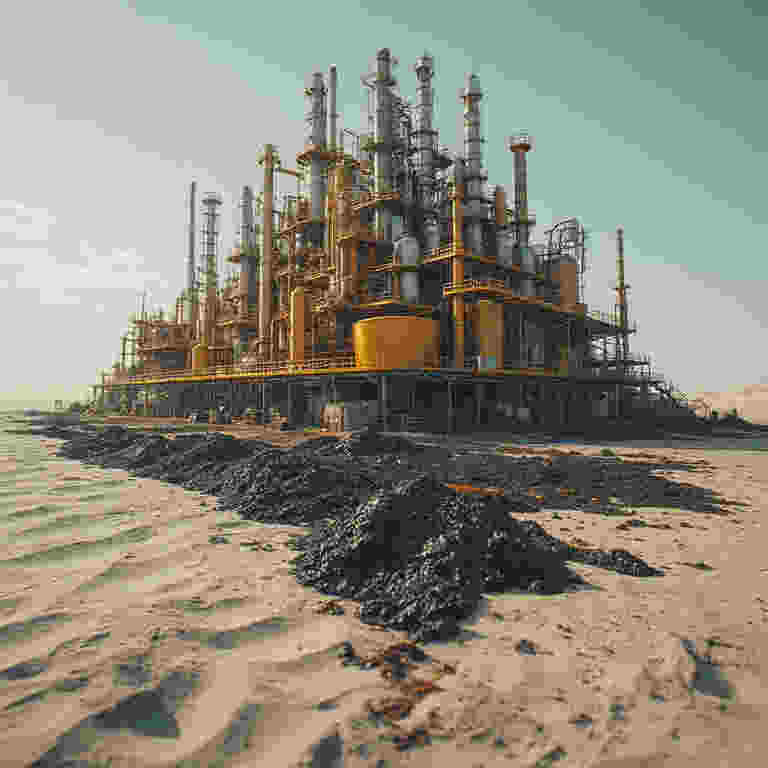
What Is Natural Gas: Understanding The Versatile Energy Commodity
What Is Natural Gas?
Natural gas is a naturally occurring hydrocarbon gas mixture composed primarily of methane (CH₄) , formed over millions of years from the remains of plants and animals buried under layers of sediment and rock. Through the application of heat and pressure, this organic material transforms into the clean-burning energy source we use today.
As a crucial energy commodity, it plays a significant role in various business and industrial sectors. Its versatility as a cleaner-burning fuel has made it a preferred choice for power generation and manufacturing processes, helping businesses reduce carbon emissions compared to traditional oil. Moreover, natural gas is often a vital input in the production of fertilizers and chemicals, enhancing agricultural productivity. The demand for natural gas also influences the stock market, reflecting its importance in the broader energy landscape.
This article does not mean to be all-time represent. The future readers should aware that information and facts in the future may change with the time and context.
Physical and Chemical Properties
Natural gas is tasteless, colorless, and in its pure form, odorless—utilities add an odorant (typically mercaptan) for leak detection. Key properties include :
| Property | Characteristic |
|---|---|
| Density | Lighter than air (0.55–0.7 specific gravity), allowing it to disperse safely if released |
| Flammability Range | 5% to 15% concentration in air |
| Ignition Temperature | High, making it less susceptible to accidental combustion |
| Energy Content | Approximately 33–34 MJ per normal cubic meter |
Composition
While methane typically constitutes over 90% of natural gas, it also contains small amounts of other hydrocarbons such as ethane, propane, and butane, along with trace impurities like carbon dioxide, nitrogen, and hydrogen sulfide. Gases containing significant higher hydrocarbons are referred to as “wet” gases.
Sources and Extraction
Natural gas originates from both conventional and unconventional sources :
| Source Type | Description | Extraction Method |
|---|---|---|
| Conventional | Found in large underground reservoirs within porous rock formations | Relatively easier extraction |
| Shale Gas | Trapped within shale formations | Hydraulic fracturing (“fracking”) |
| Tight Gas | Found in low-permeability sandstone or limestone | Specialized extraction methods |
| Coal Bed Methane (CBM) | Extracted from coal seams | Increasingly valuable source |
Transportation and Global Trade
Natural gas is transported in two primary forms :
1. Gaseous State (Pipeline Gas)
Delivered through an extensive network of intraregional and interregional pipelines—the most common method for overland transport.
2. Liquefied Natural Gas (LNG)
Natural gas is cooled to -161°C, reducing its volume to 1/600th of its gaseous form. This allows efficient storage and transport over long distances by specialized LNG carriers. Upon reaching its destination, LNG is re-gasified and integrated into the local pipeline network. The ability to convert natural gas into LNG has been instrumental in enabling global trade, connecting producing regions to high-demand markets that lack pipeline access.
Role in Business and Industry
Economic Impact
The natural gas market generates approximately USD 1.3 trillion in annual revenues and accounts for nearly a quarter of global primary energy supplies. In the United States alone, the low cost of natural gas has saved commercial and industrial customers half a trillion dollars over the past decade.
Industrial Applications
| Sector | Role of Natural Gas |
|---|---|
| Manufacturing | Provides both energy and feedstock; complex supply chains (e.g., automotive) rely on gas for power, heat, and chemicals |
| Fertilizer Production | Serves as both feedstock for nitrogen fertilizers and energy for the manufacturing process—up to 50% of global crop yields are attributable to fertilizers made from natural gas |
| Data Centers | Natural gas provides the reliability needed to avoid catastrophic outages while keeping energy costs low |
| Chemical Industry | Critical feedstock for plastics and other chemical products |
Small Business Reliance
Natural gas is essential for millions of small businesses :
- 87% of full-service restaurants rely on natural gas appliances; electric alternatives could increase energy costs sixfold, threatening profit margins that typically run between 5% and 10%
- Family farms depend on natural gas-based fertilizers to maintain yields and manage costs
- Manufacturing facilities need safe, affordable, and reliable energy—with natural gas expected to remain between half and a third the price of electricity through 2050
Key Applications of Natural Gas
Natural gas serves four primary applications :
| Application | Description |
|---|---|
| Power Generation | Gas turbines compete favorably against coal, wind, and solar, especially in regions with low gas costs such as the United States |
| Industrial Uses | Difficult to replace in most industrial applications due to its role as both fuel and feedstock |
| Space Heating | Natural gas boilers maintain operating cost advantages over heating oil, though modern air-source heat pumps are increasingly competitive |
| Marine Fuel | Growing application as shipping industry seeks cleaner fuel alternatives |
In addition, natural gas is used in thermal energy power plants (including cogeneration facilities), households for cooking, water heating, space heating and cooling, and the transport sector as an operating fuel for motor vehicles.
The Changing Global Gas Market
Shifting Trade Dynamics
The natural gas market is undergoing significant transformation driven by five key trends :
- The shift from pipeline gas to LNG, with governments playing a larger role in securing supply
- Asia’s growing dominance in LNG demand, particularly from China and Southeast Asia
- Globalization of gas markets, with shrinking regional price gaps and more dynamic trading
- Natural gas as a geopolitical tool, driving diversification and security-of-supply strategies
- Rising interest in zero- and low-carbon gases such as biomethane
New Demand Drivers
The accelerating impact of artificial intelligence is creating sustained pressure on energy infrastructure. Many next-generation data center campuses are turning to gas-fired power solutions to complement renewable energy, particularly when rapid grid interconnection is not viable to support the required computing capacity.
Natural Gas in Financial Markets
Natural gas is actively traded as a commodity on major exchanges worldwide, providing price discovery and risk management for producers, consumers, and investors.
Futures Contracts
The primary futures contract for natural gas is traded on the New York Mercantile Exchange (NYMEX) , part of CME Group.
| Specification | Details |
|---|---|
| Symbol | NG |
| Exchange | NYMEX (CME Group) |
| Trading Unit | 10,000 MMBtu (million British thermal units) |
| Tick Size | $0.001 per MMBtu ($10.00 per contract) |
| Daily Limit | 15% above or below previous settlement |
| Trading Hours | 5:00 p.m. – 4:00 p.m. (Sunday–Friday) CST |
| Trading Months | F, G, H, J, K, M, N, Q, U, V, X, Z (all months) |
Related Instruments
| Instrument | Exchange | Description |
|---|---|---|
| Natural Gas Futures (NGLNMc1) | ICE (Intercontinental Exchange) | Traded in GBP |
| Spark Spread Contracts | European Energy Exchange (EEX) | Reflect the difference between wholesale power prices and electricity production costs from natural gas |
| Natural Gas Spreads (EEX EGSI) | European Energy Exchange (EEX) | Financial-physical contracts based on the European Gas Spot Index |
| Leverage Certificates | Various (e.g., Vontobel) | Structured products offering leveraged exposure to Henry Hub natural gas futures |
Market Dynamics
LNG volumes are growing faster than pipeline gas due to the need for higher flexibility. Gas markets and prices are becoming increasingly more connected and correlated globally. The globalization of gas markets is driven by :
- Shrinking regional price gaps
- More dynamic trading patterns
- The emergence of LNG as a flexible, globally tradeable commodity
Investment and Financing Trends
Investor sentiment toward natural gas has improved significantly :
- Strong valuation outcomes for natural gas infrastructure and power assets
- Returning financial sponsors who had previously avoided the sector due to ESG concerns
- Expanded bank market capacity for LNG and gas-related infrastructure financings
- Growing private credit participation, with asset managers exploring deployment into midstream and LNG opportunities
Future Outlook
Natural gas is expected to remain a cornerstone of the global energy mix for decades to come, with demand projected to rise as populations and industrial requirements grow. Its roles are evolving:
- Grid stability partner: Natural gas provides reliable backup for intermittent renewable energy sources
- AI infrastructure enabler: Data centers are increasingly turning to gas-fired power solutions
- Transition facilitator: Gas-fired power helps bridge the gap as the world moves toward lower-carbon energy systems
The ability to secure supplies, build portfolio flexibility, and adapt to changing market dynamics will be critical for success in the evolving global gas market.












2 comments