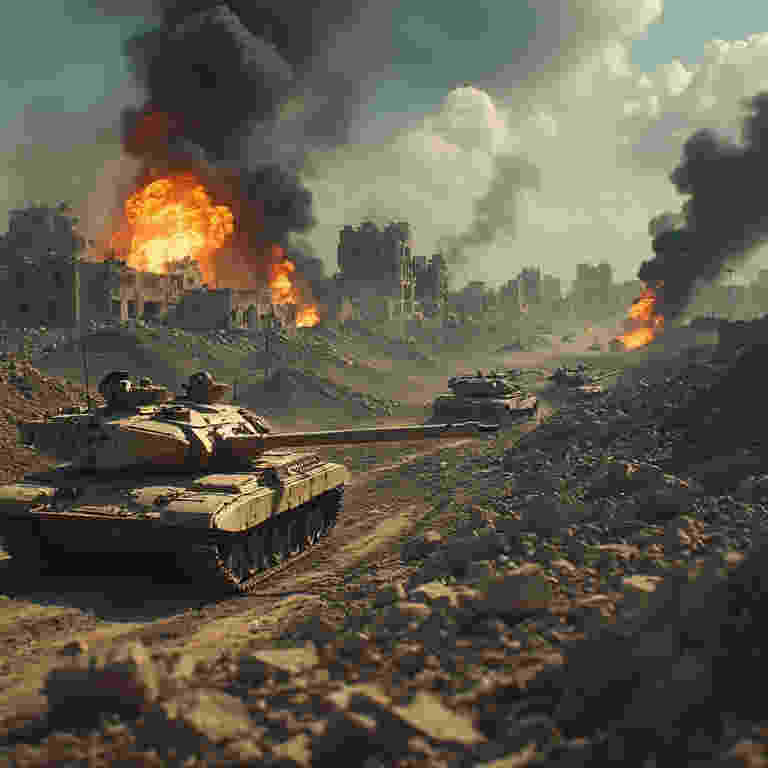
Safe-Haven Asset in Wartime : What Determines the Effectiveness?
When War Happens: What Determines the Effectiveness of Each Safe-Haven Asset?
The Flight to Safety
When armed conflict erupts, financial markets experience a fundamental shift in investor psychology. The uncertainty, destruction, and geopolitical realignment that accompany war create a powerful incentive for capital preservation. This “flight to safety” drives investors toward assets perceived as stable stores of value. However, not all safe-haven assets perform equally during wartime, and understanding what determines their effectiveness is crucial for comprehending market dynamics during conflict.
This article examines the factors that determine whether a safe-haven asset will serve its intended purpose during war, drawing on historical evidence and contemporary analysis of recent conflicts.
This article is not financial advice or any prediction of asset prices.
What Is a Safe-Haven Asset?
A safe-haven asset is defined as one with low or negative correlations with other assets during periods of market stress, serving to protect capital when uncertainty spikes. Traditional safe havens include gold, the U.S. dollar, Japanese yen, Swiss franc, and government bonds. More recently, cryptocurrencies have entered the discussion as potential “experimental” safe havens, though their status remains contested.
The key distinction is that safe havens are not merely diversifiers—they are assets that investors expect to hold their value or appreciate precisely when other assets are declining.
Key Determinants of Safe-Haven Effectiveness During War
1. Pre-Conflict Momentum: The “Positive Push” Effect
Academic research examining the Russia-Ukraine and Palestine-Israel conflicts reveals a crucial determinant: assets that exhibit an upward correlation with the market before the conflict—defined as a “positive push”—demonstrate safe-haven capacity and potentially bullish returns during wartime.
This finding challenges the traditional view that safe havens are simply those assets uncorrelated with markets. Instead, the research suggests that pre-existing upward momentum makes an asset more attractive to investors seeking both safety and positive returns. Assets that were already gaining strength before conflict erupted tend to attract more significant safe-haven flows when war begins.
This phenomenon explains why Bitcoin acted as a safe haven during the Russia-Ukraine war but not during the Palestine-Israel conflict. In the former, BTC had a positive push before the conflict; in the latter, its negative push made it less suitable as a refuge.
2. Nature and Source of the Conflict
The effectiveness of safe-haven assets varies significantly depending on what type of crisis triggers the market stress.
| Crisis Type | Effective Safe Havens | Ineffective Safe Havens |
|---|---|---|
| Macroeconomic/Financial Downturns | Government bonds (lower inflation/rates) | Equities, commodities |
| Geopolitical Conflicts | Japanese Yen, Japanese government bonds, gold | Most government bonds (diminished properties) |
Government bonds tend to be effective safe havens during downturns triggered by macroeconomic or financial market events, as these are typically associated with lower inflation and interest rates. However, geopolitical conflicts often diminish the safe-haven properties of government bonds. This occurs because war tends to be inflationary—through increased government spending, disrupted supply chains, and higher energy costs—which erodes the real value of fixed-income investments.
3. Geographic and Financial Proximity
The geographical and financial proximity of a safe-haven asset to the source of the downturn significantly affects its efficacy. Assets from countries directly involved in or closely connected to a crisis are far less likely to serve as effective safe havens.
This principle operates on multiple levels:
- Direct Involvement: A country directly engaged in conflict will see its assets suffer, regardless of their historical safe-haven status
- Regional Spillover: Neighboring countries often experience contagion effects
- Economic Interdependence: Countries heavily dependent on trade with conflict zones face indirect exposure
Japan’s unique position illustrates this principle powerfully. Japan’s minimal involvement in geopolitical conflicts has established the Japanese Yen and Japanese government bonds as the most reliable safe havens during such conflicts. This “geopolitical neutrality” premium means that when war erupts elsewhere, Japanese assets often benefit from capital inflows seeking safety far from the conflict.
4. Market Maturity and Liquidity
For newer or less-established assets, market maturity plays a critical role in determining safe-haven effectiveness. The cryptocurrency market’s immaturity affected its role as a haven during recent conflicts.
During the COVID-19 pandemic, Bitcoin and Ethereum demonstrated short-term safe-haven properties in the initial phase, but gold and silver provided better coverage. During the Russia-Ukraine war, cryptocurrencies showed safe-haven characteristics, but this was not replicated in the Palestine-Israel conflict.
The explanation lies in market depth, liquidity, and investor familiarity. Mature markets with deep liquidity—like gold and major currencies—can absorb large capital inflows without excessive price dislocation. Less mature markets may experience volatility that undermines their safe-haven function precisely when stability is most needed.
5. Relationship with Inflation and Interest Rates
War typically generates inflationary pressures through multiple channels :
- Increased government spending (e.g., military budgets)
- Disruption of energy or food supply chains
- Shipping route closures affecting trade
- Tariffs and trade policy shifts
An asset’s relationship with inflation fundamentally affects its wartime performance:
| Asset | Inflation Relationship | Wartime Implication |
|---|---|---|
| Gold | Positive hedge | Benefits from inflation expectations |
| Oil | Direct driver | Surges when supply threatened |
| Government Bonds | Negative (real yields) | Suffer when inflation rises |
| Dollar | Complex (dual role) | Strengthens on haven demand, but inflation may complicate Fed policy |
However, the relationship is not always straightforward. While gold is seen as a long-term inflation hedge, higher inflation can push real yields higher and strengthen the dollar, creating headwinds for the non-yielding metal. This dynamic played out in March 2026 when gold fell sharply despite ongoing conflict, as the dollar strengthened and Treasury yields rose on inflation concerns.
6. Central Bank Policy and Interest Rate Expectations
The expected response of central banks to conflict-induced inflation significantly influences safe-haven asset performance. When investors anticipate that central banks will keep rates higher for longer to combat inflation, the opportunity cost of holding non-yielding assets like gold increases.
During the 2026 Iran conflict, investors reduced expectations for rate cuts due to inflation concerns, contributing to gold’s price decline despite ongoing geopolitical tensions. The probability of rates being held in June 2026 rose from below 45% to more than 60%, reflecting market reassessment of Fed policy.
This creates a tension: conflict generates safe-haven demand for gold, but if the same conflict raises inflation expectations sufficiently to shift monetary policy expectations, gold may face simultaneous headwinds.
Analysis of Specific Safe-Haven Assets
Gold: The Historical Benchmark
Gold consistently exhibits safe-haven properties during wartime. Its effectiveness derives from multiple factors:
- Historical precedent: Millennia of use as store of value
- No counterparty risk: Not dependent on any government or institution
- Physical scarcity: Limited above-ground supplies
- Universal recognition: Accepted as valuable across all cultures
However, gold’s effectiveness is not absolute. During the 2026 Iran conflict, gold initially surged but later fell sharply as the dollar strengthened. This demonstrates that gold’s safe-haven status operates within a broader ecosystem of competing assets and macroeconomic forces.
The dual nature of gold was evident in March 2026: MCX gold futures opened up 2.91% as conflict escalated , yet spot gold later dropped more than 4% as investors shifted toward dollars. These opposing movements reflect the complex calculus investors make between competing safe havens.
The U.S. Dollar: The Liquidity Premium
The U.S. dollar often strengthens during conflict, particularly if U.S. assets are seen as resilient. Its effectiveness as a safe haven derives from:
- Global reserve currency status: Held by central banks worldwide
- Deep, liquid markets: Unmatched ability to absorb large capital flows
- Military and economic power: Backing of the world’s largest economy
- Petrodollar system: Critical for oil transactions
During the 2026 Iran conflict, the dollar rose 0.9% to its highest level in more than a month. Currency markets confirmed defensive positioning, with the dollar strengthening against the yen and Swiss franc.
However, the dollar’s safe-haven status carries complications. Persistent U.S. fiscal deficits and elevated interest-rate uncertainty can undermine confidence over longer horizons. The dollar’s dual role as both safe haven and potential source of inflation creates complex dynamics.
The Japanese Yen: Geopolitical Distance Premium
Japan’s minimal involvement in geopolitical conflicts has established the yen as perhaps the most reliable safe haven during such conflicts. Its effectiveness stems from:
- Geopolitical neutrality: Japan’s limited military engagement abroad
- Current account surplus: Structural lender to the world
- Domestic investor base: Deep pool of capital that tends to repatriate during crises
- Negative interest rates: Historically made yen a funding currency that strengthens when positions unwind
The yen’s unique position means that during conflicts far from Japanese shores, it often appreciates regardless of Japan’s domestic economic conditions.
The Swiss Franc: Traditional Neutrality
The Swiss franc has long benefited from Switzerland’s political neutrality and banking secrecy. Its safe-haven credentials rest on:
- Historical neutrality: Not involved in major conflicts for centuries
- Sound monetary policy: Swiss National Bank’s credibility
- Banking sector strength: Deep, stable financial infrastructure
During the 2026 Iran conflict, analysts highlighted the Swiss franc alongside gold and Treasuries as primary safe-haven beneficiaries.
Government Bonds: The Inflation Vulnerability
Government bonds present a mixed picture during wartime. While they often benefit from initial “flight to quality” flows, their effectiveness can be undermined by inflationary pressures.
During the 2026 Iran conflict, Treasury yields rose across the curve, with the 10-year yield hitting 4.043%. Rising yields reflected inflation expectations rather than recession panic—investors worried that higher oil prices would keep consumer prices elevated.
This pattern confirms the academic finding that geopolitical conflicts often diminish the safe-haven properties of government bonds. The inflation impulse from war conflicts with the deflationary environment where bonds typically excel.
Cryptocurrencies: Experimental Safe Havens
Cryptocurrencies represent a new and contested category of safe-haven assets. Their effectiveness during war depends heavily on context :
| Conflict | Cryptocurrency Performance | Key Factor |
|---|---|---|
| Russia-Ukraine War | Acted as safe haven | Positive pre-conflict push |
| Palestine-Israel Conflict | Did not act as safe haven | Negative pre-conflict push |
| COVID-19 Initial Phase | Short-term safe haven | Crisis-specific dynamics |
During the 2026 Iran conflict, Bitcoin and Ether both gained over 3%, moving in tandem with gold rather than tech stocks. This parallel rally suggests that investor behavior has evolved, with some market participants treating Bitcoin as a hedge against geopolitical and monetary instability.
However, the immaturity of the cryptocurrency market affects its role as a haven. Limited liquidity, regulatory uncertainty, and high volatility can undermine safe-haven functionality precisely when stability is most needed.
See also : How War Influence the Prices of Gold and Bitcoin, Bitcoin and Cryptocurrency in a World War III Scenario
Oil: The Conflict Amplifier
Oil occupies a unique position during wartime—it is both an asset affected by conflict and a driver of broader market dynamics. When conflict threatens major producing regions or transport routes, oil prices surge.
During the 2026 Iran conflict, WTI crude jumped 6.37% to $71.29, and Brent surged 6.18% to $76.76. The biggest fear was potential closure of the Strait of Hormuz, through which nearly 20% of global oil supply passes.
Oil’s wartime behavior is determined by:
- Supply disruption risk: Direct damage to facilities or infrastructure
- Transport route vulnerability: Chokepoints like Hormuz, Suez
- Strategic stockpiling: Importers building reserves
- Risk premium: Market pricing of future disruption probability
For investors, oil serves not as a traditional safe haven but as a conflict hedge—an asset that may appreciate precisely when conflict-driven supply concerns dominate markets.
Role in the General Economy
Macroeconomic Channels
War affects economies through multiple channels that interact with safe-haven dynamics:
- Inflation Transmission: Higher energy and commodity prices feed through supply chains
- Fiscal Expansion: Increased military spending adds to government debt
- Trade Disruption: Shipping route closures affect import/export volumes
- Confidence Effects: Business and consumer sentiment deteriorates
These macroeconomic effects create the environment in which safe-haven assets operate. For example, war-linked inflation fears prompted investors to shift into cash during the 2026 Iran conflict, with the dollar strengthening as traders trimmed rate-cut bets.
Financial Stability Considerations
Safe-haven flows during war serve a critical financial stability function. By providing outlets for capital preservation, they prevent disorderly liquidations and systemic collapse. The ability to move capital into gold, dollars, or yen during crisis periods gives investors confidence to maintain positions in other assets, reducing panic-selling pressure.
Central banks also play a role, with their own reserve holdings and potential interventions affecting safe-haven asset dynamics. The $7 trillion in U.S. dollar assets held by global central banks represents enormous stabilizing capacity.
Role for Investors and Traders
For Forex Markets
Currency markets are the frontline of safe-haven flows during conflict. Key dynamics include:
- USD Strength: The dollar typically strengthens as the world’s primary reserve currency
- JPY and CHF Appreciation: Traditional safe havens benefit from geopolitical distance
- Risk Currency Weakness: Australian dollar, New Zealand dollar, and emerging market currencies often decline
Major Forex Pair Characteristics During Conflict:
| Pair | Typical Behavior | Key Driver |
|---|---|---|
| USD/JPY | Yen strengthens (USD/JPY falls) | Japan’s geopolitical neutrality, safe-haven status |
| EUR/USD | Euro weakens (USD strengthens) | Europe’s energy import dependence, proximity to Middle East |
| USD/CHF | Franc strengthens (USD/CHF falls) | Swiss neutrality, banking secrecy |
| AUD/USD | Aussie weakens | Risk-sensitive commodity currency |
| USD/CAD | Complex (CAD may hold) | Canada’s oil exporter status provides buffer |
Traders monitor pairs like USD/JPY as “barometers of risk sentiment,” with VIX spikes potentially signaling safe-haven flow into the yen.
For Stock Markets
See also : The Impact of War on Stock Markets, Stock That May Gain in Post-War Periods
Equity markets typically decline during conflict onset, but with significant sectoral differentiation :
| Sector | Conflict Response | Rationale |
|---|---|---|
| Defense | Strong rally | Increased government spending expectations |
| Energy | Appreciation | Higher oil/gas prices |
| Technology | Underperformance | Higher yields reduce present value of future earnings |
| Financials | Mixed | Credit concerns vs. higher rate environment |
| Airlines/Shipping | Pressure | Fuel costs, route disruption |
During the 2026 Iran conflict, defense stocks like Northrop Grumman jumped around 4%, while Lockheed Martin and RTX advanced. Energy giants Exxon Mobil and Chevron gained as oil prices surged. Conversely, chip stocks led semiconductor losses, with Broadcom declining.
The S&P 500‘s response—down just 0.3% with stabilized futures—suggested markets saw risk but not systemic collapse. This “controlled pullback” versus “crash” distinction is critical for understanding market psychology during conflict.
For Commodity Markets
Commodities exhibit varied responses based on their characteristics:
- Gold: Benefits from safe-haven demand but sensitive to dollar and yields
- Silver: Dual nature—safe-haven demand plus industrial exposure creates sharper swings
- Oil: Direct conflict exposure drives prices
- Industrial Metals: Supply chain disruption risks vs. demand destruction concerns
Silver‘s performance during the 2026 Iran conflict illustrated its dual character: after jumping to multi-week highs, it later plunged 9.1% as dollar strength dominated. Analysts noted that silver’s industrial demand exposure causes relatively sharper fluctuations than gold.
For Bond Markets
Government bonds present complex dynamics during conflict:
- Initial Rally: Flight-to-quality flows often push yields lower initially
- Inflation Concerns: Rising inflation expectations eventually pressure yields higher
- Real Yield Impact: Inflation erodes real returns on fixed-income investments
During the 2026 Iran conflict, Treasury yields climbed across the curve as investors priced higher inflation expectations. The 2-year yield rose to 3.475%, the 10-year to 4.043%. This pattern reflects the inflationary nature of modern conflicts, which complicates the traditional bond-safe-haven relationship.
How Market Participants Interpret Conflict
Initial Response vs. Sustained Impact
Market participants distinguish between immediate psychological reactions and longer-term fundamental effects:
- Initial Phase: Fear-driven selling, safe-haven flows, liquidity seeking
- Assessment Phase: Evaluating duration, intensity, and economic footprint
- Pricing Phase: Incorporating new reality into valuations
During the 2026 Iran conflict, the S&P 500 futures erased half of their overnight losses, indicating that markets saw risk but avoided worst-case assumptions.
See also : Understanding Phases in Asset and Commodity Prices
Key Questions Market Participants Ask
When conflict erupts, market participants seek answers to:
- Duration: How long will the conflict last?
- Geographic Spread: Will it remain contained or expand?
- Infrastructure Damage: Are critical production or transport assets being hit?
- Supply Chain Effects: Which trade routes are disrupted, and for how long?
- Policy Responses: How will central banks and governments react?
- Second-Order Effects: Implications for inflation, growth, and corporate profits?
The Importance of Diversification
Analysts consistently emphasize that during periods of uncertainty, disciplined asset allocation is far more important than attempting to time markets. A calibrated exposure to different safe-haven assets—gold, currencies, bonds—can help cushion portfolios against geopolitical shocks, currency volatility, and inflation risks.
Limitations and Criticisms
Safe Havens Can Lose Effectiveness
Safe-haven assets can lose effectiveness depending on the nature of the crisis. An asset’s dynamic and evolving nature, particularly in volatile geopolitical contexts, is paramount. What worked in one conflict may not work in another.
No Perfect Haven
Each safe-haven asset has limitations:
| Asset | Limitations |
|---|---|
| Gold | No yield, sensitive to dollar and real rates |
| U.S. Dollar | Exposure to U.S. fiscal and monetary policy |
| Japanese Yen | Sensitivity to Japan’s domestic economy |
| Government Bonds | Vulnerable to inflation |
| Cryptocurrencies | Market immaturity, volatility, regulatory uncertainty |
The Complexity of Competing Forces
During the 2026 Iran conflict, gold faced competing pressures: safe-haven demand pushed prices up, while dollar strength and rising yields pushed them down. Understanding these competing forces is essential for interpreting market movements.
See also : As US Win or Lose the War, What Assets Will be Affected?
Conclusion
The effectiveness of safe-haven assets during war is determined by a complex interplay of factors: pre-conflict momentum, the nature and source of the conflict, geographic and financial proximity, market maturity, and relationships with inflation and interest rates. No single asset provides perfect protection, and what works in one conflict may not work in another.
Gold remains the historical benchmark, consistently exhibiting safe-haven properties across multiple conflicts. The U.S. dollar benefits from its unique status as global reserve currency. The Japanese yen and Swiss franc derive strength from geopolitical distance and neutrality. Government bonds face challenges from conflict-induced inflation. Cryptocurrencies show potential but remain experimental, with effectiveness heavily dependent on context.
For market participants across forex, stocks, commodities, and bonds, understanding these dynamics means recognizing that safe-haven assets operate within a broader ecosystem of competing forces. The flight to safety is never simple—it represents a continuous calibration of risk, return, and the ever-present uncertainty that defines wartime markets.











2 comments