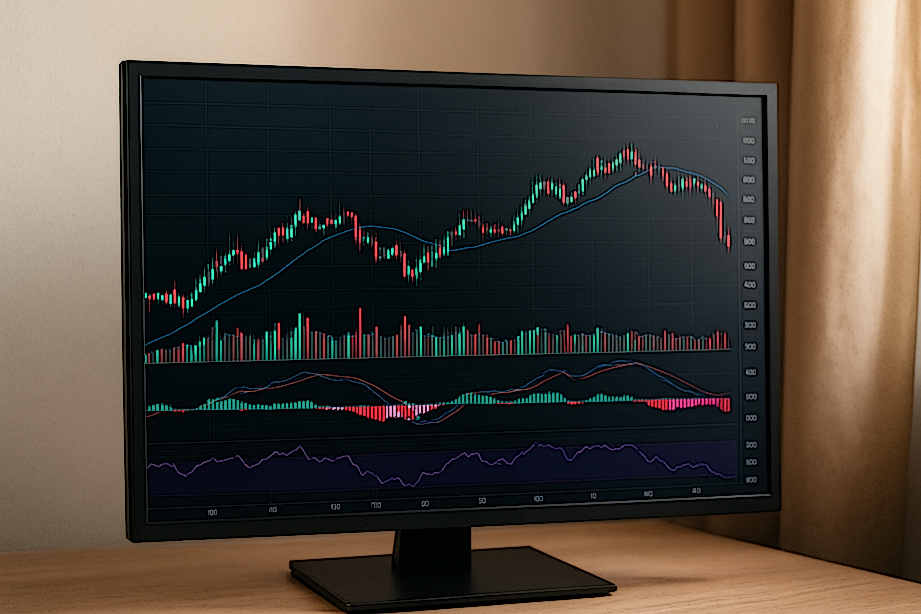
What is Scalping and its Pros and Cons
Scalping — taking dozens or even hundreds of tiny trades per day, often holding positions for seconds to a few minutes — is the most extreme form of day trading. It attracts a specific personality type and comes with a unique set of rewards and difficulties. This article is not financial advice or prediction of any asset but for common knowledge only.
What Scalping Means
Scalping is a trading strategy where traders aim to profit from very small price movements by making many quick trades throughout the day. It’s common in forex, stocks, and commodities, and requires speed, discipline, and strict risk management. Scalping appeals to traders who enjoy fast-paced decision-making and want to capitalize on market micro-movements. However, it’s risky without strict discipline, as transaction costs and sudden reversals can quickly wipe out gains.
- Short-term trading strategy: Focuses on tiny price changes, often lasting seconds to minutes.
- High trade frequency: Scalpers may place dozens or even hundreds of trades in a single day.
- Small profits per trade: The goal is to accumulate many small gains that add up over time.
- Technical analysis reliance: Scalpers use charts, indicators, and price action to spot micro-movements.
- Strict exit strategies: Quick stop-losses are essential to avoid large losses from sudden reversals.
Where Scalping Is Used
- Forex: Popular due to high liquidity and constant price movement.
- Stocks: Traders scalp volatile shares or use bid–ask spreads for small arbitrage.
- Commodities: Applied to gold, oil, or futures contracts with tight spreads.
Pros of Scalping
- Very Small Per-Trade Risk (when done correctly)
Because stops are usually 3–10 pips, a single losing trade rarely hurts the account significantly, giving a smoother equity curve on good days. - No Overnight Exposure
All positions are closed before the daily rollover, eliminating gap risk from news, elections, or central-bank surprises. - Compounding Frequency
Turning 2–6 pips into profit multiple times per session can compound quickly when the win rate is high and risk is tightly controlled. - Liquidity Is Your Friend
Scalpers almost always trade major pairs during London–New York overlap — the deepest liquidity pools on Earth — so slippage and requotes are minimal with good brokers. - Immediate Feedback
You know within minutes (sometimes seconds) whether your read of order flow, tape, or microstructure was correct. - Works Well with Automation
Many successful scalpers eventually code or buy simple EAs that execute the exact same setup hundreds of times with perfect discipline. - Low Capital Requirement for Some Styles
Pure spread-capture or rebate scalping on ECN accounts can be done with $1,000–$5,000 if risk per trade is kept tiny. - Emotion Can Be “Outsourced” to Rules
Strict mechanical entries/exits (e.g., “enter on break of 5-second high, exit at +5 pips or -4 pips”) reduce discretion and emotional interference.
Cons of Scalping
- Transaction Costs Destroy Profitability
Even 0.1–0.3 pip effective spread + commission on EUR/USD adds up when you do 50–300 round turns per day. A scalper who averages 3 pips gross profit but pays 1.2 pips in costs is already down 40 % before the market even moves. - Requires Near-Perfect Execution Environment
One bad fill, one 5-second lag, or one widened spread during news can wipe out an entire morning’s profit. - Extreme Screen Time and Physical Toll
For some, 4–8 hours of complete focus, staring at 1–15 second charts. Eye strain, neck pain, caffeine crashes, and adrenaline burnout are almost universal after 6–12 months. - Broker Hostility
Many retail brokers limit, or quietly sabotage consistent profitable scalpers (delayed execution, requotes, “toxic flow” routing). Only raw-spread ECN or institutional prime-of-prime accounts are truly safe. - Psychological Grind
Constant tiny wins interrupted by occasional stop runs create a unique form of mental fatigue. Many scalpers describe it as “death by a thousand cuts in reverse.” - Tiny Edge Magnified by Volume
The statistical edge on most scalping setups is razor-thin (51–54 % win rate with 1:1 or lower reward/risk). One week of slightly worse-than-average fills can erase a month of gains. - Regulatory and Tax Nightmares
In many countries, hundreds or thousands of trades per month trigger day-trader tax status, self-employment taxes, and endless paperwork. - Skill Decay and Obsolescence
Market microstructure changes (payment for order flow, new HFT algorithms, tick-size changes) can make a once-profitable scalping method obsolete in weeks. - Almost Impossible to Scale
A strategy that makes 6 pips on $100k risk-free cannot simply be multiplied to $10 million because liquidity and slippage explode at larger size. Most successful scalpers stay small or switch styles when accounts grow.
Pure scalping is one of the hardest ways to make money in markets. The handful who survive long-term usually:
- Trade on raw spreads with large rebates or prop-firm funding
- Use ultra-low latency setups (VPS next to broker servers)
- Have ice-cold discipline and treat it like an assembly-line job
- Accept that 3–8 % monthly returns with tiny drawdowns is already elite performance
For the vast majority, scalping becomes an expensive, high-stress game that teaches invaluable lessons about execution, spreads, and order flow — but not everyone can do it sustainably. If you want to do it sustainably, you must get yourself to be good at it.











2 comments