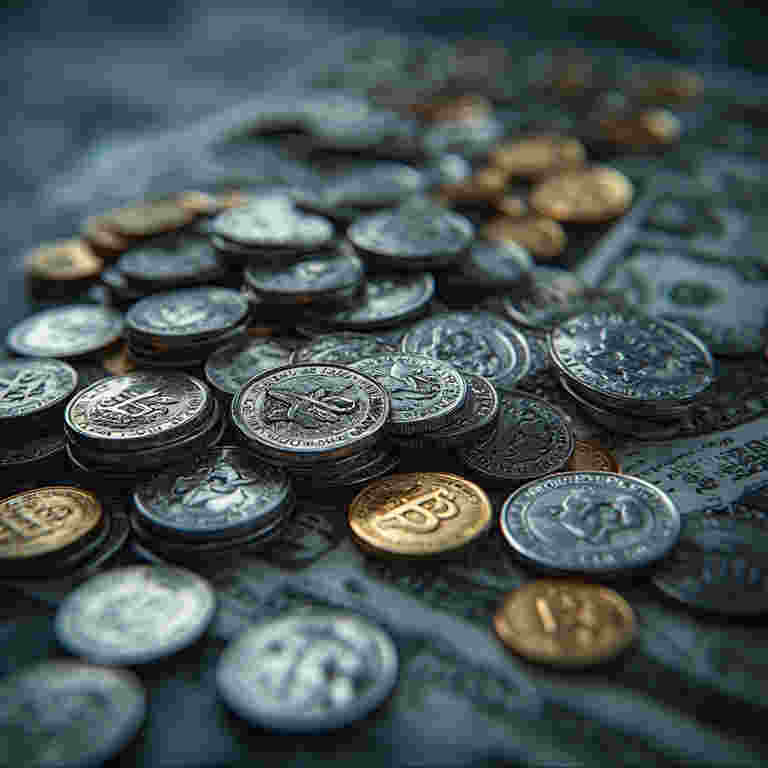
What is Safe-Haven Assets?
Understanding Safe-Haven Assets: Refuge in Uncertain Times
In financial markets, the concept of a “safe haven” refers to assets, currencies, or investments that are expected to retain or increase their value during periods of market turbulence, economic uncertainty, or geopolitical stress. These are the places where capital flows when investors seek protection from risk rather than pursuing growth or returns. Understanding what qualifies as a safe haven, why certain assets earn this designation, and how these dynamics play out across different market conditions provides insight into fundamental aspects of how global financial markets function. This article is not financial advice and did not predict or suggest any movement on assets value in the future.
Defining Safe-Haven Assets
A safe-haven asset is one that investors expect to hold its value or appreciate when broader markets are experiencing stress, uncertainty, or decline. The key characteristic is negative or low correlation with risky assets during crisis periods—when stocks fall, safe havens typically hold steady or rise.
It’s important to distinguish safe havens from other related concepts. A safe haven differs from a “safe” investment in the absolute sense. Even traditional safe havens can lose value under certain conditions; their designation relates to relative performance during specific stress scenarios rather than absolute safety in all circumstances.
Safe havens also differ from investments that simply have low volatility during normal market conditions. Some assets are stable during calm periods but fail to protect capital during crises. True safe-haven assets demonstrate their characteristics specifically when they’re most needed—during periods of heightened uncertainty or market stress.
The safe-haven designation isn’t permanent or universal. Assets considered safe havens can vary across different types of crises, different regions, and different time periods. What functions as a safe haven during one type of market stress might not during another, and historical safe havens can lose that status if underlying conditions change.
Gold: The Historical Safe Haven
Gold has functioned as a store of value for thousands of years and remains the most commonly cited safe-haven asset. Several characteristics explain gold’s enduring safe-haven status.
Gold has intrinsic value derived from its physical properties—scarcity, durability, divisibility, and universal recognition. Unlike fiat currencies or financial assets, gold doesn’t depend on any government, institution, or counterparty for its value. It can’t be printed, created digitally, or defaulted upon by a debtor.
Throughout history, gold has maintained purchasing power over very long time horizons. While its price fluctuates significantly over shorter periods, gold has broadly preserved value across centuries, civilizations, and monetary systems. This track record creates confidence that it will continue functioning similarly in the future.
Gold typically exhibits negative correlation with equity markets during stress periods. When stock markets experience sharp declines, gold often rises as investors seek safety. This behavior makes gold useful for portfolio diversification, providing ballast when other assets are declining.
Gold also tends to benefit from currency debasement concerns. When central banks engage in expansionary monetary policy, printing money or maintaining low interest rates, concerns about currency devaluation often drive interest in gold as an alternative store of value.
However, gold’s safe-haven properties aren’t absolute or consistent. During certain market stress periods, gold has declined alongside other assets as investors liquidate positions to raise cash. Gold also produces no income, meaning holders forgo yield available from interest-bearing assets. During periods of rising interest rates, this opportunity cost can make gold less attractive.
Government Bonds: Fixed Income Safety
Government bonds issued by stable, developed nations—particularly short to medium-term securities—function as important safe-haven assets. U.S. Treasury securities are the preeminent example, though bonds from countries like Germany, Japan, and Switzerland also exhibit safe-haven characteristics.
Several factors contribute to government bonds’ safe-haven status. Governments with their own currencies can theoretically always repay debt denominated in that currency by printing money if necessary. While this could create inflation, it eliminates default risk in a technical sense for bonds denominated in the issuing country’s currency.
Developed government bond markets are highly liquid, meaning investors can buy or sell large quantities quickly without significantly affecting prices. This liquidity is crucial during crises when investors need to reposition portfolios rapidly.
Government bonds also provide predictable income through coupon payments and return of principal at maturity. This certainty contrasts with equity investments where dividends and capital values can fluctuate significantly.
During economic downturns or market stress, government bonds often rally as investors flee from riskier assets. Central banks typically cut interest rates during recessions, which increases the value of existing bonds with higher coupon rates. This price appreciation during difficult economic periods reinforces bonds’ safe-haven status.
However, not all government bonds function as safe havens. Bonds from countries with questionable fiscal situations, high debt levels, political instability, or currencies perceived as vulnerable can become risky rather than safe during certain crises. The sovereign debt crisis in Europe demonstrated that even developed country bonds can lose safe-haven status when fiscal sustainability is questioned.
Different types of market stress also affect bonds differently. While bonds typically benefit from economic recessions or stock market declines, they can struggle during inflationary periods when rising prices erode the real value of fixed coupon payments. This demonstrates how safe-haven performance depends on the specific nature of the crisis.
The U.S. Dollar: Currency as Safe Haven
Despite concerns about U.S. fiscal policy, trade deficits, and political dynamics, the U.S. dollar has historically functioned as the world’s primary safe-haven currency. When global stress emerges, capital tends to flow toward dollar-denominated assets. (You may see article US Dollar index)
Several structural factors support the dollar’s safe-haven status. The U.S. economy is the world’s largest, providing a deep and broad foundation for the currency. U.S. financial markets are the most liquid globally, making it easy to move large amounts of capital in and out of dollar assets.
The dollar serves as the world’s primary reserve currency, held by central banks globally and used for international trade settlement, particularly for commodities like oil. This creates structural demand for dollars that persists across different market environments.
U.S. Treasury markets, denominated in dollars, provide a liquid destination for capital seeking safety. The combination of liquid currency markets and liquid government bond markets creates a complete safe-haven ecosystem around the dollar.
Geopolitical factors also contribute. The U.S. maintains relatively stable institutions, rule of law, and property rights that make dollar assets attractive during periods when these factors are questioned elsewhere. Despite domestic political disputes, the fundamental stability of American institutions generally exceeds that of most alternatives.
The dollar often strengthens during global crises even when those crises originate in or significantly affect the United States. This seemingly paradoxical behavior reflects the dollar’s role as the global financial system’s foundation—when the system experiences stress, participants seek the most liquid, most widely accepted unit of account, which remains the dollar.
However, the dollar’s safe-haven status isn’t guaranteed permanently. Large fiscal deficits, monetary expansion, or erosion of institutional stability could eventually undermine confidence. Other currencies have developed aspects of safe-haven characteristics, and the international monetary system continues evolving.
The Swiss Franc: Small Country, Safe Currency
The Swiss franc has long held safe-haven status despite Switzerland’s relatively small economy. Several unique factors contribute to this designation. (You may see article USD/CHF Currency pair)
Switzerland has maintained political neutrality for centuries, avoiding involvement in major conflicts and maintaining stable institutions across different global regimes and crises. This extraordinary stability creates confidence that Swiss assets will remain accessible and protected regardless of geopolitical developments.
The Swiss financial system is known for stability, conservative banking practices, and strong capital positions. Swiss banks weathered the 2008 financial crisis better than many peers, reinforcing confidence in the financial system.
Switzerland has historically maintained relatively sound fiscal and monetary policy, with low debt levels and a track record of controlling inflation. The Swiss National Bank has generally been perceived as cautious and conservative, though interventions to control the franc’s value have occasionally complicated this perception.
Swiss neutrality and banking secrecy laws (though modified in recent years) have made Switzerland a traditional destination for capital seeking protection from political instability, wealth confiscation, or currency controls elsewhere.
The franc often appreciates during European crises, as Switzerland’s position outside the European Union while geographically embedded in Europe makes it an alternative destination for capital concerned about eurozone stability.
However, the Swiss franc’s safe-haven status creates challenges for Switzerland’s export-dependent economy. Strong currency appreciation during crises makes Swiss exports less competitive. This has led to Swiss National Bank interventions to limit franc strength, including the famous 2015 removal of a franc-euro peg that caused dramatic currency movements.
The Japanese Yen: Unique Safe-Haven Dynamics
The Japanese yen exhibits safe-haven characteristics despite Japan’s enormous government debt and decades of economic stagnation. This seemingly contradictory status reflects unique factors. (You may see article USD/JPY Currency pair)
Japan runs persistent current account surpluses, meaning the country as a whole is a net creditor to the rest of the world. Japanese investors hold enormous foreign assets, and during crises, some of this capital is repatriated to Japan, creating yen demand.
Japanese government debt is primarily held domestically rather than by foreign investors. This reduces concerns about external funding and creates different dynamics than countries dependent on foreign capital.
The carry trade also influences yen safe-haven behavior. During calm periods, investors borrow yen at low interest rates to invest in higher-yielding assets elsewhere. When risk aversion increases, these carry trades are unwound, requiring yen purchase to repay loans. This technical factor amplifies yen strength during stress periods.
Japan’s status as a developed economy with liquid financial markets, despite its economic challenges, makes the yen a viable safe-haven destination when alternatives face questions.
However, Japan’s massive government debt, aging demographics, and economic stagnation create questions about the yen’s long-term safe-haven sustainability. The Bank of Japan’s aggressive monetary expansion and yield curve control policies also complicate the yen’s safe-haven characteristics.
Cash and Cash Equivalents
Physical cash and highly liquid cash equivalents represent the most fundamental safe haven—the ability to meet obligations and preserve optionality without depending on market functioning or counterparty performance.
During severe financial crises where even seemingly safe financial institutions face questions, physical cash provides certainty. The 2008 financial crisis saw moments where even bank deposits and money market funds faced concerns, driving demand for physical currency.
Cash also provides flexibility and optionality. Investors holding cash can wait for attractive opportunities without being forced to act, can meet unexpected obligations without selling assets at depressed prices, and can move quickly when opportunities arise.
However, cash has significant limitations as a safe haven. Inflation erodes purchasing power over time, meaning cash holders lose real value in inflationary environments. Cash also provides no return, creating opportunity costs when held for extended periods.
The form of cash matters significantly. Physical currency is cumbersome for large amounts and faces risks of theft or loss. Bank deposits are convenient but depend on banking system stability. Money market funds are liquid but, as 2008 demonstrated, can “break the buck” during extreme stress.
The currency denomination of cash holdings is crucial. Cash in a stable currency like dollars or Swiss francs behaves differently than cash in currencies experiencing devaluation or hyperinflation.
Real Estate: Tangible Asset Safe Haven?
Real estate is sometimes considered a safe-haven asset due to its tangible nature, but its characteristics are complex and context-dependent.
Real property can’t be created arbitrarily or destroyed easily, providing some inherent scarcity. In countries with strong property rights and rule of law, real estate ownership provides protection against certain types of political or economic instability.
Real estate can generate income through rents, providing cash flow during various market environments. Property in desirable locations may maintain value better than financial assets during certain crises.
However, real estate has significant limitations as a safe haven. It’s highly illiquid—selling property takes time and involves substantial transaction costs. During crises when liquidity is paramount, this illiquidity is a major disadvantage.
Real estate is also location-specific, performing very differently across regions, cities, and neighborhoods. Property in declining areas may lose value substantially regardless of broader market conditions. Real estate can’t be easily diversified like financial assets.
Property values can decline sharply during economic downturns, as the 2008 financial crisis demonstrated. Real estate also requires maintenance, property taxes, and ongoing costs that continue regardless of income generation or value.
The type of real estate matters enormously. Commercial property facing structural changes in how businesses operate may not preserve value. Residential property in areas with declining populations or employment faces different dynamics than property in growing regions.
Cryptocurrency: Emerging Digital Safe Haven?
Bitcoin and other cryptocurrencies have been proposed as potential safe-haven assets, though this designation remains controversial and unproven.
Proponents argue that Bitcoin’s fixed supply (only 21 million bitcoins will ever exist), decentralized nature, and independence from government control provide safe-haven characteristics similar to gold in some respects. The ability to hold wealth outside traditional financial systems and move it across borders without intermediaries could provide protection in certain scenarios.
Bitcoin’s performance during some risk-off episodes has shown occasional negative correlation with equities, and narratives about Bitcoin as “digital gold” have gained some traction among certain investor segments.
However, Bitcoin’s extreme volatility contradicts traditional safe-haven characteristics. Rather than preserving value during stress, Bitcoin has experienced dramatic drawdowns, sometimes coinciding with broader market declines. During the March 2020 COVID-19 market panic, Bitcoin fell sharply alongside equities, contradicting safe-haven behavior.
Bitcoin’s relatively short history means it hasn’t been tested across various crisis types or over extended time periods. Its correlation with risk assets appears unstable, sometimes behaving like a risk-on technology investment rather than a safe haven.
Regulatory uncertainty, technological risks, concentration of holdings, and questions about fundamental value all complicate Bitcoin’s potential safe-haven status. The infrastructure around cryptocurrency—exchanges, custody solutions, and regulatory frameworks—remains less developed than traditional safe-haven assets.
Whether cryptocurrencies eventually develop genuine safe-haven characteristics or remain primarily speculative assets is an open question that will be answered by their behavior across future crises and their evolution as the ecosystem matures.
Commodity Safe Havens Beyond Gold
While gold is the preeminent commodity safe haven, other commodities sometimes exhibit safe-haven characteristics in specific contexts.
Silver shares some of gold’s safe-haven properties, though with higher volatility and more industrial demand that complicates its safe-haven behavior. Silver often moves with gold during monetary stress but behaves differently during economic recessions that reduce industrial demand.
Platinum and palladium have monetary history but are primarily industrial metals now, limiting safe-haven characteristics. Their behavior depends heavily on automotive and industrial demand rather than safe-haven flows.
Agricultural commodities might provide inflation protection but generally don’t function as safe havens during market stress. Food security concerns during extreme crises could theoretically create safe-haven demand, but this hasn’t typically manifested in practical investment terms.
Energy commodities like oil are generally risk-on assets that decline during economic stress as demand concerns dominate. They can serve as inflation hedges but not typically as safe havens in the traditional sense.
Defensive Stocks and Sectors
Within equity markets, certain stocks and sectors are sometimes characterized as “defensive” or safe-haven investments, though this designation differs from true safe-haven assets.
Consumer staples companies producing essential goods like food, beverages, and household products typically see more stable demand during recessions. People continue buying toothpaste and groceries regardless of economic conditions. This stability can make these stocks relatively defensive, though they still typically decline during severe market stress, just less than more cyclical sectors.
Utilities providing electricity, water, and essential services have similar defensive characteristics due to stable demand and often regulated, predictable revenue streams. However, high debt levels typical in the utility sector can create vulnerability during certain crises.
Healthcare and pharmaceutical companies benefit from relatively inelastic demand—people need medical care and medications regardless of economic conditions. However, regulatory risks, patent expirations, and development pipelines create volatility not typical of traditional safe havens.
These defensive stocks are better characterized as lower-volatility or lower-beta investments rather than true safe havens. During severe market stress, most equities decline regardless of sector, though defensive sectors may decline less than cyclical ones. They don’t typically exhibit the negative correlation with broad markets that characterizes true safe-haven assets.
Geographic and Jurisdictional Safe Havens
Beyond specific assets or currencies, certain jurisdictions are considered safe havens for capital based on institutional stability, rule of law, and property rights protection.
The United States has traditionally served this role despite periodic domestic challenges. The depth and liquidity of U.S. markets, strong (if imperfect) rule of law, and relative institutional stability make the U.S. a destination for capital fleeing instability elsewhere.
Switzerland’s role extends beyond currency to its position as a stable jurisdiction for holding wealth. Banking infrastructure, political neutrality, and institutional stability make Switzerland attractive regardless of specific asset choices.
Singapore has developed as an Asian safe haven, with strong institutions, rule of law, business-friendly environment, and sophisticated financial infrastructure. Its position between East and West makes it attractive for capital from multiple regions.
The concept of jurisdictional safe havens relates to capital flight during political instability, war, or institutional breakdown. Even if specific assets or currencies aren’t threatened, concerns about property rights, wealth confiscation, or rule of law erosion can drive capital toward jurisdictions perceived as more stable.
However, no jurisdiction is absolutely safe. Political changes, policy shifts, or international pressure can affect even traditionally stable jurisdictions. Capital controls, tax changes, or modifications to banking secrecy can alter jurisdictions’ safe-haven characteristics over time.
How Safe Havens Change Across Different Crisis Types
An important nuance is that safe-haven performance varies depending on the type of crisis or stress affecting markets.
Financial Crisis: During banking or credit crises, government bonds and cash become paramount safe havens as concerns about counterparty risk and financial system stability dominate. Gold typically performs well as a store of value outside the financial system. The 2008 crisis exemplified this dynamic.
Inflationary Crisis: When inflation is the primary concern, traditional safe havens like bonds that provide fixed nominal returns actually lose real value. Gold and other tangible assets may better preserve purchasing power. The 1970s showed how different assets behave during inflationary stress compared to deflationary financial crises.
Geopolitical Crisis: Wars, political instability, or international conflicts create different safe-haven dynamics. Gold, Swiss francs, and assets in jurisdictions removed from the conflict zone typically benefit. The currency of countries directly involved in conflicts usually suffers rather than serving as safe havens.
See also : What Determines the Effectiveness of Safe-Haven Asset in Wartime
Currency Crisis: When specific currencies face devaluation or collapse, alternative currencies (typically dollar, franc, or yen) and gold become safe havens. Assets denominated in the weakening currency lose value regardless of their intrinsic characteristics.
Pandemic or Public Health Crisis: The COVID-19 pandemic created unique dynamics where traditional safe havens like government bonds and the dollar functioned as expected initially, though massive fiscal and monetary responses created complex second-order effects.
Understanding that different crises activate different safe-haven assets is crucial. An asset might preserve value during one crisis type while failing during another. This is why “flight to quality” flows shift between different safe havens depending on the specific nature of market stress.
The Liquidity Premium in Safe Havens
A crucial but sometimes overlooked aspect of safe-haven assets is liquidity—the ability to convert assets to cash quickly without significant price impact. During crises, liquidity often matters more than any other characteristic.
U.S. Treasuries, despite relatively low yields, command a premium partly due to their extraordinary liquidity. Investors can trade billions of dollars of Treasuries quickly with minimal price impact, a capability that becomes invaluable during market stress.
The dollar’s liquidity in foreign exchange markets exceeds all alternatives by substantial margins. This liquidity ensures that even very large capital flows can be executed without disrupting markets excessively.
Gold’s liquidity, while good, varies depending on the form. Physical gold is less liquid than financial gold exposure through ETFs or futures. During extreme crises, even gold markets can experience liquidity challenges, though typically less severe than most alternatives.
Assets that might seem safe during calm periods can lose that status during crises if liquidity evaporates. Corporate bonds, even high-quality ones, can become difficult to sell during stress. Real estate, as mentioned, is inherently illiquid. Even some government bonds from smaller countries can see liquidity dry up during crises.
The liquidity premium explains why the safest-haven assets typically offer lower returns during normal periods—investors are paying for the option to access liquidity when it’s most needed and most scarce.
Safe Haven Paradoxes and Limitations
Several paradoxes complicate the safe-haven concept and limit the protection these assets actually provide.
The correlation paradox: Assets exhibit safe-haven characteristics precisely when investors most need those characteristics, but this means massive capital flows toward these assets during crises. This concentrated demand can push safe-haven asset prices to levels that reduce their future return potential or even create bubbles that eventually burst.
The success paradox: If everyone attempts to reach the same safe haven simultaneously, the rush itself can create problems. Markets can become disorderly, spreads can widen despite high liquidity during calm periods, and prices can overshoot to levels that aren’t sustainable.
The return trade-off: Assets with the strongest safe-haven characteristics typically offer the lowest returns during normal periods. An investor holding substantial gold or low-yielding government bonds foregoes returns available from riskier assets. Over long periods, this opportunity cost compounds significantly.
The crisis specificity: As discussed, different crises favor different safe havens. An investor positioned in the “wrong” safe haven for a particular crisis type might not receive expected protection.
The timing problem: Moving to safe havens requires either (a) maintaining constant safe-haven allocation, accepting lower returns during normal periods, or (b) attempting to time moves into safe havens before crises, which is notoriously difficult. By the time crisis is obvious, safe havens may have already appreciated substantially.
Safe Havens in Portfolio Construction
Despite limitations, safe-haven assets play important roles in portfolio construction and risk management.
Diversification benefits arise from safe havens’ negative or low correlation with risk assets during stress periods. Even if safe havens underperform during normal conditions, their different behavior during crises can smooth portfolio returns and reduce maximum drawdowns.
Safe-haven allocations provide psychological benefits by reducing portfolio volatility and limiting wealth destruction during downturns. This can prevent panic selling of risk assets at market bottoms—a behavior that destroys wealth but that emotionally distressed investors often cannot avoid without appropriate portfolio buffers.
Safe havens provide dry powder for opportunistic deployment. Investors holding assets that preserve value during market declines have capital available to purchase risk assets when prices become attractive. This rebalancing behavior—selling safe havens that have held up to buy risk assets that have declined—can enhance long-term returns.
However, determining appropriate safe-haven allocation involves trade-offs. Too much safety means foregoing return potential during the majority of time when markets aren’t in crisis. Too little means excessive vulnerability during inevitable downturns.
The appropriate balance depends on individual circumstances including risk tolerance, time horizon, liquidity needs, and broader financial situations. There’s no universal correct answer, and the optimal allocation likely changes as circumstances change.
The Evolution of Safe-Haven Concepts
Safe-haven concepts evolve as financial systems, technologies, and global conditions change. Assets that functioned as safe havens in previous eras may not in future ones, while new safe havens may emerge.
The breakdown of the Bretton Woods system and the move to fiat currencies fundamentally changed safe-haven dynamics. Government bonds from major nations became more important as gold’s official monetary role declined, though gold retained significant safe-haven characteristics.
Financial innovation creates new instruments that might develop safe-haven properties. Exchange-traded funds made gold and other assets more accessible and liquid, potentially enhancing their safe-haven utility. Cryptocurrency represents a potential new category, though its safe-haven credentials remain unproven.
Geopolitical shifts affect safe havens. The rise of China and potential emergence of a more multipolar world could eventually change safe-haven flows if alternatives to the dollar-denominated system develop adequate depth and stability.
Environmental and social factors may influence future safe-haven concepts. If climate change creates certain physical risks, assets located in or dependent on vulnerable regions might lose safe-haven status while assets in more resilient locations gain it.
Technological risks including cyber threats could affect various safe havens differently. Digital assets face different vulnerabilities than physical ones, while traditional safe havens might gain advantages from not depending on potentially vulnerable technologies.
Practical Limitations and Realities
Several practical considerations affect how safe havens function in reality versus theory.
Accessibility: Not all investors can easily access all safe havens. Physical gold requires storage. Some currency markets have minimum transaction sizes. Real estate requires substantial capital. Certain jurisdictions restrict capital flows or asset ownership by foreigners.
Costs: Accessing and holding safe havens involves costs. Physical gold storage isn’t free. Currency exchange has spreads. Transaction costs for moving between assets during crises can be substantial. These costs reduce the net benefit of safe-haven allocations.
Regulatory considerations: Governments sometimes restrict capital flows during crises, potentially preventing access to foreign currency safe havens. Capital controls, though usually viewed as temporary, can trap capital and prevent protective positioning.
Scale matters: Safe-haven strategies that work for individual investors might not work at institutional scale. Very large pools of capital face more limited options for positioning and repositioning, particularly during crises when liquidity is reduced.
Crisis unpredictability: By definition, crises are unexpected in their timing, nature, and severity. Safe-haven positioning based on specific crisis expectations may prove inappropriate for the actual crisis that occurs.
The Human Element in Safe-Haven Behavior
Safe-haven behavior reflects not just rational economic calculation but human psychology, fear, and cultural factors.
Different cultures have different safe-haven preferences. Gold plays a larger role in certain Asian cultures where it has deep historical significance and cultural value beyond its financial characteristics. This cultural element creates regionally differentiated safe-haven demand patterns.
Fear and uncertainty drive safe-haven flows as much as rational analysis. The emotional need for security during frightening periods can override normal return considerations. This emotional component means safe-haven demand isn’t purely a function of mathematical optimization but of human need for psychological comfort.
Herding behavior affects safe havens just as it affects other market behaviors. When large numbers of investors simultaneously seek the same safe haven, flows can become self-reinforcing in the short term, pushing safe-haven assets to extreme valuations that eventually correct.
Generational experiences influence safe-haven preferences. Generations that experienced certain crises firsthand maintain different safe-haven preferences than those who only know of them historically. The Depression generation’s preferences differed from baby boomers’, whose preferences differ from millennials’.
Looking at Safe Havens Without Prediction
Understanding safe-haven assets doesn’t require predicting which crises will occur, when they’ll happen, or which safe havens will perform best. The concept itself—that certain assets tend to preserve value during stress while others typically decline—is a observable market phenomenon that has persisted across different periods and different crisis types.
The specific assets serving as safe havens, the degree of protection they provide, and the particular crisis scenarios where they function best all vary across time and circumstance. No safe haven is perfect, permanent, or universal.
For observers of financial markets, understanding safe-haven dynamics provides insight into how risk is priced, how investors behave during stress, and how global capital flows respond to uncertainty. These dynamics affect asset prices, currency values, and market behavior in ways that extend beyond any individual’s portfolio decisions.
The concept of safe havens reflects both market structure and human nature—the market structure that creates relatively safer and riskier assets, and the human nature that seeks security when faced with uncertainty and risk. Together, these forces create the patterns of capital flow and asset behavior that define safe-haven dynamics across financial markets.












2 comments