What is Aluminum and Its Roles as Asset, Commodity, and Others
Understanding Aluminum: The Metal of Modern Industry
Aluminum stands as the second most widely used metal globally by volume, surpassed only by iron and steel. Understanding what aluminum is, how it functions as a commodity, its role as an industrial material, its characteristics as an investment asset, and its broader economic significance reveals fundamental connections between materials science, industrial development, energy economics, and the infrastructure supporting contemporary manufacturing and transportation. Despite being the most abundant metallic element in Earth’s crust, aluminum’s unique properties and production requirements create distinct market dynamics that set it apart from other metals. This article is not financial advice and did not predict or suggest any movement on assets value in the future.
What Is Aluminum?
Aluminum (or aluminium in British spelling) is a chemical element (symbol Al, atomic number 13) classified as a post-transition metal. It appears as a silvery-white, lightweight metal with remarkable properties that make it indispensable for modern industry.
Physical and Chemical Properties
Lightweight: Aluminum has a density of 2.7 g/cm³, approximately one-third the density of steel or copper. This exceptional lightness relative to strength makes aluminum crucial for applications where weight reduction matters—aerospace, automotive, packaging.
Strength When Alloyed: Pure aluminum is relatively soft, but when alloyed with elements like copper, magnesium, manganese, silicon, or zinc, it achieves high strength-to-weight ratios rivaling or exceeding steel in some applications.
Corrosion Resistance: Aluminum naturally forms a thin, transparent oxide layer (aluminum oxide) when exposed to air. This layer protects the underlying metal from further corrosion, making aluminum highly durable in many environments.
Electrical Conductivity: While aluminum conducts electricity only about 60% as well as copper, its light weight means aluminum conducts electricity better than copper on a weight-for-weight basis, making it attractive for long-distance power transmission where weight matters.
Thermal Conductivity: Aluminum conducts heat well, making it useful for heat exchangers, radiators, cookware, and thermal management applications.
Malleability and Ductility: Aluminum can be easily shaped, rolled into thin foils, drawn into wires, or extruded into complex shapes, enabling diverse manufacturing processes.
Reflectivity: Aluminum reflects visible light and heat radiation efficiently, useful for mirrors, reflective insulation, and spacecraft thermal management.
Non-Magnetic: Aluminum is non-magnetic, valuable for applications requiring non-interference with magnetic fields.
Recyclability: Aluminum can be recycled indefinitely without quality degradation, with recycling requiring only 5% of the energy needed for primary production.
Discovery and Industrial History
Unlike copper, iron, or gold used for millennia, aluminum remained unknown until the 19th century despite being Earth’s most abundant metal. The difficulty wasn’t finding aluminum—it’s the third most abundant element in Earth’s crust—but extracting it from ore.
Aluminum was said to be first isolated in 1825 by Hans Christian Ørsted, but remained a rare, expensive curiosity until the Hall-Héroult process was invented independently by Charles Martin Hall (USA) and Paul Héroult (France) in 1886. This electrolytic process made commercial aluminum production viable, transforming aluminum from a precious metal more expensive than gold to an industrial commodity.
The 20th century saw aluminum production explode as its properties found countless applications—from aircraft during World Wars to beverage cans in peacetime, from building materials to electronics.
Aluminum as an Industrial Material
Modern industry depends on aluminum across numerous sectors, with applications leveraging its unique combination of lightness, strength, corrosion resistance, and workability.
Transportation
Aerospace: Aircraft construction pioneered large-scale aluminum use. Modern aircraft are primarily aluminum alloys, with a Boeing 747 containing approximately 75,000 kg of aluminum. Aluminum’s light weight directly translates to fuel savings and increased payload capacity.
Even as carbon fiber composites increasingly replace aluminum in cutting-edge aircraft, aluminum remains dominant in commercial aviation due to cost, proven reliability, and manufacturing infrastructure.
Automotive: Vehicles increasingly use aluminum for weight reduction improving fuel efficiency. Applications include:
- Engine blocks and cylinder heads
- Wheels and suspension components
- Body panels and frames
- Heat exchangers and radiators
Aluminum-intensive vehicles (like luxury cars and electric vehicles prioritizing range) can contain 200-300 kg of aluminum. The shift from steel to aluminum in automotive “lightweighting” represents a major demand driver.
Rail Transport: High-speed trains use aluminum extensively for body shells, reducing weight and enabling faster speeds with less energy consumption.
Marine: Boats and ships use aluminum alloys for hulls, superstructures, and components, valued for corrosion resistance in salt water, light weight, and ease of fabrication.
Packaging
Beverage Cans: The ubiquitous aluminum beverage can represents one of aluminum’s highest-volume applications. Globally, hundreds of billions of aluminum cans are produced annually.
Aluminum cans offer advantages: lightweight reducing transportation costs, complete barrier properties protecting contents, efficient recycling (can-to-can in 60 days), and consumer appeal.
Food Packaging: Aluminum foil, trays, and containers protect food from light, moisture, and contamination. Pharmaceutical blister packs use aluminum foil for product protection.
Industrial Packaging: Aluminum containers package paints, chemicals, and industrial products.
Packaging represents approximately 20-25% of global aluminum consumption, with recycling rates in developed countries exceeding 75% for beverage cans.
Construction and Architecture
Building Envelopes: Window frames, doors, curtain walls, and cladding systems extensively use aluminum extrusions. Aluminum’s corrosion resistance, light weight (reducing structural requirements), and ability to be formed into complex shapes make it ideal for modern architecture.
Roofing and Siding: Aluminum roofing provides lightweight, durable, recyclable covering. Aluminum siding offers low maintenance exteriors.
Structural Applications: While less common than steel for primary structure, aluminum finds use in space frames, bridges, and specialized structures where weight or corrosion resistance matter.
Infrastructure: Guardrails, lighting poles, signage, and various infrastructure components use aluminum.
Construction accounts for 20-25% of aluminum consumption, representing long-term demand that’s less cyclical than some sectors.
Electrical Applications
Power Transmission: High-voltage transmission lines increasingly use aluminum conductors, either pure aluminum or aluminum conductors with steel reinforcement (ACSR). While aluminum conducts electricity less efficiently than copper per unit volume, it conducts better per unit weight and costs less, making it economical for long-distance transmission where conductor weight matters.
Electrical Wiring: Building wiring sometimes uses aluminum, particularly in large-gauge applications, though residential wiring predominantly uses copper due to connection challenges with aluminum.
Transformer Windings: Large transformers sometimes use aluminum windings instead of copper for cost savings.
Busbars: Electrical distribution panels use aluminum busbars for power distribution within facilities.
Consumer Goods
Appliances: Refrigerators, washing machines, ovens, and other appliances incorporate aluminum for lightness, corrosion resistance, and heat management.
Electronics: Smartphones, tablets, laptops increasingly use aluminum housings for premium appearance, electromagnetic shielding, and heat dissipation.
Cookware: Aluminum’s thermal conductivity makes it popular for pots, pans, and baking sheets, often with non-stick coatings or anodized surfaces.
Furniture: Outdoor furniture leverages aluminum’s corrosion resistance and light weight.
Sporting Goods: Bicycle frames, tennis rackets, baseball bats, camping equipment use aluminum alloys for strength and light weight.
Industrial Machinery and Equipment
Heat Exchangers: Air conditioning, refrigeration, and industrial cooling systems use aluminum heat exchangers for thermal efficiency and corrosion resistance.
Pressure Vessels: Aluminum tanks and cylinders store compressed gases and liquids.
Industrial Equipment: Manufacturing machinery, material handling equipment, and processing systems incorporate aluminum components.
Specialized Applications
Defense: Military vehicles, aircraft, naval vessels, and equipment use aluminum alloys extensively.
Space: Spacecraft and satellites rely heavily on aluminum for structural components, fuel tanks, and thermal management.
Renewable Energy: Solar panel frames, wind turbine components, and supporting infrastructure use aluminum.
Aluminum Alloys
Pure aluminum is soft and relatively weak. Industrial applications use aluminum alloys—aluminum combined with other elements to enhance specific properties:
1000 Series (99%+ pure aluminum): High corrosion resistance, excellent workability, used for chemical equipment, reflectors.
2000 Series (copper alloys): High strength, used in aerospace, rivets.
3000 Series (manganese alloys): Moderate strength, excellent corrosion resistance, used in cooking utensils, heat exchangers.
5000 Series (magnesium alloys): High strength, excellent corrosion resistance, used in marine applications, automotive, pressure vessels.
6000 Series (magnesium-silicon alloys): Medium strength, excellent corrosion resistance, good extrudability, widely used in architectural applications, automotive components.
7000 Series (zinc alloys): Highest strength aluminum alloys, used in aerospace, high-stress applications.
Different alloys suit different applications, creating a sophisticated material selection process for engineers.
Aluminum Production Process
Understanding aluminum production is crucial for comprehending its market dynamics.
Bauxite Mining
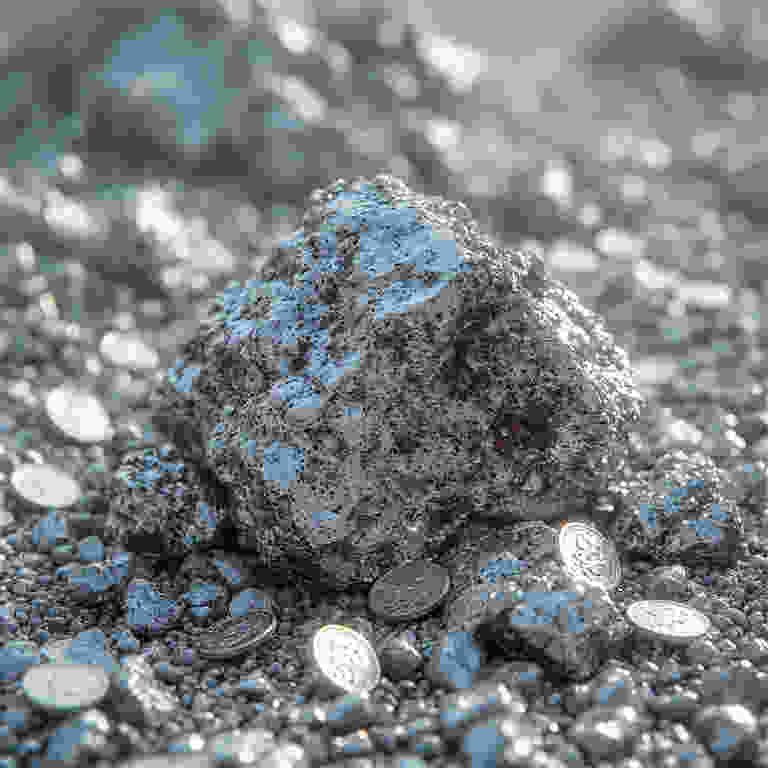
Aluminum production begins with bauxite ore—sedimentary rock containing 30-60% aluminum oxide (alumina) along with iron oxides, silicon dioxide, and other minerals.
Geographic Distribution: Major bauxite producers include Australia, Guinea, Brazil, Jamaica, and India. Bauxite deposits are widespread globally, with no significant supply concentration concerns.
Mining Methods: Primarily surface (open-pit) mining due to bauxite’s typical geological occurrence in layers near the surface.
Alumina Refining (Bayer Process)
Bauxite is refined into alumina (aluminum oxide, Al₂O₃) through the Bayer Process:
- Digestion: Bauxite is dissolved in hot caustic soda (sodium hydroxide) at high pressure, dissolving aluminum oxide while leaving impurities.
- Clarification: Impurities (red mud) are filtered out. Red mud disposal represents a significant environmental challenge.
- Precipitation: Aluminum hydroxide crystals are precipitated from the solution.
- Calcination: Aluminum hydroxide is heated to drive off water, producing pure white aluminum oxide powder (alumina).
Approximately 2 tons of bauxite yields 1 ton of alumina. Alumina is traded separately from aluminum, with its own market dynamics.
Aluminum Smelting (Hall-Héroult Process)
Alumina is reduced to metallic aluminum through the Hall-Héroult electrolytic process:
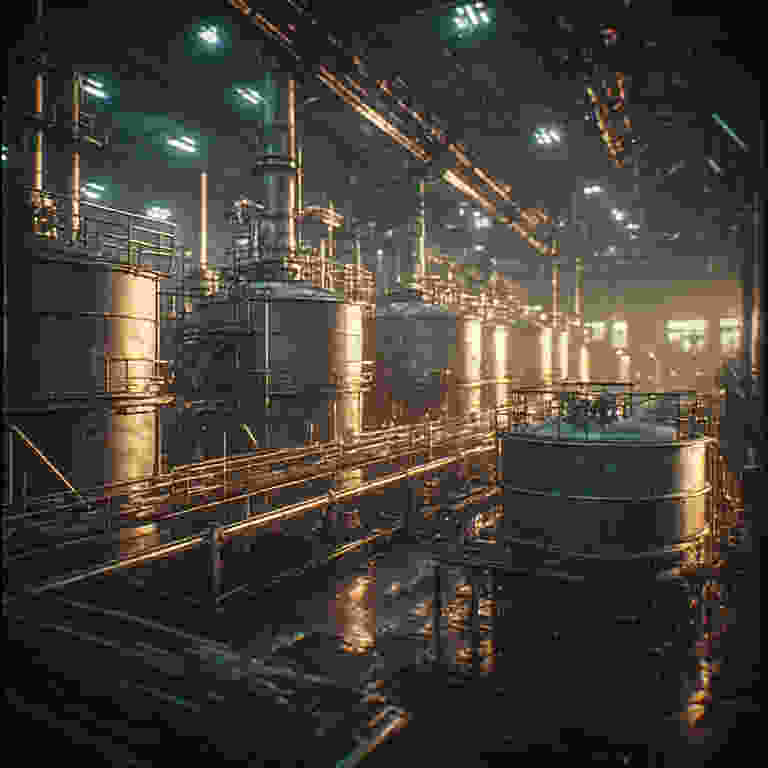
- Electrolysis: Alumina is dissolved in molten cryolite (sodium aluminum fluoride) in large electrolytic cells (pots).
- Current Application: Massive electrical currents (100,000+ amperes) pass through the solution, reducing alumina to metallic aluminum at the cathode while producing carbon dioxide at carbon anodes.
- Tapping: Molten aluminum collects at the bottom of the cell and is periodically tapped off.
- Alloying and Casting: Molten aluminum is alloyed with other elements as needed and cast into ingots, billets, or other forms for further processing.
Energy Intensity: This process is extraordinarily energy-intensive, requiring approximately 15,000 kWh of electricity to produce one ton of aluminum. This makes aluminum production one of the world’s largest industrial electricity consumers.
The energy intensity means:
- Aluminum production concentrates in regions with cheap electricity (hydroelectric, natural gas, coal)
- Electricity costs represent 30-40% of aluminum production costs
- Carbon emissions depend entirely on electricity source
- Recycling aluminum (requiring only 5% of primary production energy) is economically and environmentally compelling
Primary vs. Secondary Production
Primary Aluminum: Produced from bauxite ore through the full process described above. Energy-intensive and higher cost.
Secondary Aluminum: Produced by recycling scrap aluminum. Requires only melting and refining, using 95% less energy than primary production. Economically competitive with primary aluminum and environmentally preferable.
Global aluminum production includes roughly 70% primary and 30% secondary (recycled) metal, though this varies by region. Developed countries recycle higher percentages; developing countries with growing consumption rely more on primary production.
Aluminum as a Commodity
Aluminum trades as a global commodity with standardized specifications, organized exchanges, and transparent pricing.
Major Exchanges and Trading Symbols
London Metal Exchange (LME): The primary global marketplace for aluminum trading. Symbol: AH (for “Aluminum High-Grade”). LME contracts specify 25 metric tons of primary aluminum minimum 99.7% purity, deliverable at approved warehouses globally.
CME Group (COMEX): North American aluminum futures trading. Symbol: ALI. Contracts specify 44,000 pounds (approximately 20 metric tons).
Shanghai Futures Exchange (SHFE): China’s domestic aluminum trading platform. Given China’s dominant role in aluminum production and consumption (roughly 55% of global production and consumption), SHFE prices significantly influence global markets.
Contract Specifications
Standardized specifications ensure fungibility:
Purity: Minimum 99.7% aluminum content for primary aluminum contracts.
Form: Ingots, T-bars, sows meeting dimensional specifications.
Brands: Approved producers whose metal meets exchange quality standards.
Delivery: Physical delivery at designated warehouse locations globally.
Price Discovery
Aluminum prices emerge from continuous trading reflecting:
- Current supply-demand balance
- Inventory levels in exchange warehouses
- Expected future supply and demand
- Production costs (particularly electricity prices)
- Currency movements (aluminum priced in dollars globally)
- Macroeconomic conditions affecting industrial activity
- Chinese production and consumption patterns
LME Aluminum Price: Serves as global benchmark. Physical transactions worldwide typically reference LME prices with premiums or discounts for specific delivery terms, locations, or product forms.
Premiums: Physical aluminum trades at premiums above LME futures reflecting transportation, warehousing, financing, and regional supply-demand factors. Midwest Premium in the U.S., for example, represents additional cost above LME for physical delivery.
Warehouse Stocks and Market Dynamics
Exchange-reported warehouse inventories provide visible supply indicators. LME aluminum stocks have historically fluctuated from under 1 million tons during tight markets to over 5 million tons during oversupply periods.
However, substantial aluminum exists in unreported stocks:
- Producer inventories
- Consumer working inventories
- Strategic stockpiles (particularly Chinese government reserves)
- Financing deals (metal used as collateral)
These unreported stocks affect actual availability but aren’t publicly visible, creating information asymmetries.
Aluminum as an Economic Indicator
While not as famous as “Dr. Copper,” aluminum consumption correlates with industrial activity and economic growth.
Economic Activity Correlation
Manufacturing Indicator: Aluminum consumption in packaging, transportation, and consumer goods reflects manufacturing output and consumer demand.
Construction Proxy: Building and infrastructure use provides signals about construction activity.
Automotive Barometer: Automotive aluminum use tracks vehicle production volumes.
Geographic Economic Shifts: Aluminum production and consumption patterns reveal economic development—China’s massive capacity growth reflected its rapid industrialization.
Supply-Side Economic Information
Energy Economics: Aluminum production concentrates where electricity is cheap. Production location changes reveal energy cost geography.
Trade Patterns: Aluminum flows from production centers (often with cheap power) to consumption centers (manufacturing hubs), revealing global trade dynamics.
Government Policy: Production capacity additions often reflect government industrial policy, particularly in China where state influence is significant.
Aluminum as an Investment Asset
Aluminum functions as an investment asset, though less prominently than precious metals or even copper.
Investment Rationales
Industrial Demand Growth: Long-term demand growth from lightweighting trends, emerging market development, and infrastructure investment creates fundamental thesis.
Energy Exposure: Aluminum production’s energy intensity means aluminum prices reflect energy economics, providing indirect energy exposure.
Economic Cycle Exposure: As a cyclical industrial metal, aluminum provides leveraged exposure to economic cycles.
Diversification: Aluminum shows different return patterns than financial assets, though correlation with industrial commodities and economic cycles limits diversification benefits.
China Factor: Aluminum provides exposure to Chinese industrial policy, production decisions, and demand growth.
Investment Vehicles
Physical Aluminum: Buying and storing physical aluminum is impractical for most investors due to bulk, storage costs, and handling challenges. A cubic meter of aluminum weighs 2,700 kg, and storing it requires weatherproof facilities. Unlike precious metals, physical aluminum investment is rare.
Futures Contracts: LME or COMEX aluminum futures provide direct price exposure with leverage:
- Standardized contracts
- Margin requirements allowing leveraged positions
- Daily mark-to-market
- Rolling contracts forward creates roll costs/benefits
Requires understanding futures mechanics and active management.
Aluminum ETFs: Exchange-traded products providing aluminum exposure:
- Physically-backed ETFs: Rare for aluminum due to storage costs
- Futures-based ETFs: Hold rolling aluminum futures positions, subject to contango/backwardation effects
- Broad commodity ETFs: Include aluminum alongside other commodities
Mining and Smelting Stocks: Shares in aluminum producers like Alcoa, Rio Tinto, Rusal, Norsk Hydro, or China Hongqiao provide leveraged aluminum exposure:
- Operating leverage magnifies price moves
- Company-specific risks beyond aluminum prices
- Management quality, cost structure, and operational efficiency matter
- Political risks in production locations
- Correlation with equity markets reduces diversification
Aluminum-Heavy Sector Stocks: Aerospace companies, automotive manufacturers, or packaging companies have significant aluminum exposure, though mixed with other business factors.
Investment Characteristics
Volatility: Aluminum prices fluctuate significantly from:
- Economic cycle sensitivity (demand swings)
- Supply additions or curtailments
- Energy price changes affecting production costs
- Chinese policy and production decisions
- Currency movements
No Yield: Like other commodities, aluminum generates no income. Returns depend entirely on price appreciation.
Contango/Backwardation: Futures curves shift between contango (distant prices above near prices) and backwardation (near above distant), affecting returns from futures-based strategies.
Energy Price Correlation: Aluminum prices correlate with energy prices (electricity, natural gas, coal) due to production energy intensity.
Economic Sensitivity: Aluminum is cyclical—strong during economic expansions, weak during recessions—creating timing challenges for investors.
Aluminum Market Participants
Diverse participants create aluminum market dynamics.
Producers
Integrated Majors: Large companies conducting all production stages—bauxite mining, alumina refining, aluminum smelting. Examples: Rio Tinto, Alcoa, Rusal, Norsk Hydro, South32.
Chinese Producers: Companies like China Hongqiao, Chalco, and numerous others that dominate global production capacity.
Regional Producers: Companies focused on specific regions, often with access to cheap hydroelectric or other power.
Specialty Producers: Companies focusing on high-value alloys, specialized products, or specific market segments.
Consumers
Automotive Manufacturers: Major aluminum consumers for lightweighting.
Packaging Companies: Can manufacturers and food packaging companies.
Aerospace: Aircraft manufacturers like Boeing and Airbus.
Construction: Building material manufacturers and construction companies.
Electronics: Consumer electronics manufacturers.
Large consumers hedge price risk through futures, swaps, or long-term supply contracts.
Traders and Merchants
Commodity trading companies facilitate flows between producers and consumers:
- Glencore, Trafigura, Mercuria
- Provide financing, logistics, warehousing
- Take market positions and manage risk
- Enable global trade flows
Investors
Financial participants include:
- Commodity hedge funds
- Index funds with commodity allocations
- Proprietary trading firms
- Institutional investors seeking inflation hedges or diversification
Their buying and selling creates volatility beyond fundamental supply-demand.
China’s Dominant Influence
No discussion of aluminum is complete without addressing China’s overwhelming market influence.
Production Dominance
China produces approximately 55-60% of global primary aluminum, a concentration unmatched in other major commodities. This dominance stems from:
Cheap Energy: Coal-fired electricity in aluminum-producing provinces provided low-cost power.
Industrial Policy: Government support for aluminum capacity as part of industrial development strategy.
Domestic Demand: China’s manufacturing base and infrastructure development created massive internal demand justifying capacity.
Export Capacity: Even after satisfying domestic demand, Chinese capacity allows significant exports.
Market Impact
Chinese decisions affect global markets profoundly:
Production Policy: When China restricts production (environmental constraints, electricity shortages, policy mandates), global supply tightens and prices rise. When China adds capacity, global oversupply and price pressure result.
Strategic Reserves: Chinese government strategic stockpiling or reserve releases influence global availability.
Export Controls: Taxes, quotas, or restrictions on aluminum exports affect international markets.
Demand Swings: Chinese construction, automotive, and manufacturing demand fluctuations create global demand cycles.
Price Arbitrage
LME and SHFE aluminum prices don’t always align due to:
- Import/export restrictions
- VAT rebates and taxes
- Transportation costs
- Financing arrangements
These price differentials create arbitrage opportunities and affect global trade flows.
Environmental Considerations
Aluminum production creates significant environmental impacts while also enabling environmental benefits.
Production Impacts
Energy Consumption: Primary aluminum production’s extraordinary energy intensity makes it one of the largest industrial electricity consumers globally.
Carbon Emissions: Emissions depend entirely on electricity source:
- Hydroelectric smelters: Very low emissions
- Coal-powered smelters: High emissions (approximately 12 tons CO₂ per ton aluminum)
- Natural gas or renewable energy: Intermediate to low emissions
Red Mud Disposal: Bauxite refining generates “red mud” waste—alkaline slurry containing iron oxides and other residues. Safe disposal or beneficial use of billions of tons of accumulated red mud represents an ongoing challenge.
Water Usage: Alumina refining and smelting require substantial water for cooling and processing.
Habitat Impact: Bauxite mining creates land disturbance, though less severe than some other metal mining.
Recycling Benefits
Energy Savings: Recycling aluminum requires only 5% of primary production energy—a 95% energy reduction representing one of recycling’s most compelling cases.
Emission Reduction: Recycling’s energy savings translate to dramatic emission reductions versus primary production.
Economic Viability: Recycled aluminum is economically competitive with primary metal, creating market-based recycling incentives beyond environmental benefits.
Infinite Recyclability: Unlike some materials that degrade through recycling, aluminum can be recycled indefinitely without quality loss.
Developed countries achieve 75%+ recycling rates for aluminum beverage cans and 90%+ for automotive aluminum. These high rates reflect both environmental awareness and economic rationality.
Role in Sustainability
Transportation Efficiency: Aluminum’s lightweighting contribution to fuel efficiency reduces transportation emissions.
Renewable Energy Infrastructure: Solar panels, wind turbines, and electrical grid components use aluminum, enabling renewable energy deployment.
Packaging Efficiency: Aluminum cans’ light weight reduces transportation emissions for beverages.
Durability: Aluminum’s corrosion resistance extends product lifespans, reducing replacement cycles.
The paradox is that aluminum production creates environmental impacts but aluminum use enables environmental benefits, creating complex sustainability equations.
Economic Development and Aluminum
Aluminum production and consumption patterns reflect economic development stages.
Developing Economies
Growing economies increase aluminum consumption as:
- Infrastructure development requires building materials
- Rising vehicle ownership increases automotive demand
- Urbanization drives construction
- Manufacturing growth requires industrial materials
- Rising living standards increase consumer goods containing aluminum
Developed Economies
Mature economies typically show:
- Slower consumption growth
- Higher recycling rates
- Shift toward higher-value applications
- Focus on efficiency and lightweighting
- Service economy reducing materials intensity
Production Geography
Aluminum smelting concentrates where electricity is cheap:
- Iceland, Norway: Hydroelectric power
- Middle East: Natural gas
- China: Coal-fired power (historically)
- Canada: Hydroelectric power
This geography differs from consumption centers, creating international trade flows from power-rich to manufacturing-rich regions.
Aluminum in Different Economic Contexts
Aluminum’s role varies across economic environments.
Economic Expansions
Demand Growth: Construction, automotive production, manufacturing, and consumer goods all drive increasing aluminum consumption.
Capacity Additions: Producers invest in new capacity during strong demand, though long construction timelines mean supply lags demand.
Price Increases: Growing demand typically pushes prices higher until supply catches up.
Recessions
Demand Collapse: Cyclical sectors (automotive, construction, consumer durables) reduce aluminum consumption sharply.
Inventory Buildup: Production continues while consumption drops, causing inventory accumulation.
Production Curtailments: Smelters reduce or suspend production at high-cost facilities, though fixed costs incentivize maintaining operation if variable costs are covered.
Price Weakness: Oversupply and weak demand pressure prices downward.
Inflationary Periods
Cost Pressures: Rising energy costs increase aluminum production expenses, supporting price floors.
Real Asset Appeal: Tangible commodity characteristics make aluminum potentially attractive during inflation concerns.
Mixed Demand: High inflation often coincides with slower growth, creating conflicting demand pressures.
Looking at Aluminum Comprehensively
Aluminum represents the intersection of materials science, energy economics, industrial development, environmental considerations, and global trade. Its unique characteristics—light weight, corrosion resistance, strength when alloyed, infinite recyclability—combined with the energy-intensive production process create distinct market dynamics.
Understanding aluminum requires appreciating:
Material Properties: How aluminum’s characteristics enable applications from beverage cans to spacecraft.
Production Economics: The extraordinary energy intensity that makes aluminum prices energy-sensitive and production geography energy-driven.
Market Structure: Exchange trading with symbol AH on LME and ALI on COMEX, Chinese dominance, physical premiums.
Economic Significance: Consumption as industrial activity indicator, production revealing energy and policy dynamics.
Investment Characteristics: Cyclical industrial metal with energy exposure and China sensitivity.
Environmental Dimensions: Production impacts versus use benefits, recycling’s compelling economics and emissions reductions.
Development Role: Aluminum as enabler of transportation efficiency, infrastructure, and industrial growth.
The metal that was once more precious than gold now forms the foundation of modern transportation, packaging, and construction, demonstrating how production innovation can transform rare curiosities into ubiquitous materials supporting contemporary civilization—while the energy required to produce it from ore ensures that recycling remains both environmentally and economically essential.







1 comment