What Is a Reserve Currency?
Understanding Reserve Currency
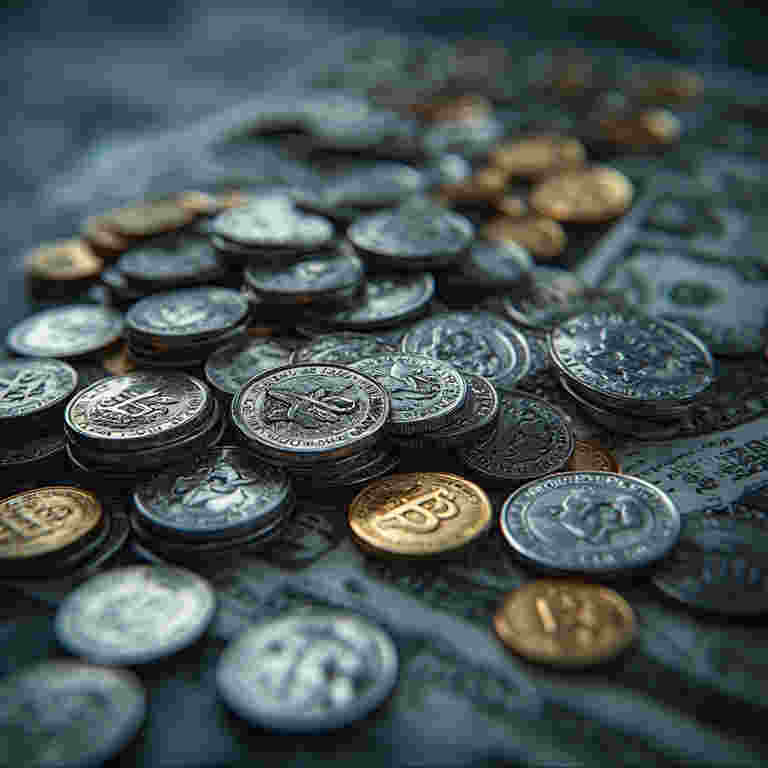
A reserve currency is a foreign currency that is held in significant quantities by central banks and other monetary authorities as part of their official foreign exchange reserves. These holdings serve as a cornerstone of international finance, enabling countries to conduct critical transactions such as settling payments for exports and imports between nations, facilitating global portfolio investments, and borrowing funds in international markets.
The currency that is widely accepted as the medium of exchange in international transactions is called an international reserve currency. All international prices, international contracts, and financial transactions are typically quoted in terms of reserve currency units. Since World War II, the U.S. dollar has prominently played this international reserve currency role, functioning as the linchpin of both world trade and the global financial system.
This is not Financial advice and not financial prediction, just and opinion.
Historical Evolution of Reserve Currencies
Reserve currencies have come and gone with the evolution of the world’s geopolitical order. Throughout history, several currencies have served this function:
| Period | Reserve Currency | Key Characteristics |
|---|---|---|
| 5th Century BCE | Greek drachma | Early international currency |
| Roman Empire | Roman denarii | Widespread across Mediterranean |
| 13th-16th Centuries | Venetian ducat, Florentine florin | Gold-based currency between Europe and Arab world |
| 16th-19th Centuries | Spanish silver dollar | First true global reserve currency recognized in Europe, Asia, and the Americas |
| 17th-18th Centuries | Dutch guilder | Reserve currency of somewhat lesser scope, used between Europe and Dutch colonial empire |
| 19th-Early 20th Centuries | British pound sterling | Primary reserve currency; over 60% of world trade invoiced in pounds |
| Mid-20th Century-Present | U.S. dollar | Dominant reserve currency since Bretton Woods system (1944) |
The Bretton Woods System and Its Legacy
In 1944, 44 nations signed the Bretton Woods Agreement, formally making the U.S. dollar the anchor of the post-war international monetary system. Under this system, the dollar was pegged to gold at $35 per ounce, and other currencies were in turn pegged to the dollar. This arrangement cemented the dollar’s dominance, and foreign central banks held dollars as the core reserve asset.
By the late 1960s, strains emerged. The U.S. had created large numbers of dollars globally through aid, military spending, and imports such that dollar liabilities abroad exceeded U.S. gold reserves. In 1971, facing a run on U.S. gold, President Nixon ended the dollar’s convertibility to gold, effectively breaking the Bretton Woods system and letting the dollar float. Despite this shift, the dollar retained its dominance—bolstered by confidence in U.S. institutions and the emergence of the petrodollar system, which ensured that oil exports from OPEC nations would be priced in dollars.
Current Composition of Global Reserves
As of recent data, the U.S. dollar remains the dominant reserve currency, though its share has declined from historical peaks. According to the IMF’s Currency Composition of Foreign Exchange Reserves (COFER), the allocation is approximately :
- U.S. Dollar: ~58-59% of global foreign exchange reserves
- Euro: ~20%
- Japanese Yen: ~5-6%
- Pound Sterling: ~4-5%
- Canadian Dollar: ~2-3%
- Australian Dollar: ~2%
- Chinese Renminbi: ~2-3%
- Other Currencies: ~3-4%
The dollar’s share has steadily declined from about 71% in 1999 to around 58% in recent years. However, research from the Federal Reserve Bank of New York indicates that this decline has been driven largely by a small set of countries rather than a widespread shift away from dollars. Switzerland’s accumulation of euros (due to its monetary policy framework) and Russia’s significant reduction in dollar holdings accounted for much of the decline. In fact, 31 of 55 countries for which data were available actually increased their U.S. dollar shares during the 2015-2021 period.
See also : The U.S. Dollar Index (DXY): The Dollar’s Measurer and Its Market Relationships
Why Currencies Become Reserve Currencies
According to the U.S. Department of the Treasury, several key criteria determine whether a currency can function as an international reserve currency :
- Large domestic economy – Provides economic weight and stability
- Significance in international trade – Widespread use in trade invoicing
- Size, depth, and openness of financial markets – Ability to absorb large capital flows
- Currency convertibility – Freedom to exchange without restrictions
- Use as a foreign exchange peg – Other countries anchor their currencies to it
- Stability of macroeconomic environment and policies – Predictable institutions and governance
The U.S. dollar maintains these advantages through robust economic growth, democratic institutions, property-rights standards, and a degree of inertia—the difficulty in changing the structure of global finance revolving around the dollar and U.S. capital markets.
The Triffin Dilemma: The Paradox of Reserve Currency Status
The Triffin Dilemma, identified by economist Robert Triffin in 1960, describes a fundamental paradox facing the issuer of a reserve currency. To satisfy other countries’ demand for foreign exchange reserves, the issuer must supply large quantities of its currency to the world. In practice, this means the reserve currency country must run net international outflows of its currency, typically through a trade deficit.
This creates a conflict: the U.S. must run deficits to provide liquidity to the world, but persistent deficits can undermine confidence in the currency long-term. This trade-off between short-term global liquidity needs and long-term stability is the essence of the Triffin Dilemma. The dilemma explains why reserve currency countries tend to run persistent trade deficits—they are effectively supplying the world with the currency it demands.
Role in the General Economy
Benefits to the Issuing Country
The country whose currency serves as the primary reserve enjoys significant advantages :
- Lower borrowing costs: The U.S. can borrow internationally in its own currency at lower interest rates. Some estimates cite about 1% in interest rate savings, which—multiplied by the roughly $8 trillion of U.S. Treasuries held overseas—translates to about $80 billion in annual savings for the U.S. government.
- Seigniorage revenue: The purchasing power created through printing new currency. Since about half of the $2.3 trillion in U.S. bills and coins is held overseas, the portion of new money going overseas amounts to about $35 billion annually.
- Ability to run deficits: The U.S. can consume more than it produces by borrowing from abroad.
- Geopolitical influence: The ability to impose financial sanctions and leverage the currency as an instrument of power.
- Safe-haven demand: During crises, capital flows into dollar assets, putting downward pressure on U.S. interest rates when policy easing might be needed.
Costs to the Issuing Country
The reserve currency status also imposes costs :
- Persistent trade deficits: The U.S. must supply dollars to the world, resulting in chronic trade imbalances
- Stronger currency: Global demand supports a stronger dollar, making U.S. exports relatively expensive and imports cheaper—further widening the trade deficit
- External indebtedness: The U.S. accumulates debt to foreigners, shifting from a net creditor in 1985 to a net debtor nation
- Policy constraints: Domestic policy decisions have global repercussions, requiring careful management
Benefits to the Global Economy
For the global economy, reserve currencies provide essential functions :
- Liquidity for international trade: A widely accepted medium of exchange facilitates global commerce
- Pricing benchmark: Commodities like oil and gold are priced in dollars, creating a common reference point
- Store of value: Safe assets for central banks and investors to protect wealth during uncertainty
- Anchor for exchange rates: Many countries peg their currencies to the dollar for stability
Role for Investors and Traders
Reserve currency dynamics significantly influence financial markets across asset classes.
For Forex Markets
The reserve currency status creates specific dynamics in currency markets:
Major Forex Pairs Link: The most heavily traded forex pairs directly involve the U.S. dollar as the primary reserve currency. Major pairs include:
- EUR/USD (euro/dollar) – The most traded pair globally
- USD/JPY (dollar/yen)
- GBP/USD (pound/dollar)
- USD/CHF (dollar/Swiss franc)
These pairs account for the majority of daily forex transactions, reflecting the dollar’s central role. Commodity currencies (Australian dollar, Canadian dollar) are also heavily influenced by dollar dynamics.
Currency Strength Interpretation: When analyzing forex, traders consider that the dollar’s movements affect all currency pairs. A strong dollar typically means weakness in other currencies, and vice versa. The dollar’s status as the primary reserve currency means that global capital flows—whether risk-on or risk-off—often manifest as dollar movements.
Safe-Haven Flows: During geopolitical or financial crises, capital tends to flow into dollars as the ultimate safe haven, strengthening the currency against most others. This “flight to safety” dynamic is a consistent feature of forex markets.
Reserve Diversification Signals: When central banks signal intentions to diversify reserves away from dollars (e.g., into euros or gold), it can create bearish sentiment for the dollar and support for other currencies.
For Stock Markets
Reserve currency dynamics affect equities in several ways:
Multinational Exposure: A strong dollar typically pressures U.S. multinational companies because their foreign earnings translate into fewer dollars. Companies with significant international revenue may see earnings headwinds when the dollar strengthens.
Sector Rotation: Investors may shift focus from large-cap multinationals to small and mid-cap companies that generate most earnings domestically during periods of dollar strength, as these are less impacted by currency fluctuations.
International Competitiveness: A weaker dollar makes U.S. exports more competitive globally, potentially benefiting industrial and manufacturing companies. Conversely, a strong dollar can make foreign goods cheaper for U.S. consumers, potentially pressuring domestic producers.
Capital Flows: Dollar strength often coincides with capital flowing into U.S. assets, supporting equity valuations. Dollar weakness may accompany capital outflows, potentially pressuring prices.
Emerging Market Sensitivity: Emerging market equities generally show inverse correlation with the U.S. dollar. Many emerging markets borrow in dollars, so a stronger dollar makes their debt more expensive to service, dragging money away from other investments and pressuring their stock markets.
For Bond Markets
The bond market is perhaps most directly influenced by reserve currency dynamics:
Demand for U.S. Treasuries: Global central banks hold nearly $7 trillion in U.S. dollar assets, predominantly Treasury securities. This consistent demand keeps U.S. interest rates lower than they might otherwise be. Any indication that central banks might reduce dollar holdings can put upward pressure on yields.
Safe-Haven Flows: During crises, global investors flock to U.S. Treasuries, driving yields lower. This “flight to quality” reinforces the dollar’s reserve status while providing financing advantages to the U.S. government.
Yield Differentials: The interest rate differential between U.S. bonds and other sovereign bonds influences currency values. Higher U.S. yields typically attract capital, supporting the dollar.
Inflation Expectations: As the currency in which commodities are priced, dollar weakness can contribute to inflationary pressures, affecting nominal bond yields and inflation-protected securities.
Credit Markets: The dollar-denominated investment-grade credit market is around three times larger than its euro-denominated counterpart, making it attractive to global reserve managers and providing deep liquidity.
For Commodity Markets
Commodities have a unique relationship with reserve currencies, particularly the U.S. dollar:
Dollar Denomination: Nearly every commodity—oil, gold, copper, agricultural products—is priced in dollars. This means that when the dollar strengthens, commodities become more expensive for buyers using other currencies, potentially reducing demand and pressuring prices.
Inverse Correlation: Commodity prices typically move inversely to the dollar. A weaker dollar supports commodity prices, while a stronger dollar tends to pressure them.
Gold as Special Case: Gold holds a unique position as both a commodity and a reserve asset. Central bank gold purchases have surged in recent years—exceeding 1,100 tons in 2022 and remaining elevated—driven by concerns about inflation, financial uncertainty, and sanctions risk. These purchases provide underlying support for gold prices.
Hedging Function: Investors may use commodities, particularly gold, as hedges against dollar weakness or as alternatives to dollar assets during periods of dollar confidence concerns.
Petrodollar System: The pricing of oil in dollars creates structural demand for dollars globally, as oil-importing countries must acquire dollars to pay for energy imports.
Link to Major Forex Pairs
The reserve currency status of the dollar directly shapes the major forex pairs traded globally. The most liquid pairs all involve the dollar:
| Currency Pair | Nickname | Characteristics |
|---|---|---|
| EUR/USD | Fiber | Most traded pair; represents two largest economic zones; highly sensitive to interest rate differentials |
| USD/JPY | Gopher, Ninja | Reflects dollar-yen relationship; sensitive to risk sentiment and carry trade dynamics |
| GBP/USD | Cable | Historical significance; often more volatile than EUR/USD |
| USD/CHF | Swissie | Swiss franc as traditional safe haven; inverse correlation with EUR/USD often observed |
| USD/CAD | Loonie | Heavily influenced by oil prices as Canada is major oil exporter |
| AUD/USD | Aussie | Commodity currency; sensitive to China growth and metals prices |
| NZD/USD | Kiwi | Commodity currency; sensitive to agricultural prices and risk sentiment |
These pairs account for the vast majority of daily forex transaction volume, reflecting the dollar’s central role in the global financial system. The euro, as the second-most held reserve currency, naturally pairs with the dollar as the primary quote.
Recent Trends and Future Considerations
Gradual Diversification
The share of the U.S. dollar in global central bank reserves has steadily declined over the years :
- 2000-2009: 66.1% average
- 2010-2019: 62.9% average
- 2020-2024: 58.5% average
Similarly, the euro’s share has declined from 24.0% (2000-2009) to 20.4% (2020-2024). Meanwhile, other currencies have gained ground:
- Japanese Yen: Rose from 4.2% (2000-2009) to 10.6% (2020-2024)
- British Pound: Increased from 3.6% to 4.8% over the same period
- Chinese Renminbi: Gradually increasing, though still modest at ~2-3%
Gold Accumulation
Central bank gold purchases have surged dramatically :
- 2022: Nearly 1,100 tonnes (more than double previous year)
- 2023: Approximately 1,000 tonnes
- 2024: Similar elevated levels
Factors driving this demand include :
- Gold’s perceived value as an inflation hedge
- Gold’s use as a risk hedge amid economic and financial uncertainty
- Gold’s role as a sanctions hedge (no issuing government), particularly salient since Russia’s invasion of Ukraine in 2022
However, gold’s share of aggregate reserves remains modest at about 10-15%, roughly its level in the early 2000s. More than half of reported gold accumulation since 2009 came from just two countries: China and Russia.
Geopolitical Considerations
Recent research suggests that geopolitical alignment with the U.S. influences reserve composition. Countries less aligned with the U.S.—as proxied by their voting agreement at the United Nations—tend to hold smaller dollar shares and have been larger gold purchasers in recent years. The freezing of Russian central bank assets following the 2022 Ukraine War has prompted many countries to reconsider the risks of concentrated dollar holdings.
Conclusion
Reserve currencies, particularly the U.S. dollar, form the bedrock of the international financial system. They enable global trade, provide a store of value for central banks, and serve as the reference point for pricing assets across all financial markets. For investors and traders, understanding reserve currency dynamics is essential because dollar movements affect every asset class—from forex pairs and stocks to bonds and commodities. The dollar’s dual role as America’s currency and the world’s currency creates complex dynamics that ripple through global markets, influencing returns, valuations, and portfolio strategies across borders.













2 comments