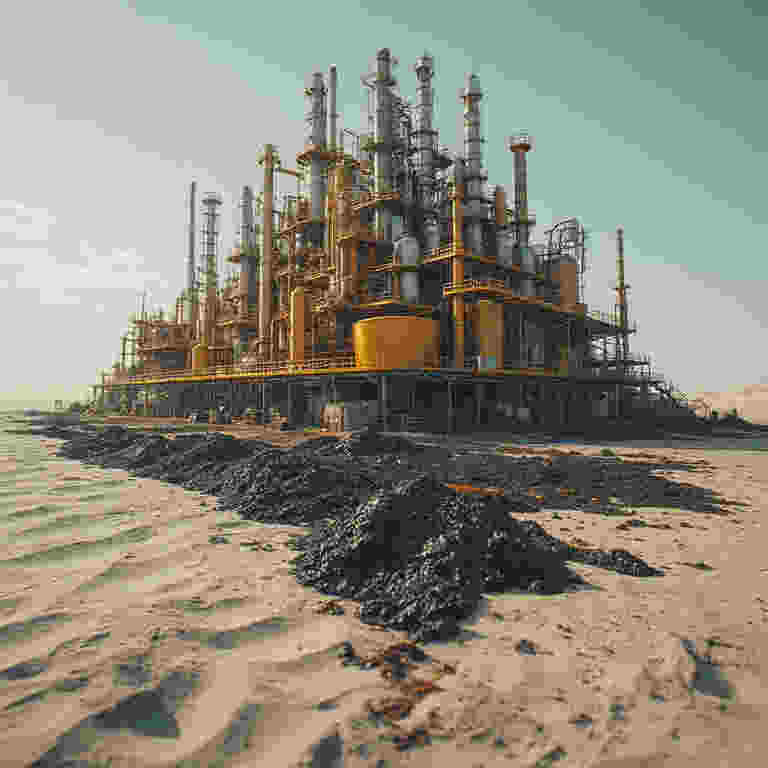
What are Energy Commodities?
Energy Commodities: Powering the Global Economy
Energy commodities are raw materials that can be processed, refined, and consumed to produce energy for industrial, commercial, residential, and transportation purposes. They are fundamental physical assets that form the backbone of global economic activity and are actively traded in financial markets. Unlike manufactured goods, these commodities are largely standardized and interchangeable (fungible), making them suitable for trading on organized exchanges.
This article is not financial advice or prediction of any asset but for common knowledge only.
Major Types of Energy Commodities
1. Crude Oil
The most widely traded energy commodity, crude oil is an unrefined fossil fuel extracted from geological formations. It is the base product refined into gasoline, diesel, jet fuel, and petrochemicals.
- Key Benchmarks: West Texas Intermediate (WTI) and Brent Blend are the primary global pricing references.
- Characteristics: Classified by density (light/heavy) and sulfur content (sweet/sour), which affect refining complexity and value.
2. Natural Gas
A gaseous fossil fuel primarily composed of methane. It is used for heating, electricity generation, and as an industrial feedstock.
- Key Benchmarks: Henry Hub (U.S.) and Title Transfer Facility (TTF – Europe) are major pricing hubs.
- Characteristics: Transportation is complex, requiring extensive pipeline networks or liquefaction into LNG (Liquefied Natural Gas) for seaborne trade.
3. Refined Petroleum Products
These are outputs from processing crude oil at refineries.
- Gasoline (Petrol): Used primarily as motor fuel.
- Heating Oil / Diesel: Used for transportation fuel (diesel), heating, and industrial power.
- Jet Fuel: Used for aviation.
- Residual Fuel Oil: A heavier product often used in shipping and industrial boilers.
4. Coal
A solid fossil fuel used mainly for electricity generation and steel production.
- Types: Primarily categorized by energy content and carbon purity—Thermal (Steam) Coal for power and Metallurgical (Coking) Coal for steelmaking.
- Characteristics: Geographically diverse reserves, but bulk transportation costs significantly impact delivered prices.
5. Electricity
Unique among commodities as it is produced and consumed instantaneously. It is a secondary energy source generated from primary fuels (coal, gas, nuclear, renewables).
- Characteristics: Prices are highly localized and time-sensitive, varying by grid region, time of day, and season. It cannot be economically stored on a large scale.
6. Emerging and Environmental Commodities
In some region, these are counted as commodities.
- Carbon Emissions Allowances (e.g., EU ETS): Tradable permits representing the right to emit a specific amount of carbon dioxide, created under cap-and-trade regulatory systems.
- Renewable Energy Certificates (RECs): Tradable instruments certifying that electricity was generated from a renewable source.
- LNG (Liquefied Natural Gas): Increasingly traded as a globally fungible commodity, distinct from pipeline natural gas.
Role in Business and Industry
- Primary Input: Energy commodities are essential operational inputs for nearly every industry, from manufacturing and agriculture to technology and services. Their cost directly impacts production expenses and profitability.
- Strategic Planning: Businesses engage in long-term energy procurement and hedging to manage budget certainty and secure supply chains.
- Logistics & Transportation: The entire global logistics network—shipping, trucking, aviation—is fundamentally powered by refined petroleum products.
- Policy and Regulation: Industrial competitiveness and location decisions are heavily influenced by local energy costs and environmental regulations linked to commodity use.
Role in Financial Markets
- Asset Class: Energy commodities constitute a major asset class for institutional investors, offering portfolio diversification as their returns historically have a low correlation with stocks and bonds.
- Price Discovery: Global futures exchanges (e.g., NYMEX, ICE) provide transparent, market-driven prices that serve as global benchmarks for physical transactions.
- Risk Management Tool: The derivatives markets (futures, options, swaps) allow producers, consumers, and merchants to hedge against adverse price movements, transferring price risk to financial speculators.
- Economic Indicator: Energy prices are closely watched as leading indicators of global economic health (demand) and geopolitical stability (supply).
Commodity Futures for Energy
Commodity futures are standardized legal agreements to buy or sell a specific quantity of a commodity at a predetermined price on a set future date. They are traded on regulated exchanges.
- How They Function for Energy:
- Standardization: Each contract specifies the quality, quantity, delivery location, and month (e.g., 1,000 barrels of WTI crude for delivery in Cushing, Oklahoma, in December).
- Centralized Trading: Provides liquidity, transparency, and counterparty credit safety via the exchange’s clearinghouse.
- Settlement: Can be settled by physical delivery of the commodity or by cash payment (financial settlement), with most contracts closed out before the delivery date.
- Primary Purposes:
- Hedging: An airline may buy oil futures to lock in future fuel costs. An oil producer may sell futures to lock in a selling price.
- Speculation: Traders and investment funds may buy or sell futures to profit from anticipated price changes without intending to take physical delivery.
- Price Discovery: The continuous trading of futures establishes the market’s consensus view of future supply, demand, and prices.
Key Exchanges and Contracts: The Intercontinental Exchange (ICE) and CME Group (via the New York Mercantile Exchange, NYMEX) are dominant. Key futures include:
- Crude Oil: WTI (NYMEX), Brent (ICE)
- Natural Gas: Henry Hub (NYMEX)
- Gasoline & Heating Oil: RBOB Gasoline, ULSD (NYMEX)
- Coal: API2 (Europe) and API4 (South Africa) contracts on ICE
- Electricity: Regional contracts (e.g., PJM, ERCOT) on ICE/NYMEX
- Carbon: EU Emission Allowances (EUA) on ICE
Conclusion
Energy commodities are the lifeblood of modern civilization, directly powering economic activity and serving as a critical, volatile component of global financial markets. Their physical characteristics, geopolitical supply chains, and complex derivative markets create a dynamic ecosystem where physical needs and financial mechanisms are deeply intertwined. The futures markets provide the essential infrastructure for price transparency and risk management in this vital sector.







2 comments