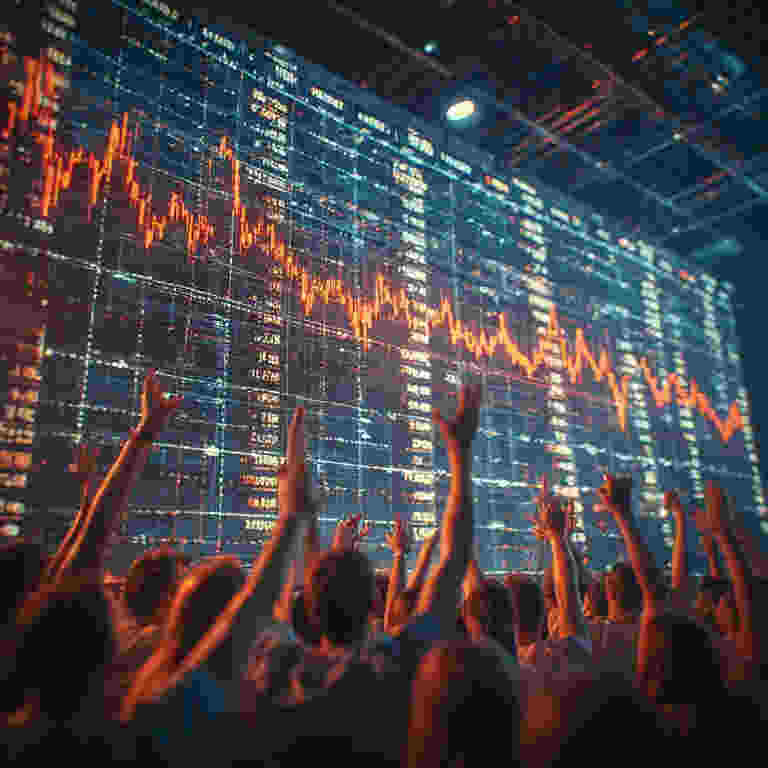
The Role of Cognitive Bias in Modern Trading
Cognitive biases are systematic patterns of deviation from rational judgment that affect decision-making across all areas of human life. In trading—whether stocks, forex, commodities, or cryptocurrencies—these mental shortcuts and unconscious tendencies can significantly influence how individuals analyze information, make decisions, and respond to outcomes. Understanding these biases doesn’t eliminate them, but awareness can help traders recognize when psychological factors might be affecting their judgment. This article is not for financial advice but for informative purpose only.
What Are Cognitive Biases?
Cognitive biases are mental shortcuts, or heuristics, that the human brain uses to process information quickly and make decisions efficiently. While these shortcuts often serve us well in everyday life, they can lead to systematic errors in judgment, particularly in complex environments like financial markets where information is abundant, uncertain, and emotionally charged.
These biases aren’t character flaws or signs of stupidity—they’re built into how human brains process information. Even highly intelligent, well-educated individuals fall prey to cognitive biases because they operate largely at an unconscious level. The field of behavioral economics, pioneered by researchers like Daniel Kahneman and Amos Tversky, has identified dozens of these biases and demonstrated their pervasive influence on economic decision-making.
See also: How “I think it was easy” Destroy Most Forex and Stock Traders.
Why Trading Is Particularly Susceptible to Cognitive Bias
Financial markets create an environment where cognitive biases can flourish and significantly impact outcomes. Several factors make trading especially vulnerable to these psychological influences.
- Markets are inherently uncertain, with outcomes influenced by countless variables that no individual can fully comprehend or predict. This uncertainty creates anxiety and stress, which can intensify reliance on mental shortcuts rather than careful analysis.
- Trading involves real financial consequences that trigger strong emotional responses. The prospect of gains activates reward centers in the brain, while potential losses trigger fear and aversion. These emotions can override rational decision-making processes.
- Markets provide constant feedback through price movements, creating numerous opportunities for biases to be reinforced or challenged. The immediate nature of this feedback can create powerful psychological loops that strengthen biased thinking patterns.
- The complexity and volume of information available to traders can be overwhelming. When faced with more data than can be rationally processed, individuals naturally rely more heavily on heuristics and biases to navigate decisions.
Below are Major Cognitive Biases covered here:
- Confirmation bias
- Anchoring bias
- Loss aversion
- Overconfidence bias
- Recency bias
- Hindsight bias
- Herd mentality and social proof
- Availability bias
- Gambler’s fallacy
- Sunk cost fallacy
- Disposition effect
- Narrative fallacy
- Status quo bias
- Self-attribution bias
- Endowment effect
- Information overload
Confirmation Bias: Seeing What We Want to See
Confirmation bias is the tendency to search for, interpret, favor, and recall information in a way that confirms pre-existing beliefs or hypotheses. In trading, this manifests when individuals selectively notice information that supports their existing position while disregarding contradictory evidence.
A trader who has taken a long position in a stock might pay more attention to positive news about the company while dismissing or minimizing negative reports. They might interpret ambiguous information as supporting their bullish thesis simply because they want the trade to succeed. This selective attention can prevent traders from recognizing when their initial analysis was wrong or when circumstances have changed.
Confirmation bias affects not just how traders interpret current information but also how they remember past events. Traders might recall past successful predictions that confirmed their beliefs while forgetting instances when their analysis proved incorrect. This selective memory reinforces confidence in flawed analytical approaches.
In forex trading, a trader convinced that a particular currency pair will rise might focus exclusively on economic data supporting that view—positive GDP numbers, favorable interest rate differentials, or political stability—while downplaying contradictory signals like increasing trade deficits or political uncertainty.
Anchoring Bias: The First Number Sticks
Anchoring bias occurs when individuals rely too heavily on the first piece of information encountered when making decisions. In trading, this often manifests through fixation on specific price levels, purchase prices, or initial valuations.
A classic example involves traders fixating on the price at which they purchased an asset. If someone buys a stock at $100, that price becomes an anchor that influences subsequent decisions. They might refuse to sell at $95, not because of rational analysis of the stock’s prospects, but because they’re anchored to the $100 purchase price and reluctant to “realize” a loss.
Anchoring also affects how traders interpret price movements. If a commodity was trading at $50 recently and has fallen to $30, traders might view $30 as “cheap” simply because it’s below the anchored $50 level, regardless of whether fundamental factors justify a price of $30, $20, or $40.
In cryptocurrency markets, where volatility is particularly extreme, anchoring can be especially problematic. A trader who witnessed Bitcoin or Specific AltCoin reach $60,000 might anchor to that price and consider $30,000 a bargain, even if changed circumstances suggest different valuation levels are appropriate.
News headlines and analyst price targets can create anchors that influence market participants. When a prominent analyst sets a price target of $200 for a stock currently trading at $150, that $200 becomes an anchor that affects how traders evaluate the stock’s value, regardless of how the analyst derived that target.
Loss Aversion: Losses Hurt More Than Gains Feel Good
Loss aversion, a concept central to prospect theory, describes the tendency for people to prefer avoiding losses over acquiring equivalent gains. Research suggests that psychologically, losses feel approximately twice as painful as gains of the same size feel pleasurable.
In trading, loss aversion manifests in numerous ways. Traders often hold losing positions far longer than rational analysis would suggest, hoping the position will recover to break-even. The psychological pain of realizing a loss leads to avoidance behavior, where traders maintain positions that are likely to decline further rather than accepting the loss.
Conversely, loss aversion can cause traders to prematurely close winning positions. Once a trade is profitable, the gain becomes something that can be “lost” if the position reverses. The fear of watching profits disappear can lead traders to take small gains quickly while letting losses run—exactly the opposite of the commonly advised trading principle to “cut losses short and let profits run.”
In commodity trading, a trader with a losing position in crude oil might continue holding through a sustained downtrend, adding to the position at lower prices in an attempt to “average down” their entry price. This behavior, driven by loss aversion and anchoring to the original entry price, can dramatically increase losses if the downtrend continues.
Loss aversion also affects how traders manage their overall portfolio. The pain of losing on one trade might cause excessive caution in subsequent trades, leading traders to miss opportunities because they’re overly focused on avoiding the pain of another loss.
Overconfidence Bias: Overestimating Our Abilities
Overconfidence bias involves overestimating one’s abilities, knowledge, or the precision of one’s information. In trading, this manifests as traders believing they’re better at predicting market movements than they actually are.
Studies consistently show that people overestimate their trading skill. Surveys of traders often reveal that the majority rate themselves as above average—a statistical impossibility. This overconfidence can lead to excessive trading, as overconfident traders believe they can identify profitable opportunities more frequently than is realistic.
Overconfidence often increases after periods of success. A trader who makes several profitable trades in a row might attribute those gains to skill rather than luck or favorable market conditions, leading them to take larger positions or make riskier trades with greater conviction.
In forex markets, overconfidence can be particularly dangerous due to the availability of leverage. A trader overconfident in their ability to predict currency movements might use excessive leverage, amplifying both potential gains and losses. What would be a manageable loss with conservative position sizing can become catastrophic when combined with overconfident use of leverage.
The phenomenon of “beginner’s luck” can be especially problematic when combined with overconfidence. New traders who happen to enter markets during favorable conditions and make initial profits might develop inflated confidence in their abilities, setting them up for significant losses when conditions change.
Recency Bias: What Happened Recently Matters Most
Recency bias is the tendency to weigh recent events more heavily than earlier events. In trading, this causes individuals to overweight recent market behavior when making decisions about the future.
After a sustained bull market, recency bias can lead traders to believe that rising prices are the norm, causing them to become more aggressive with long positions and to discount the possibility of reversals. Conversely, after a sharp decline, recent losses loom large in memory, potentially causing excessive pessimism and missed opportunities.
Cryptocurrency markets, with their extreme volatility and dramatic boom-bust cycles, particularly highlight recency bias. During a sustained rally, new entrants flood into the market, influenced by recent gains and projecting that trajectory forward. When corrections occur, recent losses dominate thinking, sometimes causing panic selling at exactly the wrong time.
Recency bias affects not just market direction expectations but also volatility expectations. A period of low volatility can lead traders to assume markets will remain calm, causing them to be unprepared when volatility spikes. Conversely, after extreme volatility, traders might overestimate the likelihood of continued turbulence.
In commodity markets, seasonal patterns can interact with recency bias. Recent price movements might cause traders to forget or discount typical seasonal patterns, leading to surprise when historical patterns reassert themselves.
Hindsight Bias: “I Knew It All Along”
Hindsight bias is the tendency to see past events as more predictable than they actually were. After an outcome becomes known, people tend to believe they “knew it all along,” reconstructing their memory of their previous uncertainty.
In trading, hindsight bias can be particularly problematic for learning from experience. After a market move occurs, traders might remember their pre-move analysis as more certain than it actually was. This false sense of having predicted the outcome can lead to overconfidence in future predictions.
Hindsight bias also affects how traders evaluate past decisions. A trade that lost money might be remembered as obviously flawed in retrospect, even if the decision-making process was sound given the information available at the time. This can lead to abandoning valid strategies after inevitable losses.
Market commentators and analysts frequently demonstrate hindsight bias, explaining market movements after the fact with narratives that make those movements seem inevitable and obvious. Traders consuming this commentary might develop false confidence that they too should have predicted the move, leading to frustration or overconfidence.
In stock markets, after a company announces disappointing earnings and shares decline sharply, hindsight bias might cause observers to point to “obvious” warning signs that were actually ambiguous at the time. This can lead to false lessons about future situations that might appear superficially similar but have different underlying factors.
Herd Mentality and Social Proof
Herd mentality refers to the tendency for individuals to follow and copy the behavior of larger groups, even when that behavior contradicts their own information or analysis. In markets, this manifests as following the crowd, buying what others are buying, or selling when others sell.
Social proof, a related concept, involves looking to others’ behavior as guidance for our own actions, particularly in uncertain situations. When everyone seems to be buying a particular asset, that collective behavior serves as “proof” that buying is the right decision, regardless of one’s own analysis.
These biases can create feedback loops that drive bubbles and crashes. As prices rise, more people notice and join, pushing prices higher, which attracts even more participants. This self-reinforcing cycle can push asset prices far beyond levels justified by fundamentals. Eventually, the process reverses, with selling begetting more selling in a cascade.
The cryptocurrency boom cycles of recent years exemplify herd behavior and social proof. As digital assets gained attention and prices rose, media coverage increased, which attracted more participants, pushing prices higher in a self-reinforcing cycle. The social proof of neighbors, friends, or celebrities buying cryptocurrencies influenced many individuals’ decisions to participate, sometimes despite limited understanding of the underlying technology or market dynamics.
In stock markets, “meme stocks” represent an interesting modern manifestation of herd behavior, where social media amplifies crowd dynamics, sometimes causing rapid and dramatic price movements driven more by collective action than fundamental analysis.
Availability Bias: Easy to Recall Means Common or Important
Availability bias occurs when people overweight information that’s easily recalled, typically because it’s recent, emotionally charged, or frequently repeated. Events that are more “available” to memory are judged as more likely or more important than they actually are.
In trading, dramatic market events create powerful memories that influence subsequent decisions. A trader who experienced a market crash might overestimate the likelihood of another crash occurring, causing excessive caution even when conditions differ. Conversely, someone who has never experienced a significant market downturn might underestimate such risks because they have no strong memories of such events.
Media coverage amplifies availability bias. Assets or markets receiving extensive media attention seem more important or promising than those with less coverage, regardless of their actual prospects. During bull markets, success stories receive widespread coverage, making profitable trading seem more common and accessible than it actually is.
In commodity markets, recent supply disruptions or geopolitical events affecting prices might be easily recalled, leading traders to overweight the probability of similar disruptions occurring again. This can cause overreaction to news that superficially resembles past events, even when circumstances differ significantly.
The spectacular failures of certain trading strategies or instruments can also create availability bias. After a high-profile blowup, traders might avoid similar strategies or instruments even when risk-reward characteristics are favorable, simply because the memorable failure makes risks seem larger than they are.
Gambler’s Fallacy: Expecting Mean Reversion
The gambler’s fallacy is the mistaken belief that if something happens more frequently than normal during a given period, it will happen less frequently in the future (or vice versa) to “balance out.” This reflects a misunderstanding of probability and independence of events.
In trading, this might manifest as believing that after several consecutive up days, a down day is “due,” or that after a series of losses, a winning trade is more likely. While some markets do exhibit mean-reverting characteristics over certain timeframes, the gambler’s fallacy involves applying this reasoning to independent events or misunderstanding the timeframe over which reversion occurs.
Currency traders might fall into this trap when watching exchange rates. After a currency pair has moved strongly in one direction, the gambler’s fallacy might lead to assumptions that a reversal is overdue, regardless of whether fundamental factors support continued movement in the same direction.
The opposite error—the “hot hand fallacy”—can also affect traders, where a streak of wins leads to belief that the streak will continue. A trader who has made several consecutive profitable trades might believe they’re “hot” and increase position sizes or take more risks, not recognizing that each trade’s outcome is largely independent of previous results.
Sunk Cost Fallacy: Throwing Good Money After Bad
The sunk cost fallacy involves continuing an endeavor because of previously invested resources (time, money, effort), even when continuing is no longer rational. People feel compelled to justify past investments by continuing commitment, even when doing so leads to additional losses.
In trading, this manifests when traders hold losing positions or add to them because they’ve already invested significant capital. The logic becomes “I’ve already lost this much; I might as well hold on and see if it recovers” rather than evaluating whether, given current information, the position still makes sense.
The sunk cost fallacy interacts with loss aversion and anchoring. A trader anchored to their entry price, averse to realizing losses, and feeling committed to justify their initial decision might hold or add to a declining position long past the point where objective analysis would suggest exiting.
In commodity trading, a trader who has researched and taken a position in gold based on inflation expectations might continue holding even after conditions change, partly because they’ve invested time and effort into their original analysis and feel committed to that viewpoint.
Recognizing sunk costs requires accepting that past investments are gone regardless of future actions, and that decisions should be made based on current information and future prospects rather than past commitment.
Disposition Effect: Selling Winners, Holding Losers
The disposition effect describes the tendency to sell assets that have increased in value while holding assets that have decreased in value. This behavior stems from loss aversion and the desire to avoid the regret of realizing losses while enjoying the pride of realized gains.
Research has documented the disposition effect across various markets and trader types. Traders tend to realize gains at a much higher rate than losses, holding losing positions far longer than winners, on average. This behavior is generally detrimental to performance, as it means cutting profits short while letting losses run—the opposite of commonly advised trading principles.
In stock trading, the disposition effect might cause a trader to sell a stock that’s up 10% to “lock in” gains, while holding onto a stock that’s down 20% hoping for a recovery. If the winning stock continues rising and the losing stock continues falling, this behavior systematically underperforms.
The disposition effect is particularly strong around breakeven points. Traders holding underwater positions often experience strong emotional resistance to selling just before breaking even, hoping to at least recover their initial investment. This creates concentrated selling pressure around original purchase prices as positions approach breakeven.
Tax considerations can sometimes reinforce or work against the disposition effect. In jurisdictions where capital losses can offset gains, tax incentives might encourage realizing losses, potentially counteracting the natural disposition effect. However, emotional and psychological factors often override tax considerations in actual trading behavior.
Narrative Fallacy: Creating Stories to Explain Randomness
The narrative fallacy refers to the human tendency to create coherent stories to explain events, even when those events are substantially influenced by randomness or are far more complex than any simple narrative suggests.
Markets generate enormous amounts of random or semi-random price fluctuations. The human mind struggles with randomness and uncertainty, preferring coherent explanations. This leads to constructing narratives that explain price movements, even when those narratives are oversimplified or wrong.
Financial media contributes to the narrative fallacy by providing explanations for daily market movements. “Stocks rose today on strong earnings reports” or “Gold fell as the dollar strengthened” create the impression that price movements have clear, identifiable causes, when in reality markets are influenced by countless factors, many of them difficult to identify or quantify.
Traders might construct narratives about their own success or failure. A string of profitable trades might be attributed to skill and superior analysis, while losses are explained by bad luck or unusual market conditions. These narratives can prevent learning from mistakes and reinforce overconfidence.
In cryptocurrency markets, the narrative fallacy can be especially pronounced. Bitcoin movements are frequently explained through narratives about adoption, regulation, or macro trends, when in reality price movements might be substantially influenced by leverage, sentiment shifts, or technical trading patterns that don’t fit neat fundamental stories.
Status Quo Bias: The Power of Inertia
Status quo bias is the preference for the current state of affairs, with changes being viewed as losses compared to keeping things the same. In trading and portfolio management, this manifests as an unwillingness to make changes to positions, strategies, or approaches, even when changes would be beneficial.
An investor might hold a portfolio allocation simply because it’s their current allocation, not because it remains optimal given changed circumstances. A trader might continue using a strategy that no longer works well simply because it’s familiar and changing would require effort and accepting that the old approach is no longer effective.
Status quo bias can prevent traders from adapting to changing market conditions. Markets evolve, with volatility regimes shifting, correlations changing, and new instruments or participants entering. Strategies that worked in previous environments might underperform in new conditions, but status quo bias can prevent necessary adaptation.
In forex trading, a trader might maintain positions or continue trading certain currency pairs out of habit rather than because those trades currently offer the best opportunities. The cognitive effort required to research and understand new markets or strategies can lead to sticking with familiar approaches even when better options exist.
Self-Attribution Bias: It’s Skill When I Win, Bad Luck When I Lose
Self-attribution bias involves attributing successes to personal skill while attributing failures to external factors beyond one’s control. This asymmetric attribution prevents accurate assessment of one’s abilities and inhibits learning from mistakes.
A trader who makes profitable trades might attribute those gains to superior analysis, discipline, or insight. When trades lose money, those same outcomes are attributed to unexpected news, irrational market behavior, or bad timing. This pattern prevents the trader from accurately assessing whether their strategy is actually effective.
Self-attribution bias interacts with overconfidence, as selectively attributing successes to skill inflates confidence while attributing failures externally prevents confidence from being appropriately calibrated by negative outcomes.
In stock trading, a successful pick might be remembered as the result of thorough research and smart analysis, while an unsuccessful pick is explained as the result of an unexpected earnings miss or management change that “no one could have predicted.” This prevents examining whether the research process was actually sound or whether warning signs were missed.
Self-attribution bias also affects how traders learn from others’ experiences. Others’ successes might be attributed to luck or favorable conditions, while their failures are seen as reflecting poor judgment. This prevents learning from observing the experiences of other market participants.
Recency and Peak-End Rule: How We Remember Trading Experiences
The peak-end rule describes how people judge experiences largely based on how they felt at the most intense point (peak) and at the end, rather than as an average of every moment. In trading, this affects how individuals remember and evaluate their trading experiences.
A trading session or period might have included long stretches of moderate performance, but if it ended with a large loss or featured one particularly painful losing trade, the entire period might be remembered as negative. Conversely, a mediocre period that ended with a big win might be recalled as successful.
This biased memory affects learning and strategy evaluation. Traders might abandon strategies that are actually profitable on average if recent experiences or particularly memorable losses create negative associations. Similarly, strategies might be overvalued if recent or peak experiences were positive, even if overall performance is mediocre.
The emotional intensity of trading experiences varies. Large gains and losses create stronger memories than smaller, more common outcomes. This can lead to overweighting the importance of rare extreme events while undervaluing consistent but less dramatic results.
Endowment Effect: Overvaluing What We Own
The endowment effect describes the tendency to value things more highly simply because we own them. In trading, this manifests as traders overvaluing positions they hold, requiring a higher price to sell than they would be willing to pay to buy the same asset if they didn’t already own it.
A trader holding a stock might refuse to sell at $50 because they value it higher due to ownership, even though if they didn’t own it, they wouldn’t buy it at that price. This irrational valuation creates suboptimal holding decisions and prevents portfolio optimization.
The endowment effect combines with loss aversion to create powerful resistance to selling positions, particularly at losses. The psychological pain of giving up something owned combines with the pain of realizing losses to create strong incentives to hold positions that objective analysis suggests should be sold.
In commodity positions, a trader might develop attachment to positions they’ve held for extended periods, viewing those positions as “theirs” and developing emotional investment beyond what rational analysis of current market conditions would justify.
Information Overload and Analysis Paralysis
While not traditionally classified as a single cognitive bias, information overload represents a significant challenge in modern trading where vast amounts of data, news, and analysis are constantly available. When faced with excessive information, individuals often make worse decisions than they would with less information, either by focusing on irrelevant details, being paralyzed by choice, or reverting to simplified heuristics.
Traders today have access to real-time news, extensive technical indicators, fundamental data, social media sentiment, and countless other information sources. This abundance can create the illusion that more information leads to better decisions, when in reality, excessive information often reduces decision quality by making it harder to identify what truly matters.
Analysis paralysis occurs when overthinking or overanalyzing prevents taking action. A trader might continuously search for additional confirmation or information, missing opportunities because they’re never quite certain enough to act. Paradoxically, this often results in worse outcomes than making reasonable decisions with incomplete information.
In forex trading, where economic data from multiple countries, central bank communications, political developments, and technical factors all potentially influence currency pairs, information overload can easily overwhelm traders. The challenge becomes filtering signal from noise rather than gathering more information.
Cognitive Biases Across Different Market Types
While cognitive biases affect trading universally, their specific manifestations can vary across different market types.
Stock markets feature company-specific information, earnings reports, and fundamental analysis, creating particular opportunities for confirmation bias, narrative fallacy, and anchoring to analyst price targets or historical valuations. The abundance of information about individual companies can actually intensify biases by providing more material for selective interpretation.
Forex markets, with their 24-hour nature and influence by central bank policies and economic data, can intensify recency bias and create situations where information overload becomes particularly problematic. The macro nature of currency movements also lends itself to elaborate narratives that might oversimplify complex realities.
Commodity markets, often influenced by seasonal patterns, supply-demand dynamics, and geopolitical events, create situations where availability bias around memorable supply disruptions can significantly affect trader behavior. The physical nature of commodities also creates different psychological relationships than purely financial assets.
Cryptocurrency markets, with their extreme volatility, nascent infrastructure, and strong ideological components, can amplify nearly all cognitive biases. The novelty of the asset class, combined with limited historical data and high uncertainty, creates an environment where herd behavior, overconfidence, and narrative fallacy can be particularly pronounced. The 24/7 trading and high leverage available in crypto markets can also intensify emotional decision-making.
Awareness Is Not Immunity
Understanding cognitive biases doesn’t automatically prevent their influence. Even traders who intellectually understand these biases find themselves acting on them. Biases operate largely at unconscious levels, and emotional responses often override intellectual understanding in the moment.
However, awareness remains valuable. Recognizing when biases might be influencing decisions creates opportunities to pause, step back, and reconsider. Building habits and systems that counteract biases can be more effective than relying on conscious recognition in the moment.
Some traders use checklists, journaling, or structured decision-making processes to create buffers against impulsive bias-driven decisions. By forcing themselves through systematic processes, they create opportunities to recognize and question potentially biased thinking.
Others use position sizing and risk management rules that limit the damage from biased decisions. If overconfidence leads to excessive conviction in a trade, position size limits can prevent that conviction from producing catastrophic losses. Stop-losses can prevent loss aversion from causing unlimited losses on positions held too long.
Conclusion: Moving Forward Accepting The Imperfects
Cognitive biases represent challenges, but they’re also simply part of being human. Traders who accept that they will experience these biases—that perfect rationality is relatively impossible—can develop more realistic expectations and more robust approaches to trading.
The goal isn’t to eliminate biases, which is likely impossible, but to recognize their presence, understand their influence, and develop strategies and systems that account for psychological realities rather than assuming perfect rational behavior.
Some of the most successful traders and investors openly discuss their own psychological challenges and the systems they’ve developed to manage them. Rather than claiming to have overcome human psychology, they acknowledge it and work with rather than against these tendencies.
Understanding cognitive bias in trading ultimately contributes to self-awareness and humility—recognizing that the human mind, for all its capabilities, has systematic limitations and tendencies that affect judgment. This awareness, combined with appropriate strategies and systems, represents a more realistic foundation for approaching markets than assumptions of perfect rationality that most participants, regardless of experience or sophistication, cannot consistently achieve.











2 comments