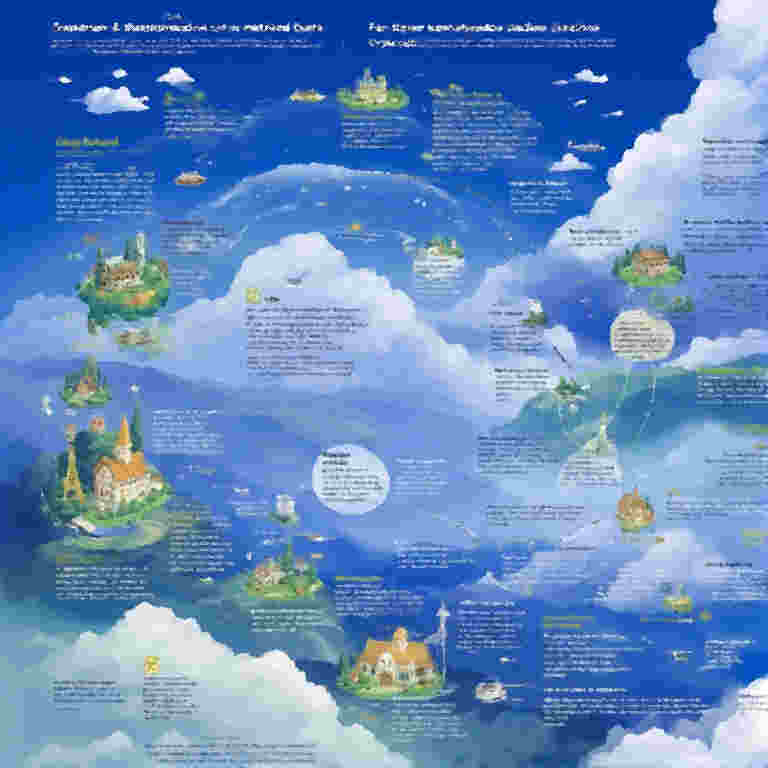
Real World Economy vs. In-Game Economies of Modern Video Games
The real-world economy is a colossal, interconnected system involving trillions of dollars in daily transactions, central banks, governments, corporations, and billions of individuals trading goods, services, currencies, and assets. It operates on principles like supply and demand, inflation, scarcity, speculation, labor markets, and geopolitical influences, with profound consequences for livelihoods, nations, and global stability.
In contrast, in-game economies are virtual simulations embedded within video games, where players buy, sell, craft, farm, and trade digital resources, currencies, items, and services. These systems range from simple barter setups to hyper-complex markets rivaling real small economies in scale. Modern games (post-2010 era) have elevated in-game economies to sophisticated levels, often player-driven and mirroring real-world dynamics while introducing unique twists like infinite respawns, developer interventions, and no existential risks.
This article compares the two, highlighting similarities, stark differences, and intriguing examples across genres. From MMORPGs like EVE Online—whose economy has been studied by economists for its realism—to sandbox survival titles like Minecraft and Rust, we’ll explore how these digital realms both reflect and diverge from our tangible financial world. With games generating billions in virtual GDP and even real-money trading (RMT), the parallels are striking, offering insights into human behavior under scarcity, abundance, and competition. This article is not financial advice of any kind.
Core Similarities: Universal Economic Principles at Play
At their heart, both real-world and in-game economies follow foundational rules of economics, creating emergent behaviors that feel eerily familiar.
Supply, Demand, and Scarcity
In the real world, oil prices surge when OPEC cuts production (supply restriction) or during wars disrupting refineries (demand spikes). Similarly, in EVE Online (CCP Games, 2003–ongoing, peak 2025 activity), rare minerals like moon goo or blueprints become scarce during fleet wars destroying mining operations. Players form cartels to hoard Tritanium, driving prices up 500% in contested null-sec regions, much like OPEC dynamics.
World of Warcraft (WoW) (Blizzard, 2004–ongoing) exemplifies this in its Auction House. Epic gear mats like Arcane Crystals fluctuate based on raid demand—prices skyrocket pre-expansion launches when thousands farm for BiS (best-in-slot) items, mimicking holiday shopping rushes.
Even in Minecraft (Mojang, 2011–ongoing), survival servers enforce scarcity via plugins like Shopkeepers or EssentialsX. Diamonds or enchanted books become “currency,” with prices dictated by mining luck and mob farms, akin to real mining booms/busts.
Inflation and Currency Devaluation
Real-world inflation erodes purchasing power; central banks print money, diluting value. In-game, developers add currencies via quests or events, causing hyperinflation.
WoW’s gold economy ballooned post-Shadowlands (2020), with billions in circulation from token purchases (WoW Token buys game time with real money, sold for gold). By 2025, a mount costing 100k gold in 2010 might fetch 1 million due to farmed gold influx—mirroring Zimbabwe’s hyperinflation.
Runescape (Jagex, 2001–ongoing) has Old School Runescape (OSRS) with its Grand Exchange, where RuneScape Gold (RS3/OSRS GP) inflates from bot farming. Jagex’s 2025 bot purges caused deflationary shocks, stabilizing prices like real quantitative tightening.
Trade, Markets, and Speculation
Real stock exchanges like NYSE facilitate billions in trades; forex turns over $7 trillion daily. Games replicate this with player auctions.
Albion Online (Sandbox Interactive, 2017–ongoing), a sandbox MMORPG, has a fully player-driven market across cities. Players mine, craft, and sell gear, with speculation on black market items during PvP seasons—prices for T8 weapons swing 200% on guild wars, echoing commodity futures.
In Path of Exile (Grinding Gear Games, 2013–ongoing), the trade league’s Chaos Orbs and Divine Orbs act as currency. Mirror-tier items (dupe-free uniques) fetch fortunes, with manipulators cornering markets like real short squeezes.
Battle royales like Fortnite (Epic Games, 2017–ongoing) use V-Bucks for cosmetics, but player trading (unofficial) creates black markets for rare skins, valued in real dollars via third-party sites.
Key Differences: Where Games Diverge from Reality
While parallels exist, in-game economies are engineered simulations, leading to profound differences.
Finite vs. Infinite Resources and Resets
Real economies face true scarcity—oil depletes, farmland erodes. Games often have infinite respawns.
In Rust (Facepunch Studios, 2018–ongoing), a survival shooter, resources like metal frags respawn on maps, but server wipes (monthly) reset everything, creating boom-bust cycles absent in reality. Players hoard during “soft wipes,” speculating on blueprint rarities.
No Man’s Sky (Hello Games, 2016–ongoing) has procedural planets with infinite resources, but economy plugins on multiplayer servers introduce scarcity via trading hubs.
Server wipes in games like Rust or Valheim (Iron Gate, 2021) act as “great resets,” purging wealth inequality—unlike real recessions, which don’t erase all assets.
Developer Interventions vs. Central Banks
Central banks adjust rates; game devs patch economies.
WoW devs nerf gold farms (e.g., 2025 Dragonflight patches reduced solo farming yields 40%), akin to rate hikes combating inflation. Elite Dangerous (Frontier Developments, 2014–ongoing) tweaked credit sinks to curb hyperinflation from exploits.
In blockchain games like Axie Infinity (Sky Mavis, 2018–peak 2021), smart contracts enforce rules, but SLP token crashes (95% drop post-2021) showed dev inability to “print” stability without backlash.
Player Agency and No Real Consequences
Real trades have life-altering stakes; games allow experimentation.
Star Citizen (Cloud Imperium Games, 2012–ongoing) boasts a persistent universe economy with ship trading, mining, and cargo runs. Players form corps for smuggling, mirroring cartels, but death is a respawn—not bankruptcy.
Mobile games like Clash of Clans (Supercell, 2012–ongoing) use gems for speed-ups; free-to-play models create pay-to-win divides, but quitting costs nothing.
Civilization VI (Firaxis, 2016) single-player economy sims teach trade routes and tech trees, but multiplayer mods add player alliances/trade embargoes.
Scale and Real-Money Integration
EVE Online’s economy rivals small nations: 2025 Monthly Economic Report showed 765 trillion ISK traded monthly (~$500 million USD equivalent via PLEX), with player corps declaring “wars” costing billions.
WoW’s gold economy supports RMT sites, where farmed gold sells for $10/100k—creating shadow economies studied by economists.
Genre-Specific Examples: Economies Across Game Worlds
MMORPGs: Complex Player-Driven Markets
- EVE Online: Deepest simulation—mining, manufacturing, PvP destruction creates scarcity. Real GDP equivalent; economists model it for macro studies.
- Black Desert Online (Pearl Abyss, 2015): Central Market with taxes; lifeskilling (fishing, trading) generates wealth.
- Lost Ark (Smilegate, 2022 West): Auction house for gear; gold sinks via honing systems prevent inflation.
Survival/Sandbox: Barter and Looter Economies
- Minecraft: Anarchy servers like 2b2t have diamond-based barter; plugins on Hypixel create shops with player-run auctions.
- Rust: Loot-based; scrap as currency for blueprints at bandit camps. Wipes reset billionaire status.
- 7 Days to Die (The Fun Pimps, 2013): Horde nights spike resource demand.
Strategy and 4X Games: Empire-Building Sims
- Stellaris (Paradox Interactive, 2016): Trade fleets, consumer goods markets; mods add stock exchanges.
- Factorio (Wube Software, 2020): Factory optimization as “economy sim”; infinite research trees mimic tech booms.
Battle Royale and Shooters: Microtransaction-Driven
- Fortnite: V-Bucks economy ($5B+ revenue); battle pass creates FOMO scarcity.
- Apex Legends (Respawn, 2019): Heirlooms as status symbols traded informally.
Mobile and F2P: Paywalls and Progression
- Genshin Impact (miHoYo, 2020): Primogems/gacha system; resin caps daily farming, creating artificial scarcity.
- Raid: Shadow Legends (Plarium, 2018): Gems for summons; economy revolves around hero collection.
Real-World Lessons from In-Game Economies
Games like EVE demonstrate emergent behaviors: Monopolies form, recessions from wars, even “depressions” post-major patches. WoW’s token system bridges virtual/real money, with gold prices reflecting server health.
Studies (e.g., Indiana University on Norrath/EverQuest) show virtual economies rival small countries (EverQuest GDP > Russia in 2002). They teach supply chains (Minecraft redstone factories), speculation (PoE league flips), and bubbles (Axie 2021 crash).
Devs balance via sinks (WoW repair costs) or faucets (daily quests), akin to fiscal policy.
The Future: Blockchain and True Ownership
Web3 games like Illuvium (2024) or Pixels (2022) introduce NFTs for tradable assets, blurring lines—players own economy slices on-chain.
In conclusion, in-game economies are microcosms of reality: scarcity breeds trade, greed fuels bubbles, wipes mimic recessions. They evolve faster, with infinite experiments, offering pure economic labs. From EVE’s interstellar corps to Minecraft’s diamond rushes, they captivate by distilling human nature into pixels—proving economies thrive wherever value is contested.






2 comments