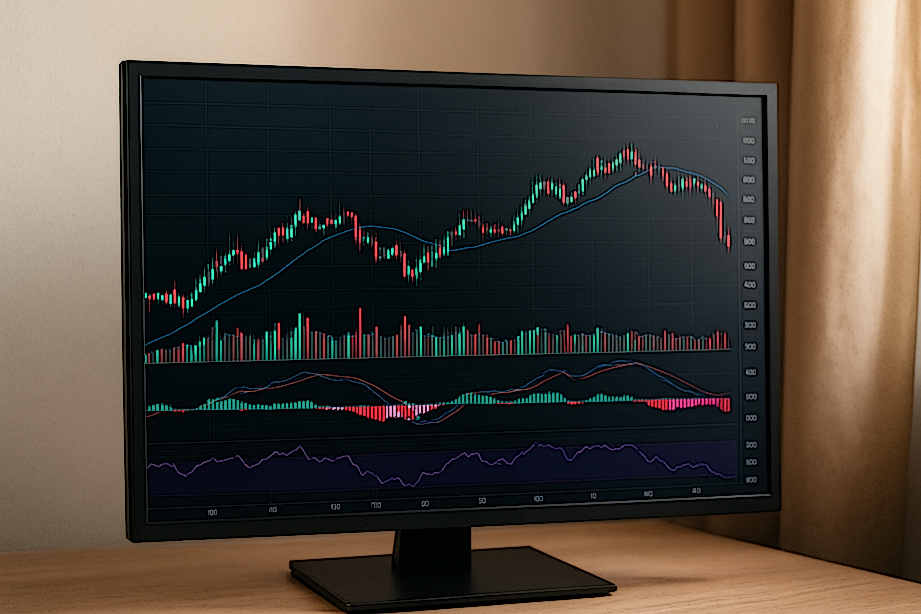
Position Sizing in Stock and Forex Trading
Position sizing is the process of deciding how big (or small) each trade should be. It is not about “how much money I want to make” — it is about “how much money I am willing to lose if I am wrong.”
Proper position sizing is the difference between surviving long enough to become profitable and blowing up your account in a few bad trades. This article is not financial advice or trading advice. Only an opinion on each issue.
The Core Idea
You first decide how much of your total capital you are willing to risk on one trade (usually 0.5 % – 2 %).
Then you adjust the number of shares, lots, or contracts so that if your stop-loss is hit, you lose exactly that pre-decided amount — no more, no less.
Position Sizing Formula (Universal for Stocks and Forex)
Position Sizing in Stock, Forex Trading, and Commodity Trading are working in the same way. General calculation is, Position size = (Account balance × Risk % ) ÷ (Distance from entry to stop-loss in $ or pips × Value of 1 unit)
Real-Life Examples
Example 1 – Forex (EUR/USD)
Account balance: $8,000
Risk per trade: 1 % = $80 maximum loss
Planned stop-loss: 35 pips away
$80 ÷ 35 pips = $2.29 per pip
In EUR/USD, $10 per pip = 1 standard lot
So you can trade approximately 0.23 standard lots (or 2.3 mini lots / 23 micro lots)
Result: If price hits your stop, you lose exactly $80 (1 %).
Your account becomes $7,920 and you live to trade another day.
Example 2 – Stock Trading (NVDA)
Account balance: $50,000
Risk per trade: 1 % = $500 maximum loss
NVDA current price: $135
You plan to buy and place stop at $128
Distance to stop: $7 per share
Maximum shares = $500 ÷ $7 = 71.4 → 71 shares
Position value = 71 × $135 ≈ $9,585
Result: If NVDA drops to $128, you lose $497 (very close to 1 %).
Your account is now $49,503 — barely noticeable.
Example 3 – Small Forex Account
Account balance: $1,200
Risk per trade: 2 % = $24 maximum loss
Pair: GBP/JPY
Stop-loss: 80 pips
$24 ÷ 80 pips = $0.30 per pip
You trade 0.03 standard lot (3 micro lots)
Result: Even with a tiny account, you can still follow the same rule perfectly.
Example 4 – Futures (ES – E-mini S&P 500)
Account balance: $35,000
Risk per trade: 0.75 % = $262.50
Current ES price: 5,800
Stop planned at 5,770 (30 points away)
1 point = $50 per contract
$262.50 ÷ (30 points × $50) = 0.175 → 1 contract (rounded down for safety)
Actual risk with 1 contract = 30 × $50 = $1,500 → too much
So you trade 0 contracts or wait for a setup with a tighter stop.
Common Position Sizing Methods in 2025
- Fixed Percentage Risk (most popular)
Always risk the same % of current balance (e.g., 1 %). - Fixed Dollar Risk
Risk the same dollar amount every trade (e.g., always $200).
Works well when accounts are small. - Volatility-Based (ATR method)
Stop distance = 1.5 × ATR(14)
Bigger stops on volatile pairs → automatically smaller position size. - Equity Curve Adjustment
Risk 2 % when account is above moving average, 0.5 % when below.
Why Most Traders Get Position Sizing Wrong
- They decide position size based on how much profit they want (“I’ll buy 500 shares so I can make $1,000”).
- They use the same fixed lot size regardless of stop distance.
- They ignore account size changes (still trading 1 lot after the account has dropped 50 %).
- They mentally round up “just this once” because the setup looks perfect.
The Math That Keeps Traders Alive
If you lose 50 % of your account, you need a 100 % gain just to break even.
If you never risk more than 1–2 %, even 20 losing trades in a row leave you with 80–65 % of your capital — completely recoverable.
Position sizing is boring, mathematical, and unemotional — which is exactly why it works.
It is the one part of trading that is 100 % under your control on every single trade, regardless of market conditions. As one master it, the market can never take one out of the game.










2 comments