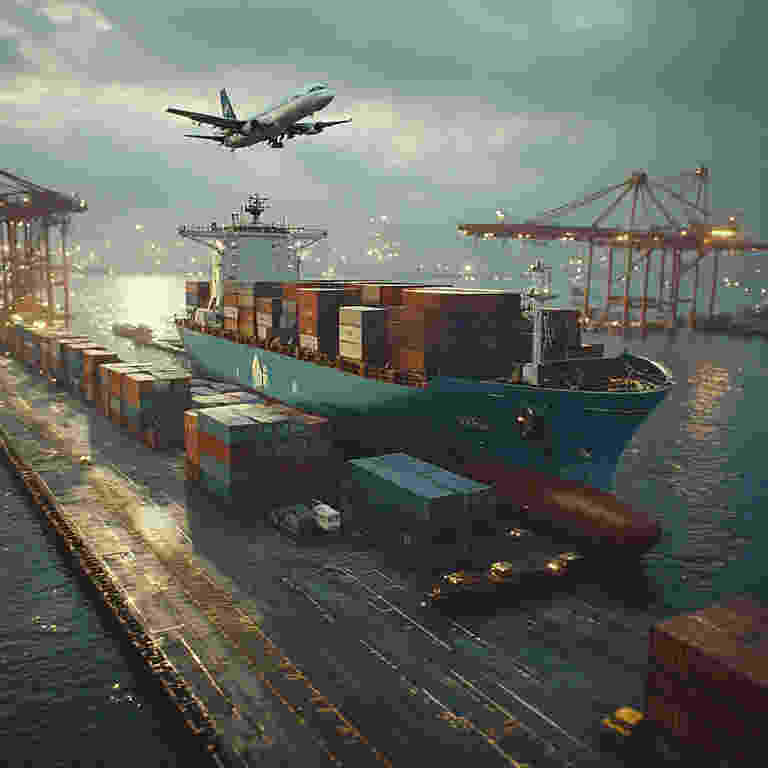
How War Affects the Global Shipping Industry in 2026
When Sea Lanes Turn Uncertain
The global shipping industry is often invisible to everyday life, yet it carries around 80–90% of world trade by volume. Almost everything — oil, food, electronics, cars, clothing, industrial materials — travels by sea at some point. When war breaks out or military tensions rise, shipping is one of the first industries to feel the pressure.
In 2026, the world has already experienced multiple examples of how conflict affects maritime trade. From disruptions in key waterways to increased naval patrols and sanctions enforcement, the shipping sector has been repeatedly forced to adapt. War does not need to directly destroy ships to create impact. Sometimes the mere risk of escalation is enough to reshape routes, insurance costs, and delivery times.
This article is not financial advice, only opinion and information in the past and do not predict anything on assets in the future.
Why Shipping Is So Sensitive to War
Shipping depends on stability. Vessels travel predictable routes through strategic chokepoints such as narrow straits, canals, and coastal passages. Many of these routes lie near politically sensitive regions. When conflict emerges near these areas, uncertainty rises immediately.
War introduces several direct concerns:
- Physical safety of vessels and crews
- Risk of missile or drone attacks
- Naval blockades or inspections
- Mining of sea routes
- Sanctions and cargo restrictions
- Higher insurance premiums
Even without direct attacks, shipping companies must assess whether the risk justifies continuing operations in affected waters.
Freight Rates and Transportation Costs
One of the first measurable impacts of war is freight rate volatility. When certain routes become dangerous, ships may need to reroute around longer paths. For example, if a canal or strait becomes unsafe, vessels may travel thousands of extra miles, increasing fuel consumption and transit time.
Longer routes mean fewer available ships in circulation at any given moment. This can reduce effective supply in the shipping market, pushing freight rates higher. Insurance costs also increase during wartime, especially for vessels passing through conflict zones.
Strength of the Freight Market
Shipping markets are flexible. Companies can adjust routes, negotiate insurance, and reallocate vessels to safer regions. Global fleets are large, and alternative paths often exist, even if they are less efficient.
Risk of the Freight Market
The risk lies in bottlenecks. If multiple conflict zones occur simultaneously or if a major chokepoint becomes unusable, rerouting options become limited. This can cause sharp increases in costs and delivery delays worldwide.
Oil Tankers and Energy Transport
Energy shipping is particularly sensitive. Oil tankers and liquefied natural gas (LNG) carriers often operate near politically unstable regions. If conflict threatens production facilities or export terminals, tanker traffic may decline or become concentrated in safer zones.
Even rumors of attacks can lead to temporary pauses while companies reassess risk exposure. War risk insurance premiums for tankers can rise dramatically during active military tension.
Strength of Energy Shipping
Energy trade is essential. Governments prioritize keeping these routes open, often deploying naval forces to secure passage. Strategic reserves and diversified supply chains provide temporary buffers.
Risk of Energy Shipping
Energy transport remains geographically concentrated. If a major exporting region becomes inaccessible, global supply chains feel immediate pressure. Because energy underpins electricity, manufacturing, and transport, the broader economic impact can be significant.
See also : What Determines the Effectiveness of Safe-Haven Asset in Wartime, The Impact of War on Stock Markets
Container Shipping and Consumer Goods
Container ships carry manufactured goods such as electronics, machinery, and retail products. War disrupts these flows in more indirect ways. Sanctions may prohibit certain goods from entering or leaving specific countries. Ports may close due to security concerns.
When delivery schedules become unpredictable, businesses may increase inventory levels to avoid shortages. This changes global logistics patterns.
Strength of Container Shipping
Container networks are diversified and global. Major ports exist across continents, allowing cargo to be redirected if necessary. Digital tracking systems improve transparency and coordination.
Risk of Container Shipping
The risk is cumulative delay. If conflict causes port congestion, inspection slowdowns, and rerouting simultaneously, supply chains stretch. Small delays at multiple points can create significant delivery disruptions.
Bulk Shipping: Food and Raw Materials
Bulk carriers transport grain, coal, iron ore, and fertilizers. War in agricultural or resource-producing regions can affect export volumes directly. If farmland becomes inaccessible or infrastructure damaged, shipments decline.
Food trade is particularly sensitive because it influences national stability. Governments may impose export restrictions during wartime to protect domestic supply.
Strength of Bulk Markets
Global agricultural production is geographically spread. If one region faces disruption, other producers may increase exports over time. International organizations often coordinate food shipments during crises.
Risk of Bulk Markets
However, not all commodities are easily replaceable. Certain fertilizers, minerals, or specialized ores come from limited sources. Disruption can raise costs and affect industries far from the conflict area.
Insurance and Financial Risk
War significantly increases marine insurance costs. Insurers calculate risk premiums based on proximity to conflict, recent attacks, and geopolitical escalation. If insurers classify an area as high-risk, shipping companies must pay higher premiums or avoid the region entirely.
Financial institutions also assess lending risk differently during wartime. Vessel financing and trade credit terms may tighten.
Strength of Insurance Systems
Global insurance markets are large and experienced in handling war risk. Specialized war-risk policies exist to manage these exposures.
Risk of Insurance Systems
If conflict expands unpredictably, insurance capacity can become strained. Higher premiums ultimately increase transportation costs for global trade.
Crew Safety and Labor Challenges
Another often overlooked impact is crew safety. Seafarers face heightened danger in war zones. Some workers may refuse to travel through high-risk regions, creating staffing shortages. Shipping companies must ensure crew welfare, evacuation plans, and hazard compensation.
Strength of the Workforce
The global maritime labor force is adaptable and experienced in crisis conditions. International maritime regulations establish safety standards.
Risk to the Workforce
Prolonged exposure to high-risk routes can reduce morale and increase operational stress. Labor shortages can compound logistical challenges.
Government and Military Involvement
When war threatens major trade routes, governments sometimes deploy naval forces to escort commercial ships. International coalitions may form to protect freedom of navigation. This has occurred multiple times in recent decades.
Strength of Military Protection
Naval patrols can stabilize routes and deter attacks, allowing trade to continue despite tension.
Risk of Escalation
However, military involvement also raises the risk of miscalculation. Increased armed presence in crowded waterways can heighten geopolitical sensitivity.
Long-Term Structural Changes
War can permanently alter shipping patterns. Companies may redesign supply chains to reduce dependence on specific regions. Countries may invest more in domestic production or regional trade agreements.
The strength of such adaptation is resilience. Global trade becomes less dependent on single chokepoints. The risk is inefficiency. Redundancy often increases costs.
Conclusion
War impacts the shipping industry through risk perception, physical disruption, insurance costs, rerouting, sanctions, and labor challenges. Because shipping connects nearly all sectors of the global economy, these effects ripple outward into energy prices, food supply, manufacturing costs, and consumer goods availability.
The industry possesses strengths: flexibility, alternative routes, naval protection, diversified production regions, and established insurance frameworks. Yet it also carries risks tied to chokepoint concentration, escalation uncertainty, cumulative delays, and crew safety.
In 2026, the lesson remains clear: the sea may appear open and vast, but global trade depends on a small number of stable corridors. When war touches those corridors, even indirectly, the impact extends far beyond the battlefield — reaching warehouses, factories, supermarkets, and households around the world.
See also :
- The Impact of Geopolitical Events on Bitcoin in 2026
- How AI Is Shaping Business and Investment in 2026
- How Middle East War Affects Energy Prices Around the World
- How a Hormuz Blockage Would Affect Business Sectors Around the World in 2026








2 comments