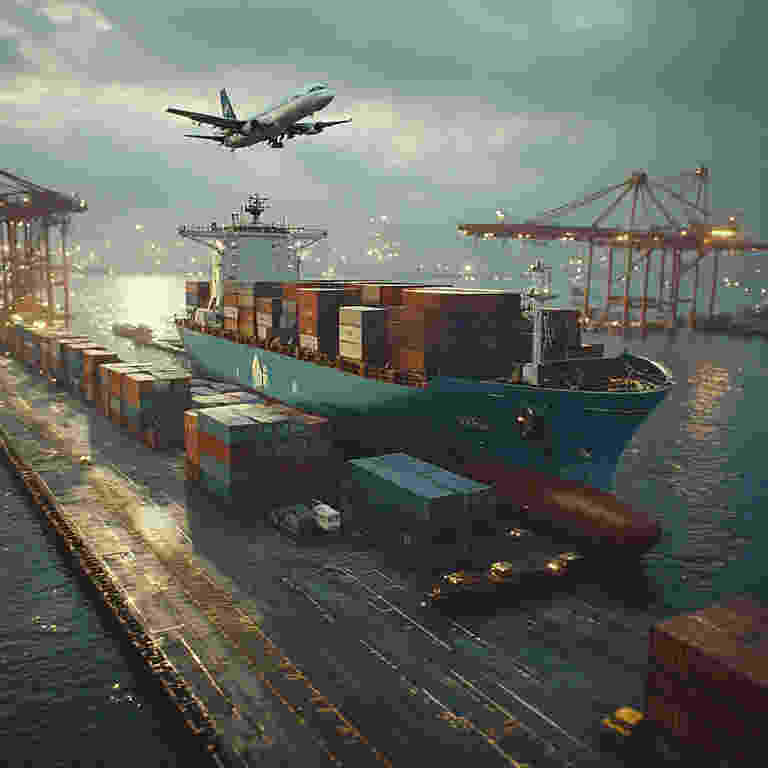
How a Hormuz Blockage Would Affect Business Sectors Around the World in 2026
If the Strait Stops
The Strait of Hormuz is one of the most strategically important waterways in the world. It is a narrow sea passage between Iran and Oman that connects the Persian Gulf to the open ocean. At its narrowest point, it is only about 33 kilometers wide, yet roughly 20% of the world’s daily oil consumption — and a significant portion of liquefied natural gas (LNG) exports — passes through it.
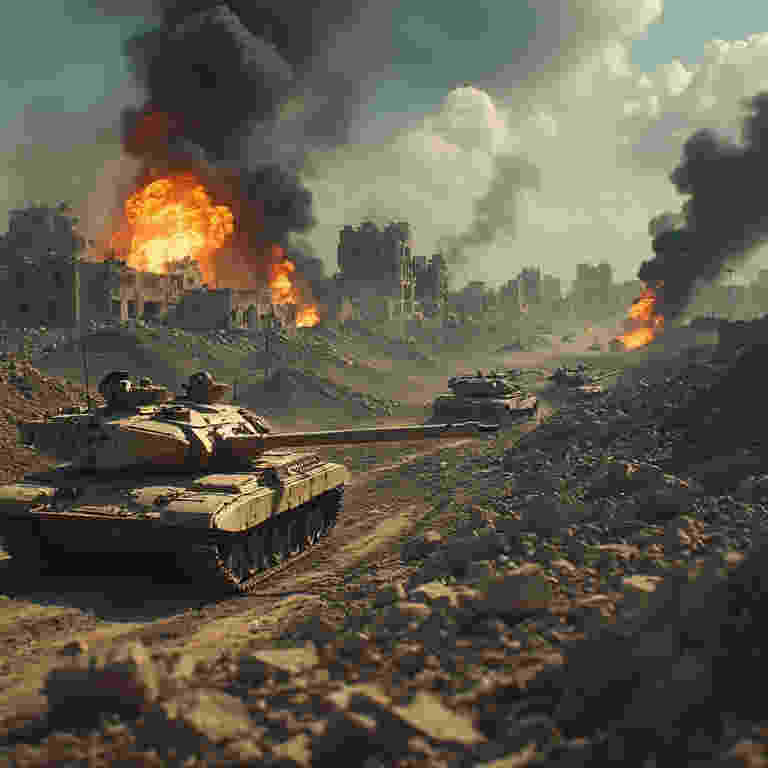
Because so much energy flows through this single corridor, any serious blockage — whether from military conflict, mining, naval confrontation, or shipping suspension — would immediately affect global business sectors. Even the threat of disruption can create economic ripple effects.
Understanding the impact requires looking at how deeply energy is connected to modern economies. This article is not financial advice and did not predict or suggest any movement on assets value in the future.
Why Hormuz Matters So Much
Several major oil-producing countries export most of their crude through the Strait of Hormuz. These include producers in the Gulf region whose economies rely heavily on maritime exports. In addition, Qatar — one of the largest LNG exporters — ships most of its gas through this route.
Energy is not just a fuel for cars or airplanes. It powers factories, produces plastics, runs data centers, transports food, and heats homes. When a chokepoint like Hormuz is threatened, the issue is not just regional. It becomes global.
Energy Sector: Immediate and Direct Impact
The first and most obvious impact of a Hormuz blockage would be on oil and gas markets. If tankers cannot pass through safely, exports from Gulf producers would decline sharply. Even if alternative pipelines exist, they cannot fully replace maritime capacity.
Strength of the Energy Sector
The global energy system has some buffers. Strategic petroleum reserves are maintained by several large economies. Some producers outside the Gulf — such as North America and parts of Africa — can adjust output over time. LNG supply chains have diversified compared to a decade ago.
Risk of the Energy Sector
However, replacement is not instant. The concentration of export capacity in the Gulf region makes it difficult to offset sudden interruptions. A prolonged blockage would tighten supply chains and raise energy costs across multiple regions simultaneously.
Energy-intensive industries would feel pressure quickly.
Transportation and Airlines
Fuel is one of the largest operating expenses for airlines and shipping companies. If crude oil exports from the Gulf are disrupted, aviation fuel and marine fuel markets would be affected.
Airlines may face higher operational costs. Shipping companies could experience increased bunker fuel expenses, affecting freight rates.
Strength of the Transportation Sector
Large carriers often hedge fuel exposure and maintain financial risk management strategies. Global logistics networks are diversified and adaptable.
Risk of the Transportation Sector
Extended high fuel costs reduce profit margins and may lead to route adjustments or capacity changes. Smaller companies without strong financial buffers could face greater strain.
Manufacturing and Heavy Industry
Industries such as chemicals, plastics, cement, steel, and automotive manufacturing rely heavily on oil and natural gas both as fuel and as raw material inputs. Petrochemicals, in particular, are closely linked to Gulf exports.
Strength of Manufacturing
Manufacturers often operate with diversified suppliers and can adjust production planning. Some regions have domestic energy sources that reduce immediate dependence.
Risk of Manufacturing
Persistent energy cost increases raise input expenses. This can compress margins or lead to higher product prices. Supply chain planning becomes more complex if raw materials sourced from Gulf producers are delayed.
Food and Agriculture
Energy plays a major role in agriculture through fuel for machinery, transportation, irrigation, and fertilizer production. Natural gas is a key component in nitrogen fertilizer manufacturing.
Strength of Agriculture
Global food production is geographically diversified. Farmers and suppliers adapt planting and distribution patterns over time.
Risk of Agriculture
Higher fuel and fertilizer costs can raise food production expenses. If transportation becomes more expensive, global food trade prices may reflect that pressure, affecting importing countries more strongly.
Financial Markets and Banking
Energy disruptions affect inflation expectations, currency stability, and investor sentiment. Banks and financial institutions monitor geopolitical chokepoints closely because they influence credit risk and economic growth projections.
Strength of Financial Systems
Modern financial systems incorporate risk modeling and stress testing. Central banks hold reserves and liquidity tools to manage instability.
Risk of Financial Systems
If a Hormuz blockage triggers persistent inflation pressure or economic slowdown, financial markets could experience volatility. Lending conditions may tighten if uncertainty increases.
Technology and Data Infrastructure
At first glance, technology companies may appear insulated from maritime chokepoints. However, data centers consume significant electricity. Semiconductor manufacturing is also energy-intensive.
Strength of Technology Sector
Many technology companies operate in regions with diversified energy mixes, including renewables and nuclear power. Their supply chains are global rather than concentrated in one region.
Risk of Technology Sector
If global energy prices rise significantly, operational costs for power-intensive computing and manufacturing could increase. Additionally, supply chain shipping costs may affect hardware distribution.
Energy-Exporting vs. Energy-Importing Countries
The impact of a Hormuz blockage would not be equal across countries.
Energy-importing countries in Asia and parts of Europe would likely experience stronger direct pressure because they rely heavily on Gulf oil and gas. Energy-exporting countries outside the region might see revenue shifts depending on global supply adjustments.
Strength of Diversified Economies
Countries with domestic production or diversified import sources are more resilient.
Risk of Concentrated Dependence
Nations heavily dependent on Gulf energy flows face higher vulnerability if maritime traffic halts or becomes restricted.
Shipping and Insurance
A blockade would significantly increase marine insurance premiums. Tankers may refuse to enter high-risk zones without government protection or compensation. Even partial restrictions create delays and added costs.
Strength of Shipping Networks
Alternative routes and strategic stockpiling offer temporary relief. Naval escorts could be deployed to secure safe passage if politically feasible.
Risk of Prolonged Disruption
If conflict escalates, insurers may classify the region as too high-risk for normal operations. Extended closure would strain global shipping capacity and logistics planning.
Renewable Energy Sector
A Hormuz crisis would indirectly highlight the importance of energy diversification. Renewable energy sources such as wind and solar are not dependent on imported fuel once infrastructure is installed.
Strength of Renewables
Domestic renewable capacity provides energy independence and insulation from maritime disruptions.
Risk of Renewables
However, renewable technology manufacturing depends on global supply chains. Rising transportation costs or broader geopolitical tension could indirectly affect equipment production.
The Bigger Economic Picture
The Strait of Hormuz represents more than a shipping lane. It symbolizes the concentration of global energy supply in specific geographic areas. A serious blockage would affect not only oil markets but also transportation, food, manufacturing, finance, and consumer prices.
Markets often react strongly even before a full closure occurs. Expectations shape pricing behavior. The actual impact would depend on the duration of disruption, physical damage to infrastructure, international diplomatic responses, and alternative supply mobilization.
Short-term disruptions might cause temporary volatility. Long-term blockages could lead to structural changes in trade routes, energy investment patterns, and geopolitical alliances.
Conclusion
A Hormuz blockage would primarily affect energy flows, but because energy underpins nearly every modern industry, the ripple effects would extend globally. The energy sector carries both strength — through diversification and strategic reserves — and risk — through geographic concentration. Transportation, manufacturing, agriculture, finance, and technology would all feel secondary effects depending on duration and severity.
The global economy is interconnected. A narrow waterway thousands of kilometers away from most consumers can influence daily life worldwide. That is why the Strait of Hormuz remains one of the most closely watched strategic locations in global trade discussions.
See also :
- The Impact of Geopolitical Events on Bitcoin in 2026
- How AI Is Shaping Business and Investment in 2026
- How Middle East War Affects Energy Prices Around the World
- How War Affects the Global Shipping Industry in 2026








1 comment