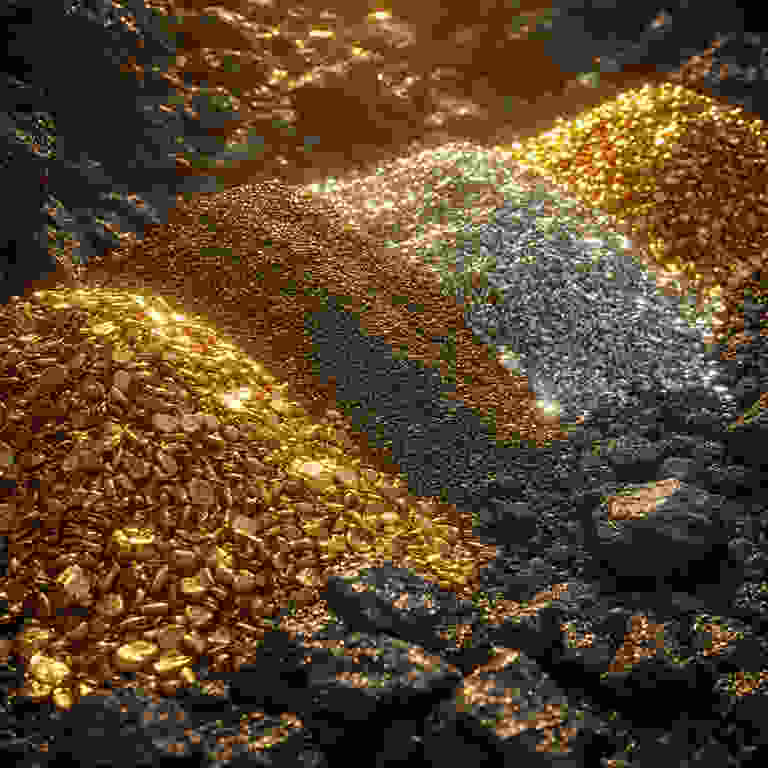
Precious Metals: Their Roles in the Economy, Industry, and Financial Markets
Precious metals are a group of rare, naturally occurring metallic elements valued for their scarcity, durability, and unique physical properties. For thousands of years, they have played multiple roles — as stores of value, industrial inputs, symbols of wealth, and financial instruments.
Today, precious metals remain deeply embedded in economic systems, industrial supply chains, and global financial markets, even as currencies and technologies evolve. This article is not financial advice of any kind. and does not predict anything in the future.
1. What Are Precious Metals?
Precious metals are generally defined by:
- Rarity in the Earth’s crust
- High economic value per unit weight
- Resistance to corrosion and oxidation
- Stable physical and chemical properties
They differ from base metals (such as copper or aluminum) by being less abundant and more valuable, often serving roles beyond basic industrial use.
2. Major Precious Metals in the Commodity Market
2.1 Gold (Au)
Economic Role
- Historically used as money and monetary reserve
- Central banks hold gold as part of national reserves
- Often associated with trust, stability, and sovereignty
Industrial Role
- Electronics (conductive and corrosion-resistant)
- Medical devices and dentistry
- Aerospace and precision instruments
Financial Market Role
- Traded globally as a commodity
- Used as a benchmark for monetary confidence
- Common reference during currency or systemic stress
2.2 Silver (Ag)
Economic Role
- Historically used in coinage
- Acts as both monetary and industrial metal
Industrial Role
- Electronics and electrical contacts
- Solar panels and renewable energy systems
- Medical and antimicrobial applications
Financial Market Role
- Traded as a precious metal with industrial sensitivity
- Often reflects both economic growth and monetary conditions
2.3 Platinum (Pt)
Economic Role
- Limited geographical production
- Higher scarcity compared to gold
Industrial Role
- Catalytic converters in vehicles
- Chemical and petroleum refining
- Medical equipment and laboratory tools
Financial Market Role
- Traded as a precious metal with strong industrial linkage
- Often influenced by automotive and manufacturing cycles
2.4 Palladium (Pd)
Economic Role
- Rare metal with concentrated supply regions
Industrial Role
- Catalytic converters (especially gasoline engines)
- Electronics and hydrogen purification
- Dental and medical uses
Financial Market Role
- Traded primarily as an industrial precious metal
- Sensitive to environmental regulation and vehicle technology shifts
2.5 Rhodium (Rh)
Economic Role
- One of the rarest precious metals
- Extremely limited production
Industrial Role
- Emission control systems
- High-temperature and corrosion-resistant alloys
Financial Market Role
- Less liquid than gold or silver
- Prices often reflect supply constraints rather than financial demand
2.6 Ruthenium (Ru)
Industrial Role
- Electronics (hard disk drives, semiconductors)
- Chemical catalysts
- Wear-resistant electrical contacts
Economic & Market Presence
- Smaller market size
- Mostly industrial demand-driven
- Limited financial trading compared to major precious metals
2.7 Iridium (Ir)
Industrial Role
- High-temperature crucibles
- Spark plugs and aerospace components
- Chemical catalysts
Economic Characteristics
- Extremely corrosion-resistant
- Rare and costly to extract
- Primarily industrial in nature
2.8 Osmium (Os)
Industrial Role
- Specialized alloys
- Scientific instruments
- High-density applications
Market Characteristics
- Very limited commercial trading
- Mostly niche industrial use
- Not commonly traded on major exchanges
3. Roles of Precious Metals in the Economy
3.1 Store of Value
Precious metals, particularly gold and silver, have historically served as:
- Wealth preservation tools
- Monetary references
- Long-term value anchors
Their durability and scarcity contribute to this role.
3.2 Monetary and Policy Significance
- Gold remains part of central bank reserves
- Precious metals influence confidence in currencies
- They act as non-sovereign assets (not issued by governments)
3.3 Economic Signaling
Movements in precious metal demand can reflect:
- Inflation perceptions
- Industrial growth or contraction
- Technological transitions
4. Roles in Industry and Technology
Precious metals are critical due to:
- High electrical conductivity
- Resistance to corrosion
- Catalytic efficiency
- Heat tolerance
Industries relying on them include:
- Electronics and semiconductors
- Automotive manufacturing
- Renewable energy
- Medical and aerospace sectors
Many modern technologies would not function efficiently without precious metals.
5. Roles in Financial Markets
5.1 Commodity Trading
Precious metals are traded:
- On global exchanges
- Through physical contracts
- As part of diversified commodity baskets
5.2 Portfolio Context (Descriptive)
In financial systems, precious metals:
- Are considered alternative assets
- Provide non-currency-based exposure
- Reflect global liquidity and confidence trends
This role is observational, not prescriptive.
5.3 Hedging and Risk Perception (Conceptual)
Market participants often reference precious metals when discussing:
- Inflation concerns
- Currency stability
- Systemic financial risk
This reflects perception and tradition rather than guaranteed behavior.
6. Key Differences Among Precious Metals
| Metal | Primary Role | Market Nature |
|---|---|---|
| Gold | Monetary & industrial | Financial-heavy |
| Silver | Monetary & industrial | Mixed |
| Platinum | Industrial | Industry-heavy |
| Palladium | Industrial | Industry-heavy |
| Rhodium | Industrial | Supply-constrained |
| Ruthenium | Industrial | Niche |
| Iridium | Industrial | Specialized |
| Osmium | Industrial | Highly niche |
7. Limitations and Challenges
- Supply concentration in certain regions
- Environmental and regulatory constraints
- Recycling complexity
- Price sensitivity to technological change
These factors contribute to volatility and structural shifts.
Conclusion
Precious metals occupy a unique intersection between economy, industry, and finance.
- They support critical technologies and infrastructure
- They influence monetary systems and confidence
- They function as globally recognized commodities
Understanding their distinct roles helps explain why precious metals remain relevant in modern markets — not as predictions or strategies, but as foundational economic elements.






2 comments