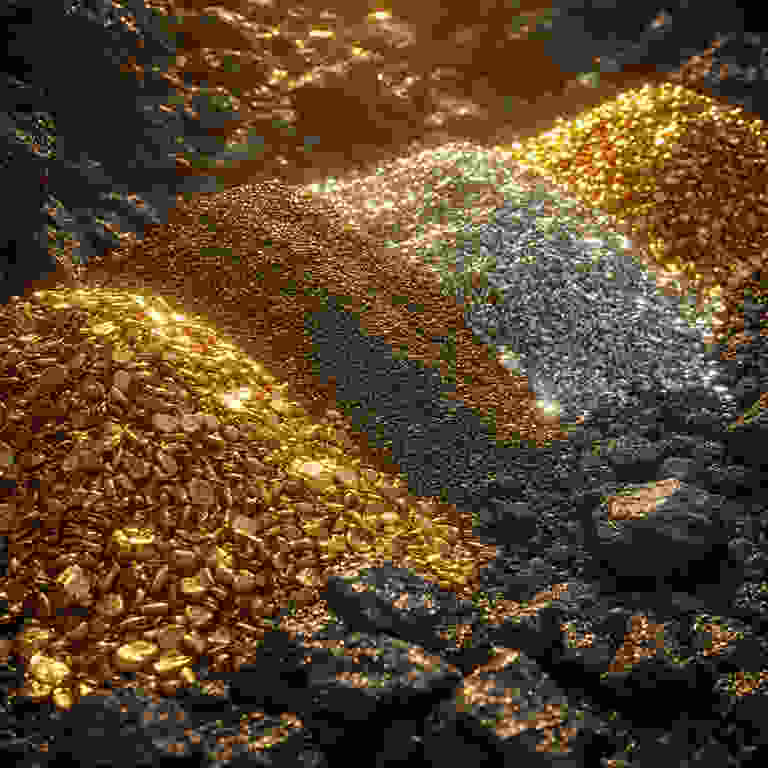
Rare Earth Elements: The Invisible Pillars of Modern Civilization
In the dim glow of your smartphone screen, the hum of an electric vehicle, or the precision of a surgical laser, invisible elements are at work. These are the Rare Earth Elements (REEs)—seventeen chemically similar metals that have become the indispensable, yet largely unseen, foundations of our technological age. Despite their name, most are not particularly rare in the Earth’s crust. Their rarity lies in their geological dispersion—they are seldom found in concentrated, economically exploitable deposits—and in the complex, environmentally challenging process required to separate them from one another. This article explores how these obscure elements, once mere curiosities for chemists, have become central to industry, economics, geopolitics, and the very fabric of modern life. This article is not financial advice or any prediction of asset prices.
Part I: The Industrial and Technological Backbone
What Are Rare Earths?
The group comprises the fifteen lanthanides—lanthanum, and lutetium—plus scandium and yttrium. They are typically divided into two categories based on atomic weight:
- Light Rare Earths (LREE): Lanthanum through europium.
- Heavy Rare Earths (HREE): Gadolinium through lutetium, plus yttrium.
This distinction is critical, as HREEs are generally less abundant, more valuable, and crucial for high-performance applications.
The “Vitamins” of Modern Technology
Rare earths are not typically used in bulk like steel or copper, but in minute, precise amounts to enable or enhance material properties. Their unique 4f electron orbitals give them exceptional magnetic, phosphorescent, and catalytic capabilities.
1. Permanent Magnets: The Power of Miniaturization
The single most important application, consuming about 29% of global REE production, is in Neodymium-Iron-Boron (NdFeB) magnets. These are the strongest known permanent magnets.
- Where They Work: Electric vehicle motors (particularly in high-performance, direct-drive systems), wind turbine generators (especially in direct-drive designs), hard disk drives, smartphone speakers and vibration motors, MRI machines, and industrial robots.
- The Heavy Rare Earth Twist: Adding dysprosium or terbium allows these magnets to retain their strength at high temperatures, making them essential for applications like EV motors that generate significant heat.
2. Phosphors and Lighting: The Colors of the Modern World
Europium, yttrium, terbium, and cerium are key to light emission and manipulation.
- Where They Glow: Fluorescent and LED lighting (providing specific wavelengths for white light), color displays (LCD, plasma, and OLED screens—europium provides red, terbium green), medical imaging screens, and banknote anti-counterfeiting marks.
3. Catalysts: Enabling Chemical Transformations
Lanthanum and cerium are workhorses in catalysis.
- Where They React: Automotive catalytic converters (helping break down pollutants), petroleum refining (fluid catalytic cracking to produce gasoline), and synthetic fuel production.
4. Polishing Agents: Creating Flawless Surfaces
Cerium oxide is the premier polishing compound for creating atomically smooth surfaces.
- What It Polishes: Glass for lenses, mirrors, and smartphone screens; silicon wafers for the semiconductor industry.
5. Metallurgy and Alloys: The Strength Within
Small additions transform material properties.
- Where They Strengthen: Lanthanum in nickel-metal hydride (NiMH) batteries (like those in early hybrid vehicles); scandium in high-strength, lightweight aluminum alloys for aerospace and sporting goods; mischmetal (a natural mix of REEs) in magnesium alloys and flints for lighters.
6. Defense and Aerospace: The Critical Edge
REEs are not merely commercial; they are strategically vital.
- Defense Applications: Precision-guided munitions, sonar systems, radar, communication equipment, stealth technology, and the electric drives of naval vessels.
- Aerospace: High-temperature alloys for jet engines, thermal barrier coatings, and guidance systems.
7. Medical Technology: Invisible Healing
Gadolinium is the key component of contrast agents for MRI scans, providing unparalleled clarity in diagnostic imaging.
Part II: The Economic and Geopolitical Landscape
From Ore to Oxide: The Supply Chain Crucible
The economic challenge of rare earths lies not in mining, but in separation. The process is a testament to chemical engineering and environmental management:
- Mining: Extracting ore (typically bastnäsite, monazite, or xenotime).
- Cracking: Breaking down the mineral structure using concentrated acids or high-temperature roasting.
- Separation: The most difficult step. Because REEs are chemically so similar, they must be separated through hundreds of stages of solvent extraction or ion exchange—a capital-intensive, time-consuming process that generates large volumes of low-level radioactive and chemical waste (thorium and uranium are often present in the ores).
- Reduction & Alloying: Transforming purified oxides into metals and alloys.
- Manufacturing: Incorporating the metals or alloys into final components (e.g., sintering magnets).
This complex, dirty process created a geographic consolidation of production. For decades, Western producers moved operations offshore due to environmental regulations and cost pressures, inadvertently creating a strategic dependency.
The Geopolitics of Concentration
While China holds a significant portion of global reserves (approx. 37%), its dominance has been in processing, not just reserves. At its peak, China may controlled over 90% of global refined rare earth production and nearly 100% of heavy rare earth production.
The Global Rebalancing:
The 2010 crisis acted as a wake-up call, leading to:
- Diversification Efforts: Revival of the Mountain Pass mine in the USA (though some ore is still sent to other place for separation), development of the Mount Weld project in Australia (with processing in Malaysia), and new projects in Canada, Greenland, and Africa.
- China’s Evolving Role: China has consolidated its industry, enforced stricter environmental standards, and increasingly consumes its own production for its vast manufacturing sector, reducing exports of raw materials while exporting higher-value finished components like magnets.
- National Security Frameworks: The USA, EU, Japan, and Australia now classify rare earths as critical minerals, creating policies to secure supply chains through strategic stockpiling, funding for processing research, and diplomatic “minerals partnerships.”
The Economic Paradox: Small Market, Enormous Leverage
The global rare earth oxide market is valued at only a few billion dollars annually—a rounding error compared to oil or copper. Yet, their economic leverage is astronomical because they enable entire industries worth trillions: consumer electronics, renewable energy, defense, and automotive. A sustained shortage of neodymium and dysprosium could stall the global transition to electric vehicles and wind power.
Part III: Finance, Markets, and Investment Structures
The Challenge of “Investing” in Rare Earths
Rare earths do not trade on a centralized commodities exchange like gold or oil. Their market is opaque, fragmented, and characterized by:
- Long-term Contracts: Most transactions are direct, confidential contracts between producers and industrial consumers.
- Specialized Pricing: Prices are quoted for individual oxides and metals (e.g., \$/kg of neodymium oxide) by specialized agencies like Asian Metal or Argus Media.
- High Volatility: Prices are susceptible to sharp swings based on geopolitical tensions, Chinese policy shifts, and technological breakthroughs (e.g., the 2011 price spike).
Financial Pathways (Descriptive, Not Prescriptive)
For those in finance observing or engaging with the sector, exposure is typically gained indirectly:
- Public Mining & Processing Companies: Firms like MP Materials (USA), Lynas Rare Earths (Australia/Malaysia/USA), and Iluka Resources (Australia) are pure-play listed equities.
- Diversified Miners: Some larger miners have rare earth projects or by-production (e.g., Rio Tinto from ilmenite tailings).
- ETFs and Basket Funds: Certain exchange-traded funds track baskets of companies involved in critical minerals or rare earths.
- Royalty and Streaming Companies: Specialty finance firms that provide upfront capital to miners in exchange for a percentage of future production.
- Component Manufacturers: Companies further down the value chain that manufacture magnets or alloys (e.g., Hitachi Metals in Japan, VAC in Germany, and a growing number of Chinese firms).
The sector is considered high-risk, high-potential, subject to the vagaries of permitting, metallurgical challenges, and the constant pressure of competing with China’s established, vertically integrated industry.
Part IV: The Future: Substitution, Recycling, and Circularity
The Innovation Imperative
Dependency risk drives the search for substitution and efficiency.
- Magnet Research: Efforts to reduce or eliminate heavy rare earths in magnets (grain boundary engineering, new compositions like Ce-Fe-B), and the development of entirely new types like iron nitride magnets.
- Alternative Technologies: Induction motors (used by Tesla in some models) that don’t require permanent magnets, or alternative generator designs for wind turbines.
The Urban Mine: Recycling’s Elusive Promise
In theory, recycling end-of-life products could provide a significant secondary supply—the “urban mine.” In practice, it is extremely challenging:
- Dilution: Tiny amounts of REEs are dispersed in complex products (a smartphone contains less than a gram of rare earths).
- Dismantling Cost: Labor-intensive collection and disassembly is expensive.
- Design for Recycling: Products are not designed with easy recovery in mind.
Current recycling is limited to pre-consumer scrap (manufacturing waste) and specific, high-value items like MRI magnets or large generator magnets from decommissioned wind turbines. Creating a true circular economy for rare earths requires a systemic redesign of manufacturing and recycling infrastructure.
The Environmental and Social Equation
The industry’s future is inextricably linked to its ability to operate sustainably. The historical environmental damage from poorly regulated processing casts a long shadow. Future projects must demonstrate:
- Cleaner Separation Technologies: Research into bioleaching, electrochemical separation, and membrane technologies to reduce chemical and radioactive waste.
- Social License to Operate: Transparent engagement with local communities, particularly regarding waste management and water usage.
- Lifecycle Analysis: Holistic assessment from mine to final product to responsible end-of-life handling.
Conclusion: The Strategic Thread in the Tapestry of Progress
Rare earth elements are the ultimate bottleneck commodity. They are not consumed like fuel, but enabled like a catalyst. Their story is a powerful lesson in interconnectedness: the fate of a mine in Myanmar or a processing plant in Malaysia is linked to the assembly lines of German automakers, the procurement offices of the Pentagon, and the consumer’s desire for a lighter laptop.
They embody the central paradox of our technological era: the pursuit of clean, efficient, and miniaturized technology depends on a supply chain that is itself geologically concentrated, chemically intensive, and geopolitically fraught. Securing a stable, responsible, and diversified supply of these invisible pillars is not merely an industrial or financial concern—it is a civilizational imperative for sustaining and advancing the technologies that define modern life.
The era of taking rare earths for granted is over. They have moved from the footnotes of chemistry textbooks to the forefront of national security strategies, corporate boardroom agendas, and materials science laboratories. Understanding their role is to understand the fragile, invisible architecture upon which our visible world is built.










2 comments