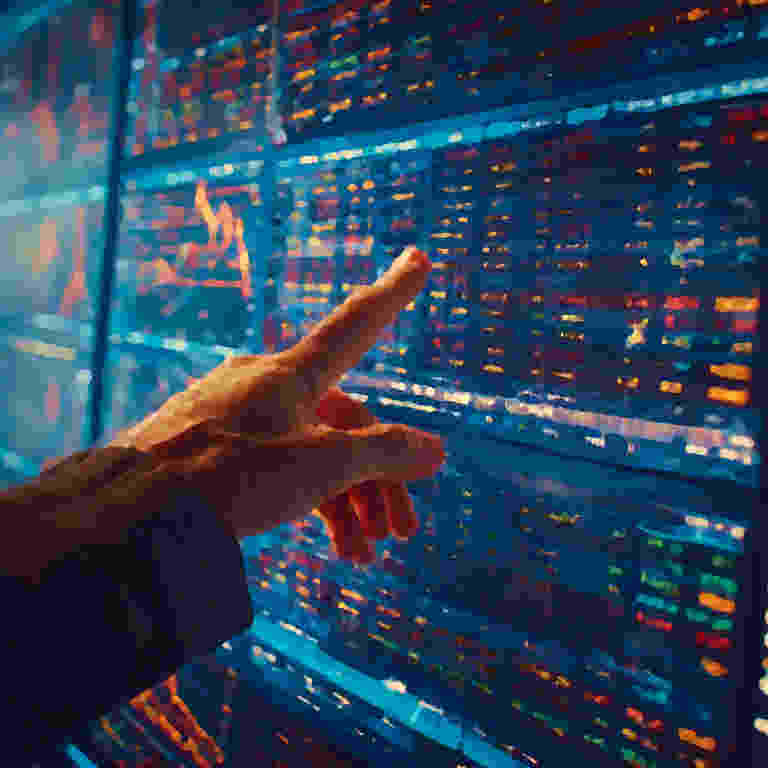
Fundamental Analysis in the Forex Market
Foreign exchange (forex market) is the world’s largest financial market, where currency values constantly shift in response to economic conditions, political developments, and market sentiment. To understand why a currency moves—and not just how—many traders, especially big players and institutional one, rely on fundamental analysis. This form of analysis examines economic, financial, and geopolitical factors that influence the strength of one currency relative to another.
While technical analysis studies price patterns, fundamental analysis explains the forces behind those movements, helping traders see the bigger picture and make more informed decisions. This article is not for financial advice or but for general informative purpose only.
See also : Fundamental Analysis in Stock and Commodity Market
What Is Fundamental Analysis in Forex?
Fundamental analysis evaluates the underlying economic and political drivers of a currency’s value. Because every forex pair represents one economy versus another, any change in a country’s economic health can affect its currency.
In simple terms:
A currency tends to rise when its economy is strong and fall when its economy weakens.
Fundamentals help traders understand whether a currency is likely to strengthen or weaken in reaction to new information.
Why Fundamental Analysis Matters
Unlike stocks, which depend on a single company, currencies depend on entire national economies. That makes forex highly sensitive to:
- Economic releases
- Central bank decisions
- Political stability
- International trade
- Global risk sentiment
Fundamental analysis helps traders:
- Interpret economic news correctly
- Understand what is driving market trends
- Anticipate currency responses to data
- Avoid being caught on the wrong side of major news events
- Build context around technical patterns
Even traders who rely heavily on charts still watch fundamentals because news can invalidate technical setups instantly.
Key Elements of Fundamental Analysis in Forex
These are some example of topic that are popular in fundamental analysis today, explained in brief, and this is just general interpretation, not guaranteed any movement in the future or any context. If you want to know more in-dept or more topics, you may learn them specifically by yourself or by asking in the community such as this forum.
1. Interest Rates and Central Banks
Central banks such as the Federal Reserve (Fed), European Central Bank (ECB), Bank of England (BoE), and others are the most influential entities in forex.
Why?
Because interest rates determine the yield of a currency, and capital flows toward higher returns.
When interest rates rise:
- Currency often strengthens
- Foreign investors move money into the country
- Higher yields attract capital inflows
When interest rates fall:
- Currency often weakens
- Investors seek better returns elsewhere
Central bank announcements (rate decisions, policy statements, forward guidance) are among the most market-moving events.
2. Inflation Data (CPI, PPI)
Inflation measures how quickly prices are rising in an economy.
- If inflation is high, central banks may raise interest rates → currency strengthens
- If inflation is low, central banks may cut rates → currency weakens
Inflation releases often cause large, immediate spikes in major pairs like EUR/USD, GBP/USD, and USD/JPY.
3. Employment Data (NFP, Unemployment Rate)
Employment is a key measure of economic health.
Strong employment:
- Suggests economic growth
- Supports higher interest rates
- Can strengthen the currency
Weak employment:
- Indicates slowing growth
- May push central banks toward easing
- Can weaken the currency
The US Non-Farm Payrolls (NFP) report is one of the most watched events in forex.
4. GDP (Gross Domestic Product)
GDP measures the total output of a country.
- Rising GDP → economic expansion → positive for currency
- Falling GDP → economic contraction → negative for currency
GDP has strong long-term influence, though markets often react before the data is released due to forecasts.
5. Trade Balances and Commodity Prices
Currencies of countries that rely on exports or commodities are heavily influenced by global trade.
Examples:
- USD/CAD reacts to oil prices because Canada is a major oil exporter.
- AUD/USD and NZD/USD react to China’s growth and commodity demand.
- Japan’s dependence on energy imports affects JPY when oil prices rise.
Surpluses strengthen currencies, while deficits can weaken them.
6. Geopolitical Events
Political stability directly affects currency confidence.
Events that move forex markets include:
- Elections
- Trade wars
- Natural disasters
- Conflicts or military tensions
- Government collapses
- Sanctions
Safe-haven currencies such as JPY and CHF often strengthen during crises.
7. Market Sentiment and Risk Appetite
Sometimes fundamentals are less about data and more about mood. People may risk something more than normal situation. (It does not mean you should risk. This is just general interpretation, not guaranteed any movement in the future or any context.)
Risk-On:
- Investors seek higher returns
- AUD, NZD, CAD often strengthen
- JPY and CHF may weaken
Risk-Off:
- Investors seek safety
- USD, JPY, CHF strengthen
- Commodity currencies weaken
This is why currencies can move even without data releases.
Combining Fundamental Factors: How Major Releases Affect Forex
Certain events consistently generate strong market reactions:
High-impact events
- Central bank rate decisions
- US Non-Farm Payrolls
- CPI inflation
- GDP
- PMI (Purchasing Managers Index)
- Political decisions
- Speeches by central bank governors
Markets often move before, during, and after these events based on expectations, actual results, and revisions.
How Traders Use Fundamental Analysis
1. News Trading
Traders react immediately to economic releases.
Requires experience and fast execution due to volatility.
2. Position Trading / Long-Term Analysis
Traders follow macro trends such as:
- Rate cycles
- Economic expansion or contraction
- Commodity booms
- Safe-haven flows
This is the most textbook use of fundamentals.
3. Sentiment-Based Trading
Traders use fundamentals to measure market mood:
- Risk-on → buy commodity currencies
- Risk-off → buy JPY or USD
4. Event Anticipation
Markets often move on expectation before news releases.
For example:
- If inflation expectations rise, the currency may strengthen before CPI data comes out.
5. Combining with Technical Analysis
Most forex traders blend both methods:
- Fundamentals explain the trend
- Technicals refine entries and exits
For example:
- Strong employment + hawkish central bank → bullish bias
- Traders then look for pullbacks to enter long positions
This hybrid method is widely used by professionals.
Limitations of Fundamental Analysis
While powerful, it has challenges:
- Economic data can be contradictory
- Markets sometimes react unexpectedly
- News can cause temporary volatility spikes
- Fundamentals change slowly, making timing difficult
- Sentiment may override data in the short term
Fundamental analysis is most effective when used to understand context, not minute-by-minute price action.
Why Mastering Fundamentals Helps Traders
A trader who understands fundamentals can be better at these things:
- Interpret news instead of guessing
- Recognize when trends are likely to continue or reverse
- Understand why currencies behave differently
- Avoid trading blindly into major economic events
- Stay on the right side of big market shifts
Fundamental knowledge turns forex from a chaotic chart into a logical system driven by economic cause and effect.
Conclusion
Fundamental analysis is seen as one of the core foundations of forex trading. It examines the economic, political, and financial forces that influence currency movements. By understanding interest rates, economic indicators, global trade dynamics, and market sentiment, traders gain insight into the true drivers of price action more precisely.
While technical analysis reveals where price may move, fundamental analysis reveals why. Together, they form a complete framework that helps traders navigate the fast-moving, interconnected world of foreign exchange with more confidence and clarity.










2 comments