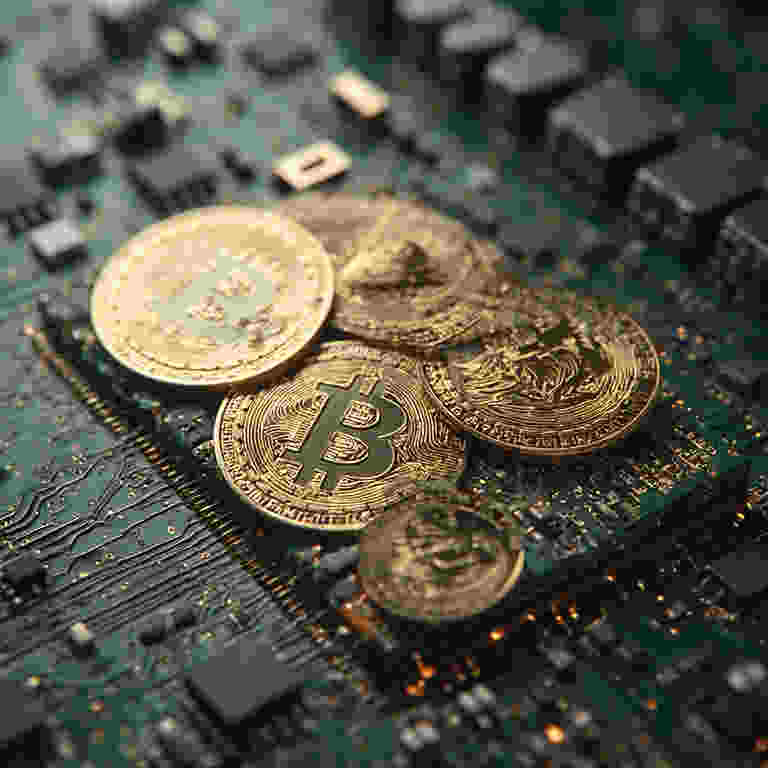
What is Bitcoin, Cryptocurrency, and Digital Tokens?
Bitcoin, cryptocurrency, and digital tokens are all parts of the modern digital financial world, and while they may seem confusing at first, the basic ideas behind them are actually quite simple when explained in everyday language. Understanding them is useful, but just as important is understanding the risks and precautions that beginners should keep in mind before getting involved.
* It should be noted that Bitcoin and Cryptocurrency are not accepted legally by many country. This article is not for financial advice but for informative purpose only.
What is Bitcoin
Bitcoin is the first and most well-known cryptocurrency. It was created in 2009 as a new way for people to send money to each other without needing a bank or financial institution as a middleman. Instead of using a bank’s server, Bitcoin operates on something called blockchain, which is a public digital record shared across thousands of computers worldwide. Every time someone sends Bitcoin, the transaction is recorded permanently on this blockchain, making it transparent and very difficult to alter. Many people see Bitcoin as “digital gold” because its supply is limited and it cannot be created endlessly like paper money. This limited supply is part of what gives Bitcoin value, but it also makes the price fluctuate a lot, which can be risky for beginners.
What is Cryptocurrency
Cryptocurrency is a broader term that includes Bitcoin and thousands of other digital currencies. While Bitcoin was designed mainly to act as digital money, many other cryptocurrencies were created for specific purposes. For example, some cryptocurrencies aim to improve speed, others focus on privacy, and some are used to power digital platforms, apps, or blockchain projects. Every cryptocurrency uses its own version of blockchain technology, but the idea stays the same: a decentralized system where transactions are verified by a network of computers rather than one central authority. This decentralization gives people more control over their assets but also removes the safety net that banks normally provide. If you lose your login keys, fall for a scam, or make a mistake, there is usually no way to reverse the damage.
Some notable cryptocurrencies as of November 2025.
1 Bitcoin (BTC) The original cryptocurrency, still the largest by market cap, seen as “digital gold.”
2 Ethereum (ETH) Smart contract leader powering DeFi, NFTs, and Web3 apps; strong ecosystem growth.
3 Solana (SOL) High-speed blockchain with low fees, popular for gaming and decentralized apps.
4 XRP Focused on cross-border payments; backed by Ripple’s partnerships with banks.
5 Dogecoin (DOGE) Meme coin turned mainstream, supported by community and occasional corporate adoption.
6 Cardano (ADA) Research-driven blockchain emphasizing sustainability and scalability.
7 Avalanche (AVAX) Known for fast transactions and subnet architecture, strong in DeFi projects.
8 Polkadot (DOT) Enables interoperability between blockchains via parachains.
9 Tether (USDT) Leading stablecoin pegged to USD, widely used for liquidity and trading.
10 USD Coin (USDC) Regulated stablecoin, popular for institutional adoption and DeFi.
11 Remittix (RTX) Rising PayFi project focused on remittances and cross-border financial services
What is Digital Token?
Digital tokens are related but slightly different. Where a cryptocurrency is usually a form of digital money on its own blockchain, a digital token is usually built on top of another blockchain or some base digital system (if presence). For example, many tokens run on the Ethereum blockchain without having their own separate network. Tokens can represent many things: access to a software service, participation in a project, ownership of digital assets, or even physical items in the real world. Some tokens act like currencies inside specific platforms, while others are used more like tickets, membership passes, or digital collectibles. Because tokens can be created quickly and easily by developers, they have become very common—but that also means many tokens come with questionable value or unclear long-term use.
What is NFT?
An NFT (Non-Fungible Token) is a unique digital asset recorded on a blockchain that certifies ownership and authenticity of items like art, music, videos, or virtual goods. Unlike cryptocurrencies such as Bitcoin, NFTs are non-fungible, meaning each one is distinct and cannot be exchanged on a one-to-one basis.
Core Features of NFTs
- Unique digital identifier: Each NFT has a distinct code stored on a blockchain, making it impossible to duplicate.
- Proof of ownership: The blockchain records who owns the NFT, ensuring transparency and security.
- Non-fungibility: Unlike money or crypto (where one unit equals another), NFTs are one-of-a-kind.
- Digital asset linkage: NFTs often represent digital files such as artwork, music, videos, or even in-game items.
- Transferability: Owners can sell or trade NFTs, with transactions permanently recorded on the blockchain.
It may allow creators to monetize digital work directly, transformed how art and collectibles are bought and sold online, and represent in-game assets, skins, or land ownership. This is up to the creator’s design.
The Impact of War on Bitcoin, Cryptocurrency, and Digital Tokens
War can significantly impact the price of Bitcoin, cryptocurrency, and digital tokens by altering investor behavior and facilitating shifts in economic stability. In times of conflict, traditional financial systems may experience instability, prompting investors to seek refuge in decentralized assets like Bitcoin as a hedge against uncertainty. This surge in demand can lead to increased prices for cryptocurrencies. Additionally, war can disrupt conventional banking operations and increase inflation, making digital currencies more appealing for transactions and savings, especially in regions experiencing hyperinflation or economic collapse. The advantages of using Bitcoin in wartime include its borderless nature, allowing for seamless, low-cost transactions across jurisdictions, and its potential to circumvent sanctions or restrictions placed on traditional financial systems. Furthermore, the anonymity provided by certain cryptocurrencies can offer a level of privacy for individuals seeking to protect their assets and resources during turbulent times. Overall, while war poses risks to global markets, it can simultaneously accelerate the adoption and utility of cryptocurrencies, solidifying their role as alternative financial instruments in times of crisis.
See also : How War Influence the Prices of Gold and Bitcoin
What should be careful about this?
In my opinion, it’s important to understand not just what these digital assets are, but also the precautions involved. The biggest risk is volatility. Cryptocurrency prices can rise or fall dramatically in a short time, and it’s very easy for inexperienced users to panic, take unnecessary risks, or follow hype instead of understanding what they are buying.
Also be careful of misinformation and scams. Because cryptocurrencies and tokens are relatively new and sometimes complicated, someone with not good purpose often take advantage of people who do not fully understand how the technology works. Promises of guaranteed profits, “secret strategies,” or new coins that claim they will become “the next Bitcoin”. Another precaution involves regulations. Depending on your country, cryptocurrency rules may be unclear, constantly changing, or completely unregulated. This can affect taxes, legal protection, or how exchanges operate.
Finally, it’s important to remember that cryptocurrencies and tokens should not be approached as “easy stuff.” They require learning, understanding, and responsible decision-making. Newcomers can benefit from taking time to understand the basics, practicing with small amounts, using trusted platforms, and never investing more than they can afford to lose.
In the simplest terms, Bitcoin is kind of decentralized digital money (according to the history of it, relating to blockchain), cryptocurrencies are a wide group of digital assets that use blockchain, and digital tokens are versatile digital items built within blockchain networks. All three offer exciting opportunities, but they also come with real risks. With careful learning and awareness, newcomers can avoid the common pitfalls and get the best of what it offer.













2 comments