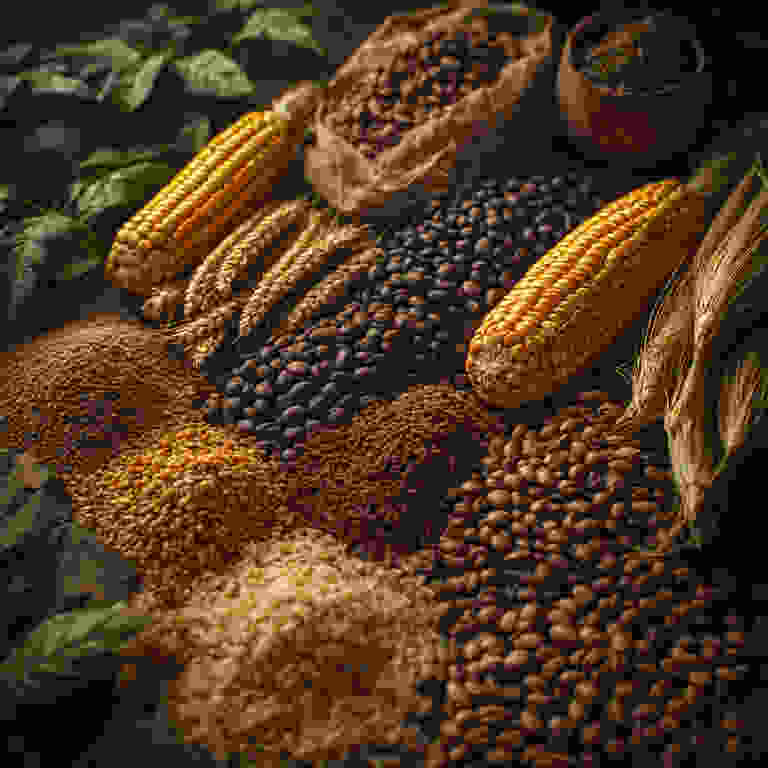
Agricultural commodities represent the most ancient and fundamental form of human economic activity—the cultivation and exchange of life-sustaining products. Yet today, they exist simultaneously as physical goods that feed the world and as financial instruments traded in global markets with staggering complexity. This dual nature—where a soybean can be a chicken’s meal, a tofu block, biodiesel fuel, and a speculative futures contract—makes agricultural markets uniquely fascinating. They bridge the physical reality of soil, weather, and biology with the abstract world of finance, creating a system where a drought in Brazil can ripple through pension funds in Norway and bread prices in Egypt. This article is not financial advice or prediction of any asset but for common knowledge only.
Part I: Agricultural Commodities as Physical Goods
The Foundation of Human Survival
Agricultural commodities are, first and foremost, products grown or raised to sustain human and animal life. They fall into several broad categories:
1. Grains and Oilseeds: The calorie backbone of civilization
- Corn/Maize: The most produced cereal globally, used for animal feed (60%), ethanol, sweeteners, and direct human consumption
- Wheat: The primary grain for human consumption in bread, pasta, and noodles
- Soybeans: The “miracle bean” crushed for oil (vegetable oil) and meal (protein-rich animal feed)
- Rice: The staple for over half the world’s population
2. Soft Commodities: Plantations and perennial crops
- Coffee (Arabica and Robusta) and Cocoa: Luxury stimulants with global addiction
- Sugar: From cane and beet, serving both sweetening and ethanol markets
- Cotton: The “white gold” fiber for textiles
- Orange Juice: A concentrated, seasonal market
3. Livestock and Dairy:
- Live Cattle and Feeder Cattle: The meat production pipeline
- Lean Hogs: Pork production
- Dairy: Milk, butter, cheese futures
4. Other Essentials:
- Lumber: For construction
- Palm Oil: The world’s most consumed vegetable oil
- Rubber: For tires and medical supplies
The Physical Supply Chain: From Farm to Fork
The journey of agricultural commodities is remarkably complex:
- Production: Highly dependent on weather, soil, genetics, and farming practices
- Harvesting: Seasonal patterns create natural cycles of plenty and scarcity
- Storage: Requires specialized facilities (elevators, silos, refrigerated warehouses)
- Processing: Transformation (milling, crushing, refining) adds value
- Transportation: Via rail, truck, barge, or ocean vessel to global destinations
- Distribution: To manufacturers, retailers, and ultimately consumers
This physical chain is vulnerable at every point: droughts destroy crops, labor shortages affect harvests, port closures disrupt exports, and disease wipes out herds.
The Unique Physical Characteristics
Unlike metals or energy commodities, agricultural goods have special properties:
- Perishability: Most have limited shelf lives without proper storage
- Seasonality: Production occurs in specific windows, but consumption is year-round
- Biological Nature: Subject to diseases, pests, and genetic limitations
- Quality Variance: Grading systems (No. 2 Yellow Corn, Arabica vs. Robusta) create price differentials
- Geographic Concentration: Certain regions dominate production (U.S. Corn Belt, Brazilian soy, Vietnamese coffee)
Part II: Agricultural Commodities as Trading Instruments
The Evolution from Barter to Electronic Trading
The formal trading of agricultural commodities dates back to 19th-century Chicago, where the Chicago Board of Trade (CBOT, founded 1848) emerged to help farmers and merchants manage price risk. This innovation—standardized futures contracts—revolutionized agriculture by allowing:
- Price discovery: Establishing transparent market prices
- Risk transfer: Letting farmers lock in prices months before harvest
- Market liquidity: Enabling continuous trading
Today, agricultural futures and options trade on exchanges worldwide:
- CME Group: The dominant force with CBOT, NYMEX, and COMEX
- Intercontinental Exchange (ICE): For coffee, cocoa, sugar, cotton
- Euronext: European grains and rapeseed
- Dalian Commodity Exchange: China’s primary ag futures market
- B3: Brazilian agricultural derivatives
Market Participants: A Diverse Ecosystem
Agricultural markets bring together stakeholders with fundamentally different motivations:
1. Commercial Hedgers (The Physical Players):
- Producers: Farmers who sell futures to lock in prices
- Processors: Crushers, millers, refiners who buy raw materials and sell finished products
- Merchants and Elevators: Middlemen who store and transport
- End-Users: Food companies, restaurants, biofuels producers
2. Financial Players (The Speculators):
- Managed Money: Hedge funds, commodity trading advisors (CTAs)
- Index Funds: Offering passive exposure to commodity baskets
- Proprietary Trading Firms: High-frequency and algorithmic traders
- Retail Investors: Through ETFs, CFDs, or futures accounts
3. Infrastructure Providers:
- Exchanges and Clearinghouses: Provide platforms and guarantee trades
- Brokers and FCMs: Facilitate market access
- Analysts and Data Providers: Supply fundamental and technical information
Trading Instruments and Strategies
Core Instruments:
- Futures Contracts: Standardized agreements to buy/sell a specific quantity and quality at a future date
- Options on Futures: The right, but not obligation, to enter a futures position
- Calendar Spreads: Trading price differences between contract months
- Crush Spreads: Processing margins (soybeans vs. soybean oil and meal)
- ETF/ETNs: Like Teucrium Corn Fund (CORN) or iPath Bloomberg Agriculture Subindex (JJA)
Key Trading Concepts:
- Basis: The difference between local cash price and futures price
- Carrying Charge: Cost of storage, insurance, and financing
- Contango/Backwardation: Term structure of futures curves
- Seasonal Patterns: Historical price tendencies based on planting/harvest cycles
Part III: Price Drivers and Market Dynamics
The Fundamental Trinity: Supply, Demand, and Stocks
Supply-Side Factors:
- Weather: The dominant short-term driver—droughts, floods, frosts, hurricanes
- Planting Decisions: Farmers’ responses to price signals and crop rotation needs
- Yield Technology: Genetic improvements, fertilization, irrigation
- Geopolitical Disruptions: Export bans, tariffs, trade wars
- Input Costs: Fertilizer, fuel, labor, and seed prices
Demand-Side Factors:
- Population and Income Growth: Particularly in developing nations
- Dietary Shifts: Meat consumption rising with prosperity (increasing feed demand)
- Biofuel Mandates: Corn for ethanol, soy/palm for biodiesel
- Currency Effects: Dollar strength affects affordability in importing nations
- Substitution Effects: Between grains, proteins, and sweeteners
Stock Levels: The Cushion Against Shock
- Stock-to-Use Ratio: Key metric—low ratios indicate vulnerability to price spikes
- Government Reserves: Strategic grain reserves in China, India, and other nations
- Visibility Issues: True stock levels in private hands are often opaque
The Financialization Debate
Since the early 2000s, agricultural markets have seen increased participation from financial investors. This “financialization” has sparked debate:
Arguments That Financialization Has Increased Volatility:
- Large fund flows can overwhelm physical market fundamentals
- Herding behavior among algorithmic traders
- Increased correlation with broader financial markets during crises
Arguments That Financialization Adds Liquidity and Efficiency:
- Provides necessary liquidity for commercial hedgers
- Improves price discovery through diverse viewpoints
- Allows risk transfer to those willing to bear it
The evidence remains mixed, but what’s clear is that agricultural markets now exist at the intersection of meteorology, agronomy, geopolitics, and global finance.
Part IV: The Special Case of Soft Commodities
Soft commodities (coffee, cocoa, sugar, cotton, orange juice) exhibit unique characteristics:
The “Softs” Paradox:
- Grown predominantly in developing nations (Brazil, Vietnam, Ivory Coast, India)
- Consumed primarily in developed nations
- Subject to “The Boom-Bust Cycle”: High prices → expanded planting → oversupply → price collapse → reduced planting → shortage → high prices
Structural Challenges:
- Tree Crop Investment Lag: Cocoa and coffee trees take years to mature
- Political Sensitivity: Many are critical export earners for producing nations
- Quality Differentiation: Specialty markets (single-origin coffee, fine flavor cocoa) command large premiums
- Concentration Risk: A few regions dominate production (Ivory Coast 40% of cocoa, Brazil 30% of coffee)
The “Softs” Trading Culture:
Historically more volatile and less liquid than grains, with trading floors retaining more of their traditional “pit” character even as electronic trading dominates. Softs traders often develop specialized expertise in specific commodities, understanding nuances like the “frost season” in Brazilian coffee or the Harmattan wind’s effect on West African cocoa.
Part V: Risk Management and the Real Economy
How Agricultural Markets Serve Society
Price Discovery: The most vital function—providing transparent global prices that guide billions of farming decisions. A Brazilian farmer checking Chicago soybean prices before planting is using this mechanism.
Risk Transfer: The original purpose of futures markets. Allows:
- A Kansas wheat farmer to lock in a price at planting
- A European chocolate maker to secure cocoa supplies at known costs
- A Chinese feed mill to guarantee soybean imports without currency risk
Physical Delivery: While only 1-3% of futures contracts result in actual delivery, this mechanism ensures convergence between paper and physical markets. The delivery process—with specific grades, locations, and procedures—anchors the entire system to reality.
Global Food Security Implications
Agricultural markets are intrinsically tied to food security:
- Price Spikes and Social Unrest: The 2007-08 and 2010-11 food price crises triggered protests in 40+ countries
- The “Thin Film” Illusion: Global grain stocks often represent just 15-20% of annual consumption—a precarious buffer
- Export Restrictions: When prices spike, producing nations often restrict exports to protect domestic consumers, exacerbating global shortages
- The Speculation-Fundamentals Debate: To what extent do financial flows affect the affordability of basic nutrition?
Part VI: Modern Challenges and Transformations
In climate change narrative, agriculture is both victim and contributor to climate change:
- Changing Growing Patterns: Wheat belts shifting poleward, coffee zones moving uphill
- Increased Volatility: More frequent extreme weather events
- Carbon Markets (in some area) : Potential for agricultural carbon credits creates new revenue streams
- Adaptation Costs: Development of drought-resistant varieties, altered planting schedules
Technological Disruption
Precision Agriculture: Satellite imagery, IoT sensors, and data analytics are increasing yields and efficiency.
Blockchain and Traceability: Consumers demanding transparency in food origins is driving technology solutions.
Alternative Proteins: Plant-based and lab-grown meats could disrupt traditional feed grain markets.
Algorithmic Trading: Now dominates daily volume, changing market microstructure.
Geopolitical Fragmentation
The trend toward “friend-shoring” supply chains and increased export controls creates a less fluid global market, potentially increasing volatility and regional price disparities.
The Sustainability Imperative
In some country, Environmental, Social, and Governance (ESG) considerations are important:
- Deforestation Concerns
- Water Usage
- Labor Practices
- Regulatory Response: EU deforestation regulations, sustainable sourcing commitments
Conclusion: The Living Market
Agricultural commodity markets represent one of humanity’s most remarkable creations—a system that connects an Iowan farmer’s combine, a Swiss hedge fund’s algorithm, an Indonesian palm oil plantation, a Brazilian port, and a Japanese noodle factory into a single, pulsing network of price signals.
These markets are not abstract financial casinos but vital infrastructure for feeding 8 billion people. They are imperfect, sometimes volatile to excess, occasionally manipulated, but irreplaceable. They translate sunlight, rain, and soil into numbers that allocate resources across time and space.
The duality of agricultural commodities—as both physical sustenance and financial abstraction—reflects our modern condition: we are biological creatures who have built increasingly complex systems to manage our biological needs. The grain of wheat contains both carbohydrates and information about scarcity, quality, and future availability.
As population growth and geopolitical tensions intensify, agricultural markets will face unprecedented stress tests. Their ability to continue performing their essential functions—price discovery, risk transfer, and facilitating global trade—will be critical to global stability. Understanding these markets means understanding not just finance or agriculture, but the fragile, miraculous system that keeps civilization fed.