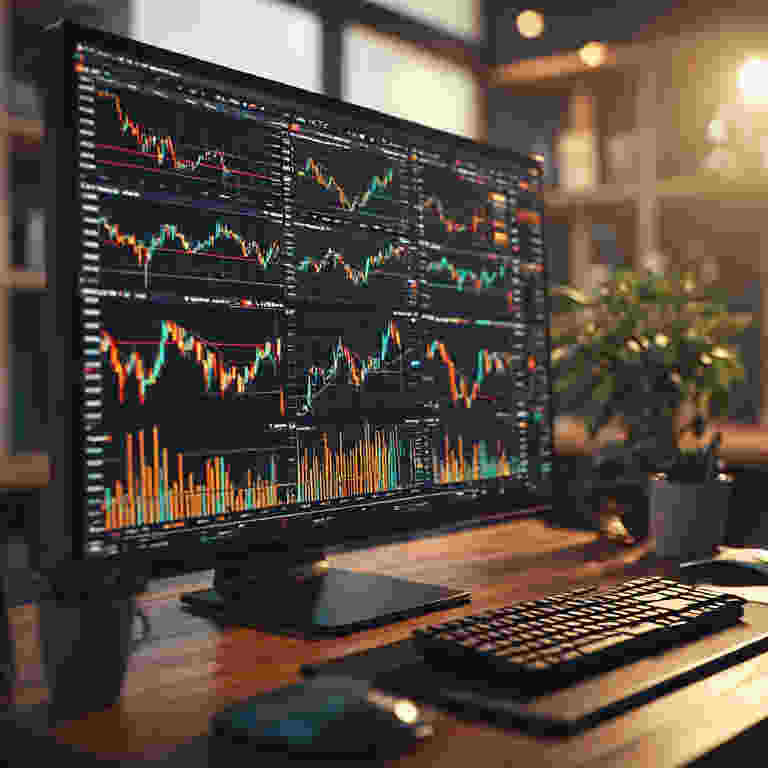
10 Top Indicators in the Forex Market 2025 And Why They Matter
In 2025, forex trading continues to evolve as global liquidity shifts, volatility rises, and markets process economic data faster than ever. While strategies differ, certain indicators remain at the center of traders’ attention because they help interpret market conditions, clarify uncertainty, or reveal hidden dynamics. Importantly, indicators do not predict the future—they simply help traders understand the current environment with more clarity.
Below are 10 of the most widely used forex indicators in 2025 and the reasons why they remain essential tools. This article is not financial advice or prediction of any asset but for common knowledge only.
See also : Overlays vs. Oscillators Indicators
1. Moving Averages (MA, EMA, SMA)
Why This Indicator Matters
Moving averages remain one of the top indicators because they simplify chaotic price movement. In a market where intraday noise is higher than ever due to algorithmic trading, MAs help traders understand:
- The underlying direction of price
- Whether momentum is strong or fading
- How price behaves relative to commonly watched levels
In 2025, moving averages are especially valued for their ability to act as consensus levels—zones almost every type of market participant sees. When many eyes watch the same lines, they naturally become important areas of reaction.
2. Relative Strength Index (RSI)
Why This Indicator Matters
In an era of fast volatility spikes caused by news and algorithmic bursts, RSI is crucial because it reveals the intensity of recent price changes. It helps traders see:
- When momentum is unusually stretched
- When moves are slowing down
- When price is behaving irrationally or emotionally
RSI matters because it reflects market pressure, not prediction. In 2025’s speed-driven environment, that insight is more valuable than ever.
3. MACD (Moving Average Convergence Divergence)
Why This Indicator Matters
MACD is widely used because it combines two essential concepts:
- Trend direction
- Momentum strength
Instead of looking at multiple indicators, MACD compresses this information into a clean format. This dual nature is why MACD remains popular in 2025: it helps traders identify when the market is accelerating, decelerating, or shifting gears—critical in a year marked by unpredictable global monetary cycles.
4. Bollinger Bands
Why This Indicator Matters
Bollinger Bands adapt to volatility, which is extremely important as 2025 markets remain sensitive to:
- Central bank speeches
- Inflation releases
- Sudden geopolitical shifts
The bands expand and contract with volatility, allowing traders to see how aggressive or quiet price is at any moment. It also provides a natural visual framework around price behavior, helping interpret whether the market is calm, trending, or breaking structure.
5. Fibonacci Retracement Levels
Why This Indicator Matters
Fibonacci levels matter because they reveal how deep or shallow market pullbacks tend to be, providing insight into crowd behavior. Human psychology tends to create repeating patterns of:
- Relief
- Panic
- Profit-taking
- Re-entry interest
These patterns often align with Fibonacci levels.
In 2025, as retail and algorithmic traders interact more than ever, Fibonacci tools help visualize how groups of traders collectively react to price changes.
6. Volume Profile & VWAP (Volume Weighted Average Price)
Why These Indicators Matter
Forex is an OTC market where volume is not centralized, but modern trading platforms have improved access to tick volume and liquidity measurement.
- VWAP highlights where the “fair value” of price sits during the day
- Volume Profile shows where the market is most interested in trading
In 2025, these indicators help traders distinguish between genuine price movement and artificial volatility, giving clarity on whether the market truly agrees with a move.
7. ATR (Average True Range)
Why This Indicator Matters
ATR is vital because it measures volatility, not direction.
This matters because:
- Knowing how far price typically moves helps avoid unrealistic expectations
- It identifies when the market is “breaking character”
- It reveals when trends might transition into consolidation or vice versa
In 2025, where major pairs see irregular intraday spikes due to data releases, ATR is one of the best tools for understanding the market’s actual breathing rhythm.
8. Ichimoku Cloud
Why This Indicator Matters
Ichimoku Cloud remains relevant because it provides a full environment view:
- Trend
- Momentum
- Support/resistance
- Market equilibrium
Instead of using 3–4 indicators, Ichimoku offers a complete structure in one system.
With macroeconomic shifts and widening volatility ranges in 2025, traders value indicators that help them interpret bigger-picture conditions quickly, and Ichimoku does exactly that.
9. TD Sequential
Why This Indicator Matters
TD Sequential remains popular among advanced traders because it focuses on trend exhaustion, a highly relevant concept in 2025. With fundamentals causing extended moves—especially after interest rate changes—traders want a tool that helps identify:
- When buyers or sellers are losing strength
- When a trend is overextended
- When the market may be shifting from aggressive behavior to hesitation
Its value comes from highlighting when a trend has gone “too far” compared to historical behavior.
10. Market Structure Tools (HH/HL/LL/LH Detection Indicators)
Why This Indicator Matters
Modern forex trading is heavily influenced by algorithmic reaction to structural levels such as:
- Higher highs
- Higher lows
- Breaks of structure
- Liquidity zones
Indicators that automatically detect these elements help traders understand how algorithms interpret price, which is increasingly important in 2025 when machine-driven trading makes up a large portion of market volume.
These tools matter because they visualize what big players and automated strategies often react to, allowing traders to see the “skeleton” behind price movement.
Conclusion
The top indicators of 2025 remain relevant not because they predict the market, but because they clarify it. They help traders interpret:
- Trend direction
- Market strength
- Volatility
- Crowd psychology
- Price behavior relative to expectations
Whether simplifying chaotic charts or enhancing decision-making, these indicators provide valuable structure in a fast, data-driven, globally reactive forex environment.
Each indicator brings a unique perspective, and understanding why it matters allows traders to better interpret the continuously shifting landscape of the forex market—without relying on prediction or advice.










3 comments